UPSC Current Affairs
Watermelon become a symbol of the Palestine cause
Context: In the many posts showing support for Palestine on social media, a popular symbol is the watermelon. Pictures and emojis of the sliced fruit, as well as artwork featuring it, are often used to express solidarity with the people of Palestine. A watermelon when sliced shows the colours of the Palestinian flag — red, green, black, and white.
VRAuthor Desk
2 min read
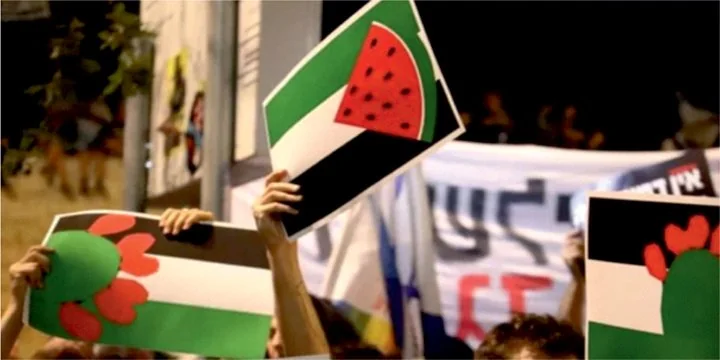
Context: In the many posts showing support for Palestine on social media, a popular symbol is the watermelon. Pictures and emojis of the sliced fruit, as well as artwork featuring it, are often used to express solidarity with the people of Palestine. A watermelon when sliced shows the colours of the Palestinian flag — red, green, black, and white.
Context:
- In the many posts showing support for Palestine on social media, a popular symbol is the watermelon.
- Pictures and emojis of the sliced fruit, as well as artwork featuring it, are often used to express solidarity with the people of Palestine.
Why a watermelon?
- A watermelon when sliced shows the colours of the Palestinian flag — red, green, black, and white.
- As carrying and displaying the Palestinian flag has often been barred by Israeli authorities, a watermelon is used to symbolise it instead.
- On social media, many claim that posts with overt Palestinian symbols are restricted by the US-headquartered bigger platforms, and hence, the sliced watermelon comes in useful here too.
- The watermelon is also widely cultivated in Palestine, from the West Bank to Gaza, and features prominently in Palestinian cuisine.
Its use in protests:
- Palestine has been on the boil the whole of this year, much before the Hamas attack that triggered the bloodbath in Gaza by Israel.
- In January, Israeli National Security Minister Itamar Ben Gvir claimed he had instructed the police to tear down any Palestinian flags flown publicly, after a terror convict waved the flag after his release from prison.
- Flowing the Palestinian flag is not legally banned in Israel, but the police often crack down, claiming the flag could “disturb peace”.
- As the arrests continued, in June, an organisation called Zazim began adding images of sliced watermelons on taxis playing in Tel Aviv, with the accompanying text reading “This is not a Palestinian flag”.
- Another prominent example is the work of Palestinian artist Khaled Hourani, who in 2007 painted a slice of watermelon for the Subjective Atlas of Palestine project.
- His work received wide viewership, and served to associate the watermelon with the Palestinian cause strongly.
Origins of usage in protests:
- What is less clear, however, is how the watermelon first came to be used in protests.
- While many Western media organisations have reported that it was a prominent symbol of resistance during the First Intifada (1987-1993), Arab news websites and blogs have contradicted this.
- After the 1967 Arab-Israeli war, Israel occupied West Bank and Gaza, and criminalised public displays of the Palestinian flag.
- Thus, it is plausible that sliced watermelons were used during the First Intifada, which was against the occupation.
Syllabus: prelims
- Prelims: Key facts, institutions, locations and terminology in the article.
- Mains: Connect the topic with Economy.
- Revision: Use the article headings to prepare concise notes and answer-writing points.
Test your understanding
Questions from this article
Prelims practiceWith reference to Watermelon become a symbol of the Palestine cause, consider the following statements:
- In the many posts showing support for Palestine on social media, a popular symbol is the watermelon.
- Pictures and emojis of the sliced fruit, as well as artwork featuring it, are often used to express solidarity with the people of Palestine.
- A watermelon when sliced shows the colours of the Palestinian flag — red, green, black, and white.
Which of the statements given above are correct?
- 1 and 2 only
- 2 and 3 only
- 1 and 3 only
- 1, 2 and 3
View answer
Answer: (d) 1, 2 and 3. All three statements are drawn from the article.
Mains practiceDiscuss the background, key issues and significance of Watermelon become a symbol of the Palestine cause for India.
Answer in 250 words.
View answer approach
- Context:
- Why a watermelon?
- Its use in protests:
- Origins of usage in protests:
Frequently asked questionsFrequently asked questions
Why is Watermelon Become A Symbol Of The Palestine Cause in the news?
Context: In the many posts showing support for Palestine on social media, a popular symbol is the watermelon. Pictures and emojis of the sliced fruit, as well as artwork featuring it, are often used to express solidarity with the people of Palestine.
What are the key facts about Watermelon Become A Symbol Of The Palestine Cause?
A watermelon when sliced shows the colours of the Palestinian flag — red, green, black, and white. As carrying and displaying the Palestinian flag has often been barred by Israeli authorities, a watermelon is used to symbolise it instead. On social media, many claim that posts with overt Palestinian symbols are restricted by the US-headquartered bigger platforms, and hence, the sliced watermelon comes in useful here too.
Why is Watermelon Become A Symbol Of The Palestine Cause important for UPSC preparation?
The topic connects current developments with Economy and is relevant for both objective revision and analytical answer writing.