UPSC Current Affairs
Uttarakhand tunnel rescue: What is an auger machine, what went wrong, and what’s next?
What is a horizontal auger machine? A horizontal auger machine, often called a horizontal boring machine or directional drill, is a specialised tool to create horizontal bores or underground tunnels without disturbing the surface. It typically consists of a rotating helical screw blade called an auger, attached to a central shaft or drill, which penetrates the material by rotating.
VRAuthor Desk
4 min read
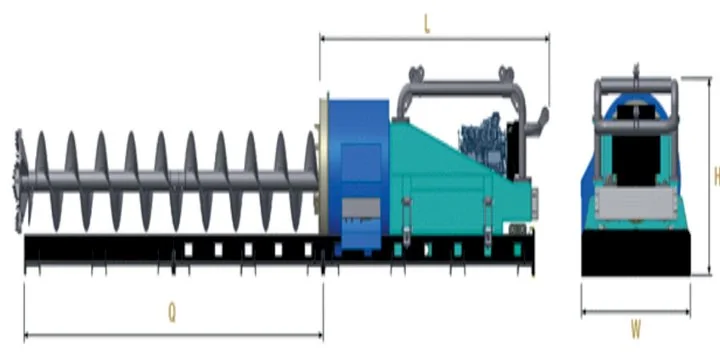
What is a horizontal auger machine? A horizontal auger machine, often called a horizontal boring machine or directional drill, is a specialised tool to create horizontal bores or underground tunnels without disturbing the surface. It typically consists of a rotating helical screw blade called an auger, attached to a central shaft or drill, which penetrates the material by rotating.
What is a horizontal auger machine?
- A horizontal auger machine, often called a horizontal boring machine or directional drill, is a specialised tool to create horizontal bores or underground tunnels without disturbing the surface. It typically consists of a rotating helical screw blade called an auger, attached to a central shaft or drill, which penetrates the material by rotating.
- These machines are commonly employed in construction, utility installations such as laying pipes or cables, and infrastructure projects.
- For the machine to work, it is positioned at the starting point of the bore, usually on the surface. It consists of a drill head with an auger or a drill string attached to it. The auger at the front of the machine rotates and cuts through the soil, rock, or other materials underground. Hydraulic or mechanical systems power this rotation.
- As the auger advances, it removes the material from the tunnel, and it is usually flushed out by a drilling fluid or mud pumped through the drill string. This fluid serves to lubricate the drilling process, cool the cutting head, and carry excavated material back to the surface.
- The machine also has a steering system that allows operators to control the direction and angle of the bore.
- Horizontal auger machines often use advanced guidance systems, such as GPS and electronic tracking, to ensure accuracy in direction and depth while drilling underground. Once the machine has bored the desired length, the auger is retrieved, and the tunnel is ready.
Why was it used in this case?
- In the Silkyara-Barkot tunnel rescue operation, the initial plan to remove the debris blocking the tunnel exit using heavy excavators did not work.
- It was later decided that an auger machine could be a good option because if used properly, it can create a passage through the debris with minimum disturbance to the surface.
- To keep that passage intact, the rescuers are pushing 900 mm and 800 mm wide mild steel pipes along with the auger blade. Once the passage is complete, the auger blade could be pulled back from inside the pipes.
- In the current operation, the rescuers are using the American Auger 60-12000, a large and powerful horizontal directional drilling (HDD) machine manufactured by American Augers, a company specialising in trenchless underground construction equipment. The numbers “60-1200” refer to its drilling diameter capabilities.
- Like other horizontal auger machines, the 60-1200 employs trenchless technology, enabling it to create horizontal bores or tunnels underground without the need for extensive excavation or disruption to the surface. The machine can drill holes ranging from 5 feet to 10 feet in diameter.
What is the new hurdle?
- In order to use the auger machine, the central shaft or drill stays outside, and the auger blade is attached to it to penetrate through the debris. In this case, the auger blade is passing through the mild steel pipes used to keep the passage intact.
- On Friday, a new obstruction was observed. When similar situations were faced earlier, the machine and the auger blades were pulled out so that someone could enter the pipes and check the obstruction manually.
- The same thing was planned in this case. Rescuers started pulling back the machine to clear the pipes for manual inspection. But it appears that the tip of the blade was still stuck in the obstruction, and after pulling back around 15 metres, an auger joint broke. Around 32 metres of the auger blade is left inside the pipes, blocking them.
What needs to be done now?
- Because there is no way to pull the broken auger blade, rescuers need to enter the 800 mm wide pipes, and cut the 32 metres long auger blade piece by piece to clear the path. According to officials, they have cut and removed almost 20 metres of the machine using gas cutters.
- The rescuers have also called for a plasma cutter from Hyderabad, and it is expected to reach the tunnel site by Saturday night.
- A plasma cutter is a tool used for cutting various types of electrically conductive materials, such as steel, aluminium, stainless steel, copper, and other metals. It works by creating a high-velocity jet of ionised gas, known as plasma, to melt and cut through the material.
Way Forward- Tunnel Rescue operations need to be expedited as far as possible . At the same time new SOPs can be adopted to prevent similar incidents in future.
Syllabus- GS-3; Science and Tech
Source- Indian Express
- Prelims: Key facts, institutions, locations and terminology in the article.
- Mains: Connect the topic with Economy, Polity & Governance, Science & Technology.
- Revision: Use the article headings to prepare concise notes and answer-writing points.
Test your understanding
Questions from this article
Prelims practiceWith reference to Uttarakhand tunnel rescue: What is an auger machine, what went wrong, and what’s next?, consider the following statements:
- A horizontal auger machine, often called a horizontal boring machine or directional drill, is a specialised tool to create horizontal bores or underground tunnels without disturbing the surface. It typically consists of…
- These machines are commonly employed in construction, utility installations such as laying pipes or cables, and infrastructure projects.
- For the machine to work, it is positioned at the starting point of the bore, usually on the surface. It consists of a drill head with an auger or a drill string attached to it. The auger at the front of the machine…
Which of the statements given above are correct?
- 1 and 2 only
- 2 and 3 only
- 1 and 3 only
- 1, 2 and 3
View answer
Answer: (d) 1, 2 and 3. All three statements are drawn from the article.
Mains practiceDiscuss the background, key issues and significance of Uttarakhand tunnel rescue: What is an auger machine, what went wrong, and what’s next? for India.
Answer in 250 words.
View answer approach
- What is a horizontal auger machine?
- Why was it used in this case?
- What is the new hurdle?
- What needs to be done now?
Frequently asked questionsFrequently asked questions
Why is Uttarakhand Tunnel Rescue: What Is An Auger Machine, What Went Wrong, And What’S Next in the news?
What is a horizontal auger machine? A horizontal auger machine, often called a horizontal boring machine or directional drill, is a specialised tool to create horizontal bores or underground tunnels without disturbing the surface.
What are the key facts about Uttarakhand Tunnel Rescue: What Is An Auger Machine, What Went Wrong, And What’S Next?
It typically consists of a rotating helical screw blade called an auger, attached to a central shaft or drill, which penetrates the material by rotating. These machines are commonly employed in construction, utility installations such as laying pipes or cables, and infrastructure projects. For the machine to work, it is positioned at the starting point of the bore, usually on the surface.
Why is Uttarakhand Tunnel Rescue: What Is An Auger Machine, What Went Wrong, And What’S Next important for UPSC preparation?
The topic connects current developments with Economy, Polity & Governance, Science & Technology and is relevant for both objective revision and analytical answer writing.