UPSC Current Affairs
The ICJ ruling on the genocide case against Israel
Context: The International Court of Justice (ICJ) recently ruled that Israel must take all measures within its power in order to prevent genocidal acts in Gaza. It is to be noted that under Article 9 of the Genocide Convention - disputes between parties relating to the interpretation, application, or fulfilment of the Convention, including disputes relating to the responsibility of a State for genocide, shall be… The court observed that South Africa had publicly made multiple comments indicating Israel may have acted contrary to its obligations under the Genocide Convention.
VRAuthor Desk
2 min read
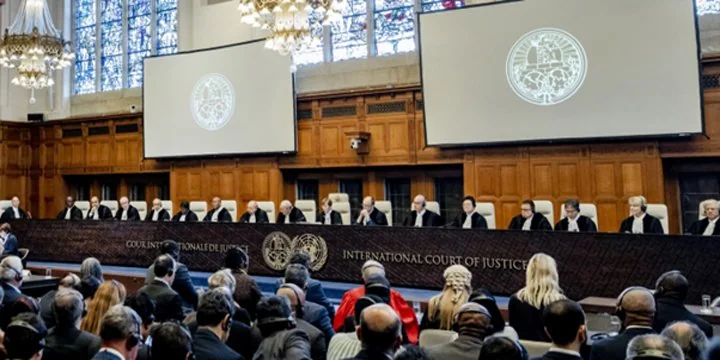
Context: The International Court of Justice (ICJ) recently ruled that Israel must take all measures within its power in order to prevent genocidal acts in Gaza. It is to be noted that under Article 9 of the Genocide Convention - disputes between parties relating to the interpretation, application, or fulfilment of the Convention, including disputes relating to the responsibility of a State for genocide, shall be… The court observed that South Africa had publicly made multiple comments indicating Israel may have acted contrary to its obligations under the Genocide Convention.
Context:
- The International Court of Justice (ICJ) recently ruled that Israel must take all measures within its power in order to prevent genocidal acts in Gaza.
- It is to be noted that under Article 9 of the Genocide Convention - disputes between parties relating to the interpretation, application, or fulfilment of the Convention, including disputes relating to the responsibility of a State for genocide, shall be submitted to the ICJ at the request of any of the parties to the dispute.
- The court observed that South Africa had publicly made multiple comments indicating Israel may have acted contrary to its obligations under the Genocide Convention.
- But Israel had dismissed all notions of genocide in Gaza as morally repugnant.
- The court held that the parties held opposite views concerning Israel’s obligations under the genocide convention and that this indicated a dispute between the two parties.
- Also it is important to note that the ICJ stopped short of ordering a ceasefire.
- South Africa’s plea before the ICJ had asked it to order Israel to immediately suspend all military operations in Gaza, as an interim measure.
About International Court of Justice:
- It is also known as the World Court and is the only international court which adjudicates general disputes between nations, and gives advisory opinions on international legal
- It is one of the six organs of the United Nations (UN).
- ICJ is located in The Hague, Netherlands.
- The ICJ consists of a panel of 15 judges who areelected by the UN General Assembly and Security Council for nine-year terms.
- It is worth mentioning that no more than one judge of each nationality may be represented on court at the same time, and judges collectively must reflect the principal civilizations and legal systems of the world.
- The ICJ is the only principal UN organ which is not located in New York City.
- Its official working languages are English and French.
- Prelims: Key facts, institutions, locations and terminology in the article.
- Mains: Connect the topic with Economy, Defence, Polity & Governance.
- Revision: Use the article headings to prepare concise notes and answer-writing points.
Test your understanding
Questions from this article
Prelims practiceWith reference to The ICJ ruling on the genocide case against Israel, consider the following statements:
- The International Court of Justice (ICJ) recently ruled that Israel must take all measures within its power in order to prevent genocidal acts in Gaza.
- It is to be noted that under Article 9 of the Genocide Convention - disputes between parties relating to the interpretation, application, or fulfilment of the Convention, including disputes relating to the responsibility…
- The court observed that South Africa had publicly made multiple comments indicating Israel may have acted contrary to its obligations under the Genocide Convention.
Which of the statements given above are correct?
- 1 and 2 only
- 2 and 3 only
- 1 and 3 only
- 1, 2 and 3
View answer
Answer: (d) 1, 2 and 3. All three statements are drawn from the article.
Mains practiceDiscuss the background, key issues and significance of The ICJ ruling on the genocide case against Israel for India.
Answer in 250 words.
View answer approach
- Context:
- About International Court of Justice:
- Background and context
- Key facts and institutional framework
- Significance and way forward
Frequently asked questionsFrequently asked questions
Why is The Icj Ruling On The Genocide Case Against Israel in the news?
Context: The International Court of Justice (ICJ) recently ruled that Israel must take all measures within its power in order to prevent genocidal acts in Gaza. It is to be noted that under Article 9 of the Genocide Convention - disputes between parties relating to the interpretation, application, or fulfilment of the Convention, including disputes relating to the responsibility of a State for genocide, shall be…
What are the key facts about The Icj Ruling On The Genocide Case Against Israel?
The court observed that South Africa had publicly made multiple comments indicating Israel may have acted contrary to its obligations under the Genocide Convention. But Israel had dismissed all notions of genocide in Gaza as morally repugnant. The court held that the parties held opposite views concerning Israel’s obligations under the genocide convention and that this indicated a dispute between the two parties.
Why is The Icj Ruling On The Genocide Case Against Israel important for UPSC preparation?
The topic connects current developments with Economy, Defence, Polity & Governance and is relevant for both objective revision and analytical answer writing.