UPSC Current Affairs
The Global Pandemic Treaty
Health officials from the 194 member states of the World Health Organization hope next week to complete more than two years of negotiations on new rules for responding to pandemics when they gather in Geneva. Negotiations are ongoing for two complementary deals that could be formalised at the May 27-June 1 meeting: an update to existing health rules on outbreaks and a new legally-binding treaty to shore up the world’s defences against future pathogens after the… The WHO already has binding rules known as the International Health Regulations (2005) which set out countries’ obligations where public health events have the potential to cross national borders.
VRAuthor Desk
3 min read
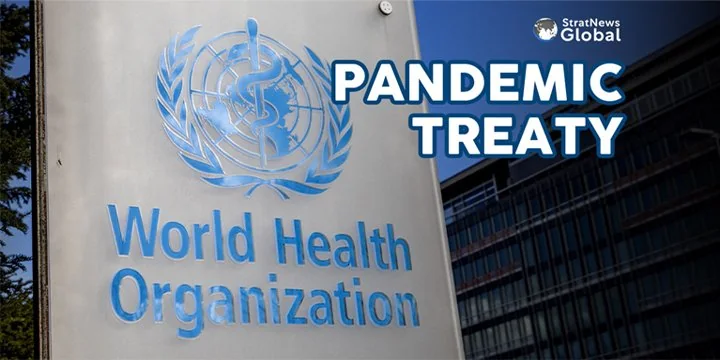
Health officials from the 194 member states of the World Health Organization hope next week to complete more than two years of negotiations on new rules for responding to pandemics when they gather in Geneva. Negotiations are ongoing for two complementary deals that could be formalised at the May 27-June 1 meeting: an update to existing health rules on outbreaks and a new legally-binding treaty to shore up the world’s defences against future pathogens after the… The WHO already has binding rules known as the International Health Regulations (2005) which set out countries’ obligations where public health events have the potential to cross national borders.
Health officials from the 194 member states of the
World Health Organization hope next week to
complete more than two years of negotiations on new rules for
responding to pandemics when they gather in Geneva.
Negotiations are ongoing for two complementary deals that could be formalised at the
May 27-June 1 meeting: an update to existing health rules on outbreaks and a new legally-binding treaty to shore up the world’s defences against future pathogens after the COVID-19 pandemic killed millions of people.
WHY SUCH A TREATY IS NEEDED?
- The WHO already has binding rules known as the International Health Regulations (2005) which set out countries’ obligations where public health events have the potential to cross national borders.
- These include advising the WHO immediately of a health emergency and measures on trade and travel.
- Adopted after the 2002/3 SARS outbreak, these regulations are still seen as functional for regional epidemics such as Ebola but inadequate for a global pandemic.
- Much of the impetus for a separate treaty comes from a desire to address the COVID-era shortcomings of the current system, chiefly avoiding a repeat of the “vaccine apartheid” denounced repeatedly by Tedros, and ensuring faster, more transparent information sharing and cooperation.
WHAT TYPES OF PROVISIONS ARE EXPECTED?
- Updates to the IHR rules include a new alerts system for communicating different risk assessments for future outbreaks, following criticism that cumbersome existing rules slowed the global response to the COVID-19 emergency.
- Currently, the WHO has only one level of emergency – a public health emergency of international concern (PHEIC) – whereas the new system envisages an intermediary stage called an “early action alert”.
- Negotiators are also considering a “pandemic emergency” for the most serious public health threats, addressing a gap in its current system which does not use the term pandemic at all.
- Other revisions include attempts to bolster states’ obligations, in one case strengthening language on their duties to inform the WHO on public health events from “may” to “should”.
- One of the most important and fiercely debated sections of the treaty, Article 12, envisages reserving around 20% of tests, treatments and vaccines for the WHO to distribute to poorer countries during emergencies although the exact portion is still contested, negotiators say.
THE ROADBLOCKS
- Negotiations have been characterised by major rifts between wealthy and poorer countries’ positions that have confounded mediators’ attempts to bridge them.
- Besides the sharing of drugs and vaccines, one of the most contested aspects is financing, including whether to set up a dedicated fund or draw on existing resources, such as the World Bank’s $1 billion pandemic fund.
- Negotiations have sometimes dragged on late into the night, getting stuck on technicalities.
- Another factor constraining negotiators has been political pressure over the treaty, particularly by right-wing groups and politicians who say it threatens sovereignty, which the WHO strongly denies.
- Prelims: Key facts, institutions, locations and terminology in the article.
- Mains: Connect the topic with Economy, Defence, Polity & Governance.
- Revision: Use the article headings to prepare concise notes and answer-writing points.
Test your understanding
Questions from this article
Prelims practiceWith reference to The Global Pandemic Treaty, consider the following statements:
- The WHO already has binding rules known as the International Health Regulations (2005) which set out countries’ obligations where public health events have the potential to cross national borders. These include advising…
- These include advising the WHO immediately of a health emergency and measures on trade and travel.
- Adopted after the 2002/3 SARS outbreak, these regulations are still seen as functional for regional epidemics such as Ebola but inadequate for a global pandemic.
Which of the statements given above are correct?
- 1 and 2 only
- 2 and 3 only
- 1 and 3 only
- 1, 2 and 3
View answer
Answer: (d) 1, 2 and 3. All three statements are drawn from the article.
Mains practiceDiscuss the background, key issues and significance of The Global Pandemic Treaty for India.
Answer in 250 words.
View answer approach
- WHY SUCH A TREATY IS NEEDED?
- WHAT TYPES OF PROVISIONS ARE EXPECTED?
- THE ROADBLOCKS
Frequently asked questionsFrequently asked questions
Why is The Global Pandemic Treaty in the news?
Health officials from the 194 member states of the World Health Organization hope next week to complete more than two years of negotiations on new rules for responding to pandemics when they gather in Geneva. Negotiations are ongoing for two complementary deals that could be formalised at the May 27-June 1 meeting: an update to existing health rules on outbreaks and a new legally-binding treaty to shore up the world’s defences against future pathogens after the…
What are the key facts about The Global Pandemic Treaty?
The WHO already has binding rules known as the International Health Regulations (2005) which set out countries’ obligations where public health events have the potential to cross national borders. These include advising the WHO immediately of a health emergency and measures on trade and travel. Adopted after the 2002/3 SARS outbreak, these regulations are still seen as functional for regional epidemics such as Ebola but inadequate for a global pandemic.
Why is The Global Pandemic Treaty important for UPSC preparation?
The topic connects current developments with Economy, Defence, Polity & Governance and is relevant for both objective revision and analytical answer writing.