UPSC Current Affairs
Somnath: A brief history of the temple, and why Nehru opposed the President inaugurating it
Somnath, till 1947 The Somnath temple, located in Prabhas Patan, Veraval, Gujarat, is a significant Hindu pilgrimage site. It has faced numerous attacks throughout history, notably by Mahmud of Ghazni in 1026 CE. However, not all Muslim rulers were against it.
VRAuthor Desk
3 min read
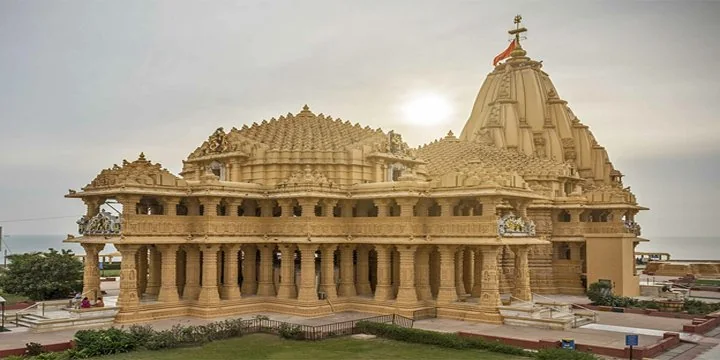
Somnath, till 1947 The Somnath temple, located in Prabhas Patan, Veraval, Gujarat, is a significant Hindu pilgrimage site. It has faced numerous attacks throughout history, notably by Mahmud of Ghazni in 1026 CE. However, not all Muslim rulers were against it.
Somnath, till 1947
- The Somnath temple, located in Prabhas Patan, Veraval, Gujarat, is a significant Hindu pilgrimage site. It has faced numerous attacks throughout history, notably by Mahmud of Ghazni in 1026 CE. However, not all Muslim rulers were against it.
- For instance, Akbar allowed the worship of the linga in the temple in the 16th century.
- Three generations after Akbar, Aurangzeb ordered the temple’s destruction and its conversion into a mosque. The temple gradually fell into disrepair until 1782, when Maratha queen Ahalyabai Holkar built a small temple at the site.
- In 1842, British Governor General Lord Ellenborough highlighted the temple as a symbol of Islamic excesses on Hindus. He claimed to have avenged an 800-year-old insult by returning the “gates of Somnath” taken by Mahmud of Ghazni, although these gates were later found to be unrelated to the temple.
- This narrative persisted, and as communal tensions rose before Independence, many Hindus saw the restoration of Somnath as crucial to Hindu pride, with Congress leader K M Munshi being one of the most vocal proponents.
After Independence
- Following Independence, the Nawab of Junagadh, where the Somnath temple is situated, chose to join Pakistan, a decision that was largely opposed by his subjects. This led to a rebellion, forcing the Nawab to flee.
- On November 12, 1947, Sardar Vallabhbhai Patel, who was India’s Home Minister at the time, visited Junagadh. During a large public meeting, he announced plans to rebuild the Somnath temple.
- The Union Cabinet, led by Nehru, supported this decision. However, when Patel, Munshi, and others informed Mahatma Gandhi about the plan, he proposed that the project should be funded by the public rather than the government.
- This suggestion was accepted, and a Trust was subsequently established under Munshi to oversee the project.
Nehru’s letters to Rajendra Prasad on Somnath
- By the time the Somnath temple was ready for inauguration, Sardar Vallabhbhai Patel had passed away. K M Munshi approached President Rajendra Prasad for the inauguration, despite Prime Minister Jawaharlal Nehru’s opposition.
- Nehru expressed his concerns about the government associating with a religious event in letters to Prasad and the Chief Ministers. He was particularly concerned about the Saurashtra government’s contribution of Rs 5 lakh towards the ceremony, given the country’s economic conditions.
- Nehru also opposed a circular sent to Indian ambassadors asking them to collect and send water from major rivers and soil and twigs from mountains of the countries they were accredited to, for the temple. He asked the Ministry of External Affairs to ignore these requests.
Conclusion- The reconstruction of the Somnath temple in the post-Independence era of India was a significant event that highlighted the complexities of a secular government engaging with religious institutions. Despite opposition from Prime Minister Jawaharlal Nehru, who was concerned about the implications of the government’s association with a religious ceremony, the temple was rebuilt.
The event underscored the delicate balance between respecting religious sentiments and maintaining the secular fabric of the nation. It also brought to the fore the enduring influence of historical narratives in shaping contemporary socio-political discourse. The Somnath temple, thus, stands not just as a religious monument, but also as a symbol of a critical juncture in India’s history.
- Prelims: Key facts, institutions, locations and terminology in the article.
- Mains: Connect the topic with Environment, Economy.
- Revision: Use the article headings to prepare concise notes and answer-writing points.
Test your understanding
Questions from this article
Prelims practiceWith reference to Somnath: A brief history of the temple, and why Nehru opposed the President inaugurating it, consider the following statements:
- The Somnath temple, located in Prabhas Patan, Veraval, Gujarat, is a significant Hindu pilgrimage site. It has faced numerous attacks throughout history, notably by Mahmud of Ghazni in 1026 CE. However, not all Muslim…
- For instance, Akbar allowed the worship of the linga in the temple in the 16th century.
- Three generations after Akbar, Aurangzeb ordered the temple’s destruction and its conversion into a mosque. The temple gradually fell into disrepair until 1782, when Maratha queen Ahalyabai Holkar built a small temple at…
Which of the statements given above are correct?
- 1 and 2 only
- 2 and 3 only
- 1 and 3 only
- 1, 2 and 3
View answer
Answer: (d) 1, 2 and 3. All three statements are drawn from the article.
Mains practiceDiscuss the background, key issues and significance of Somnath: A brief history of the temple, and why Nehru opposed the President inaugurating it for India.
Answer in 250 words.
View answer approach
- Background and context
- Key facts and institutional framework
- Significance and way forward
Frequently asked questionsFrequently asked questions
Why is Somnath: A Brief History Of The Temple, And Why Nehru Opposed The President Inaugurating It in the news?
Somnath, till 1947 The Somnath temple, located in Prabhas Patan, Veraval, Gujarat, is a significant Hindu pilgrimage site. It has faced numerous attacks throughout history, notably by Mahmud of Ghazni in 1026 CE.
What are the key facts about Somnath: A Brief History Of The Temple, And Why Nehru Opposed The President Inaugurating It?
However, not all Muslim rulers were against it. For instance, Akbar allowed the worship of the linga in the temple in the 16th century. Three generations after Akbar, Aurangzeb ordered the temple’s destruction and its conversion into a mosque.
Why is Somnath: A Brief History Of The Temple, And Why Nehru Opposed The President Inaugurating It important for UPSC preparation?
The topic connects current developments with Environment, Economy and is relevant for both objective revision and analytical answer writing.