UPSC Current Affairs
Severe drought grips the Amazon rainforest: The impact, cause and grim future
Stranded boats, wildfires, dead fish The present spell of drought began in June and has stubbornly persisted since. As a result, water levels have dropped and high numbers of fish and river dolphins, known as boto, have been washing up dead — their rotting carcasses have contaminated the water supply in some areas, forcing residents to use it for cooking, bathing, and… The lack of water has also stalled the operations of a major hydropower dam in the region and left tens of thousands of people stranded in remote jungle villages, with limited access to food, and other supplies.
VRAuthor Desk
3 min read
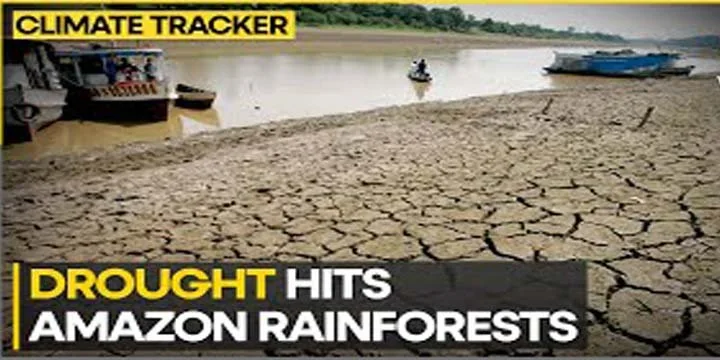
Stranded boats, wildfires, dead fish The present spell of drought began in June and has stubbornly persisted since. As a result, water levels have dropped and high numbers of fish and river dolphins, known as boto, have been washing up dead — their rotting carcasses have contaminated the water supply in some areas, forcing residents to use it for cooking, bathing, and… The lack of water has also stalled the operations of a major hydropower dam in the region and left tens of thousands of people stranded in remote jungle villages, with limited access to food, and other supplies.
Stranded boats, wildfires, dead fish
- The present spell of drought began in June and has stubbornly persisted since. As a result, water levels have dropped and high numbers of fish and river dolphins, known as boto, have been washing up dead — their rotting carcasses have contaminated the water supply in some areas, forcing residents to use it for cooking, bathing, and drinking.
- The lack of water has also stalled the operations of a major hydropower dam in the region and left tens of thousands of people stranded in remote jungle villages, with limited access to food, and other supplies. Brazilian authorities fear that about 500,000 people may be affected due to the drought by the end of October.
- The extreme dry conditions have made the rainforest more vulnerable to wildfires too. So far this month, the Amazonas state has witnessed 2,700 blazes — the highest ever noted for the month of October since the records began 25 years ago, according to Brazil’s National Institute for Space Research.
- Smoke from wildfires has plummeted air quality in Manaus, a city of two million in the middle of the Amazon, to hazardous levels. Children and older people living in the city are struggling to breathe and many have ended up in hospitals, according to doctors in Manaus.
The combined effect of El Nino and high sea surface temperatures
- Droughts aren’t unheard of in the Amazon. Most recently, the rainforest witnessed a dry spell in 2021, which was the worst in at least 90 years.
- The latest drought, however, is probably even more severe as two simultaneous natural events have hindered cloud formation, further reducing the already low rainfall levels in the region.
- One of them is the onset of El Nino, which refers to an abnormal warming of surface waters in the equatorial Pacific Ocean. The weather pattern is known to increase the likelihood of breaking temperature records and triggers more extreme heat in many parts of the world and in the ocean.
- The other weather event is the unusually high water temperatures in the northern tropical Atlantic Ocean. Due to warmer ocean waters, heated air rises into the atmosphere, which then reaches the Amazon rainforest. The warm air inhibits the formation of clouds, causing rainfall to drop sharply.
A grim future
- Over the years, several studies have indicated that with rising global temperatures, the Amazon will experience longer and more frequent droughts.
- A 2022 study, published in the journal Proceedings of the National Academy of Sciences (PNAS), said if humans continue burning fossil fuels at the current rate, the rainforest would experience major drought nine out of every 10 years by the year 2060.
- A different 2022 study, published in the journal Nature, revealed that the Amazon has become slower at recovering from longer periods of drought over the past 20 years and is nearing its tipping point.
- Beyond the tipping point, it would transform from a lush green forest into a drier open savanna, releasing a large amount of stored carbon, which would, in turn, exacerbate global warming.
Conclusion- In the past five decades, between 17 and 20 per cent of the Amazon has been destroyed. Therefore, there is an urgent need to curb deforestation and greenhouse gas emissions to protect the Amazon, and, where possible, reforest the degraded swathes according to experts.
Syllabus- GS-3; Disaster Management
Source- Indian Express
- Prelims: Key facts, institutions, locations and terminology in the article.
- Mains: Connect the topic with Environment, Polity & Governance.
- Revision: Use the article headings to prepare concise notes and answer-writing points.
Test your understanding
Questions from this article
Prelims practiceWith reference to Severe drought grips the Amazon rainforest: The impact, cause and grim future, consider the following statements:
- The present spell of drought began in June and has stubbornly persisted since. As a result, water levels have dropped and high numbers of fish and river dolphins, known as boto, have been washing up dead — their rotting…
- The lack of water has also stalled the operations of a major hydropower dam in the region and left tens of thousands of people stranded in remote jungle villages, with limited access to food, and other supplies.…
- The extreme dry conditions have made the rainforest more vulnerable to wildfires too. So far this month, the Amazonas state has witnessed 2,700 blazes — the highest ever noted for the month of October since the records…
Which of the statements given above are correct?
- 1 and 2 only
- 2 and 3 only
- 1 and 3 only
- 1, 2 and 3
View answer
Answer: (d) 1, 2 and 3. All three statements are drawn from the article.
Mains practiceDiscuss the background, key issues and significance of Severe drought grips the Amazon rainforest: The impact, cause and grim future for India.
Answer in 250 words.
View answer approach
- Background and context
- Key facts and institutional framework
- Significance and way forward
Frequently asked questionsFrequently asked questions
Why is Severe Drought Grips The Amazon Rainforest: The Impact, Cause And Grim Future in the news?
Stranded boats, wildfires, dead fish The present spell of drought began in June and has stubbornly persisted since. As a result, water levels have dropped and high numbers of fish and river dolphins, known as boto, have been washing up dead — their rotting carcasses have contaminated the water supply in some areas, forcing residents to use it for cooking, bathing, and…
What are the key facts about Severe Drought Grips The Amazon Rainforest: The Impact, Cause And Grim Future?
The lack of water has also stalled the operations of a major hydropower dam in the region and left tens of thousands of people stranded in remote jungle villages, with limited access to food, and other supplies. Brazilian authorities fear that about 500,000 people may be affected due to the drought by the end of October. The extreme dry conditions have made the rainforest more vulnerable to wildfires too.
Why is Severe Drought Grips The Amazon Rainforest: The Impact, Cause And Grim Future important for UPSC preparation?
The topic connects current developments with Environment, Polity & Governance and is relevant for both objective revision and analytical answer writing.