UPSC Current Affairs
RISING PULSES PRICES
Recently, Prices of commonly used dals are soaring to all time highs. CURRENT STATUS OF PULSES IN INDIA: Consumers in India use a whole variety of pulses, including tur (pigeon pea), masoor (lentils), chana (gram), urad (black gram), and moong (green gram) as a staple. The most recent data from the consumer affairs department shows that except for lentils, the year-on-year price rise in other varieties ranges from 19% for gram to 41% for tur.
VRAuthor Desk
3 min read
Recently, Prices of commonly used dals are soaring to all time highs. CURRENT STATUS OF PULSES IN INDIA: Consumers in India use a whole variety of pulses, including tur (pigeon pea), masoor (lentils), chana (gram), urad (black gram), and moong (green gram) as a staple. The most recent data from the consumer affairs department shows that except for lentils, the year-on-year price rise in other varieties ranges from 19% for gram to 41% for tur.
WHY IN NEWS?
- Recently, Prices of commonly used dals are soaring to all time highs.
CURRENT STATUS OF PULSES IN INDIA:
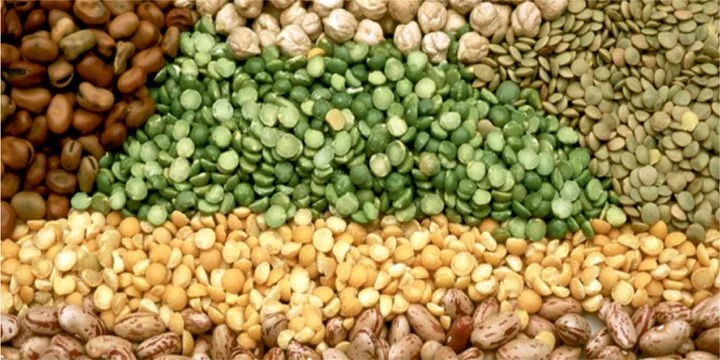
- Consumers in India use a whole variety of pulses, including tur (pigeon pea), masoor (lentils), chana (gram), urad (black gram), and moong (green gram) as a staple.
- The most recent data from the consumer affairs department shows that except for lentils, the year-on-year price rise in other varieties ranges from 19% for gram to 41% for tur.
- In some major cities the price rise is more pronounced.
- For instance, retail tur prices in Delhi have shot up by about 50% to ₹173 per kg now compared with ₹118 last year.
- The price rise is worrying as pulses are an important source of protein for many families.
INCREASING PRODUCTIVITY:
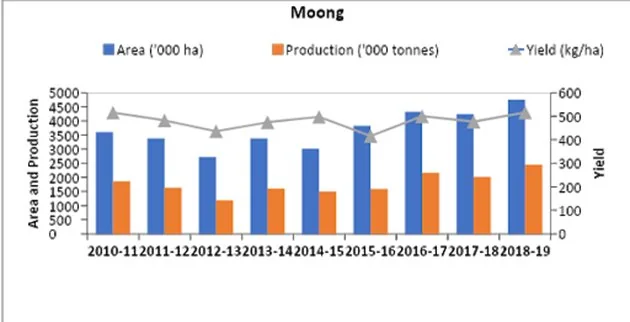
- From a meagre production of 14.76 million tonnes in the 2007-08 crop year, pulses production has now reached 42 million tonnes in the 2020-2021 crop year, which is a phenomenal increase of 65 per cent.
- India is still importing around 4 lakh tonnes of tur, 0.6 lakh tonnes of moong and around 3 lakh tonnes of urad for meeting its demand.
- The special programme will increase the production and productivity of the three pulses of tur, moong and urad to a great extent and will play an important role in reducing the import burden.
CAUSES OF INCREASING PRICES:
- DECREASING SHOWN AREA: Data from the agriculture ministry shows that the area under rain-fed kharif pulses this year was 11.5% less than the five-year average.
- DROP IN PRODUCTION: Production is likely to drop to 7.12 million tonnes as per the first advance estimates released late last month, compared with 8.16 million tonnes last year, and the previous best of 9.6 million tonnes in 2016-17.
- ERRATIC RAINFALL: Production was also impacted by below-normal rains in major growing states such as Karnataka, Madhya Pradesh and Maharashtra.
- Worryingly, planting of winter grown pulses is also lagging year-on-year—by as much as 12% for gram—as of 24 November.
CONCERNS IN CONTROLLING PULSE PRICES:
- Pulses are mostly grown on marginal land, with little or no access to irrigation. Some varieties like tur are low-yielding, long duration crops.
- As access to irrigation improved, farmers switched to high- yielding cereals that come with guaranteed price support.
- An open import policy which kept prices low in the past also led to farmers losing interest.
- Unlike in oilseeds, where India meets its domestic shortfall with imports of cheap palm oil, global supplies of pulses are limited.
HOW TO INCREASE PULSES PRODUCTION?
- A peculiarity of Indian diets is that one pulse variety cannot be replaced by another, leading to inelastic demand.
- Tur used in South Indian kitchens to make sambar cannot be replaced by moong or lentils.
- That means India must boost production of all varieties (other than gram where it is self-sufficient).
- Faced with high prices, the Centre is considering a new scheme to boost production— purchase assurance at a guaranteed price.
- India also need a technological breakthrough to improve yields.
- To boost domestic supplies, India is now reportedly exploring production opportunities in countries such as Brazil, Ethiopia, and Tanzania.
WAY FORWARD:
- Sustainable and increased production of pulses is crucial for ensuring food security, improving soil health, and providing affordable sources of nutrition for the population.
- Efforts to address challenges, promote research, and support farmers through policies and initiatives play a vital role in enhancing pulses production in India.
- Efforts to enhance pulse production in India include the adoption of modern agricultural practices, use of improved seed varieties, proper irrigation methods, and the implementation of government schemes to support farmers.
SYLLABUS: MAINS, GS-3, AGRICULTURE
SOURCE: INDIAN EXPRESS
- Prelims: Key facts, institutions, locations and terminology in the article.
- Mains: Connect the topic with Economy, Polity & Governance, Health.
- Revision: Use the article headings to prepare concise notes and answer-writing points.
Test your understanding
Questions from this article
Prelims practiceWith reference to RISING PULSES PRICES, consider the following statements:
- Recently, Prices of commonly used dals are soaring to all time highs.
- Consumers in India use a whole variety of pulses, including tur (pigeon pea), masoor (lentils), chana (gram), urad (black gram), and moong (green gram) as a staple.
- The most recent data from the consumer affairs department shows that except for lentils, the year-on-year price rise in other varieties ranges from 19% for gram to 41% for tur.
Which of the statements given above are correct?
- 1 and 2 only
- 2 and 3 only
- 1 and 3 only
- 1, 2 and 3
View answer
Answer: (d) 1, 2 and 3. All three statements are drawn from the article.
Mains practiceDiscuss the background, key issues and significance of RISING PULSES PRICES for India.
Answer in 250 words.
View answer approach
- WHY IN NEWS?
- CURRENT STATUS OF PULSES IN INDIA:
- INCREASING PRODUCTIVITY:
- CAUSES OF INCREASING PRICES:
- CONCERNS IN CONTROLLING PULSE PRICES:
Frequently asked questionsFrequently asked questions
Why is Rising Pulses Prices in the news?
Recently, Prices of commonly used dals are soaring to all time highs. CURRENT STATUS OF PULSES IN INDIA: Consumers in India use a whole variety of pulses, including tur (pigeon pea), masoor (lentils), chana (gram), urad (black gram), and moong (green gram) as a staple.
What are the key facts about Rising Pulses Prices?
The most recent data from the consumer affairs department shows that except for lentils, the year-on-year price rise in other varieties ranges from 19% for gram to 41% for tur. In some major cities the price rise is more pronounced. For instance, retail tur prices in Delhi have shot up by about 50% to ₹173 per kg now compared with ₹118 last year.
Why is Rising Pulses Prices important for UPSC preparation?
The topic connects current developments with Economy, Polity & Governance, Health and is relevant for both objective revision and analytical answer writing.