UPSC Current Affairs
RBI’s status quo and an indication that rate cuts would have to wait: What’s in store for borrowers, depositors
The pause in the Repo rate – the rate at which RBI lends money to banks to meet their short-term funding needs – on Friday (October 6) is for the fourth time since the RBI started hiking Repo rate in May 2022 to check inflation. In April policy, the MPC members, in a surprise move, had unanimously decided to pause the rate hike cycle. Monetary policy transmission is still incomplete after the RBI slashed the Repo rate by 250 basis points since May 2022 and headline inflation is expected to remain above the five per cent level and even touch even 6.2 per cent in the second quarter of this…
VRAuthor Desk
3 min read
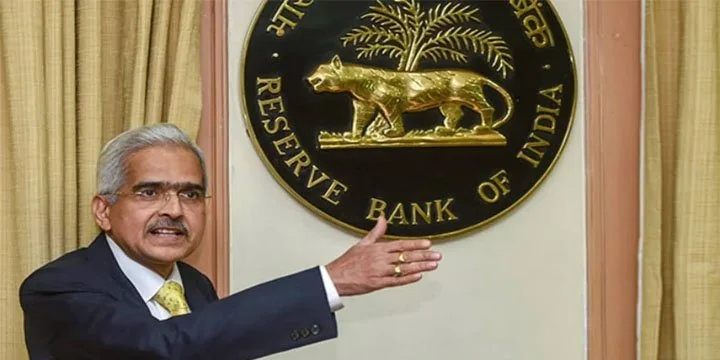
The pause in the Repo rate – the rate at which RBI lends money to banks to meet their short-term funding needs – on Friday (October 6) is for the fourth time since the RBI started hiking Repo rate in May 2022 to check inflation. In April policy, the MPC members, in a surprise move, had unanimously decided to pause the rate hike cycle. Monetary policy transmission is still incomplete after the RBI slashed the Repo rate by 250 basis points since May 2022 and headline inflation is expected to remain above the five per cent level and even touch even 6.2 per cent in the second quarter of this…
Why is the RBI in pause mode?
- The pause in the Repo rate – the rate at which RBI lends money to banks to meet their short-term funding needs – on Friday (October 6) is for the fourth time since the RBI started hiking Repo rate in May 2022 to check inflation.
- In April policy, the MPC members, in a surprise move, had unanimously decided to pause the rate hike cycle.
- Monetary policy transmission is still incomplete after the RBI slashed the Repo rate by 250 basis points since May 2022 and headline inflation is expected to remain above the five per cent level and even touch even 6.2 per cent in the second quarter of this year.
- RBI Governor Shaktikanta Das said the overall inflation outlook is clouded by uncertainty by the fall in kharif sowing, lower reservoir levels, volatile global food and energy prices.
What will happen to lending, deposit rates?
- As the RBI has kept the policy rate unchanged in the October policy, all external benchmark lending rates (EBLR) linked to the repo rate will not rise. It will provide some relief to borrowers as their equated monthly instalments (EMIs) will not increase.
- Banks will also not increase fixed deposit rates in the wake of the pause in Repo rate. The decision to hold deposit rates at the current levels will be driven by surplus liquidity in the banking system due to improvement in low-cost current account and savings account (CASA) balance following the deposit of Rs 2000 banknotes.
- The pause in the Repo rate hike taken by the RBI, if at all provides a breather, should not be seen as a flattening of rate hike cycle as the RBI in its statement has said that it remains focused on the withdrawal of the accommodative stance.
Why has RBI retained the stance of withdrawal of accommodation?
- The RBI has focused on its stance of ‘withdrawal of accommodation’ until all risks to inflation dissipate. An accommodative stance means the central bank is prepared to expand the money supply to boost economic growth.
- Withdrawal of accommodation will mean reducing the money supply in the system which will rein in inflation further. After the RBI withdrew Rs 2,000 notes from circulation, of the total value of Rs 3.56 lakh crore banknotes in circulation as of May 19, 2023, Rs 3.42 lakh crore has been received by the banking system.
What are the risks ahead?
- The six-member rate-setting panel met against a backdrop of growing domestic as well as external economic challenges. These domestic challenges encompass growing risks to consumption demand amid high food inflation, an uneven monsoon adversely affecting kharif crops, higher interest rates and rising global crude oil prices, a Care Ratings report said.
- Since the August 10th policy, international crude oil prices have averaged nearly $89 per barrel, sitting above $85 per barrel factored into RBI estimates (April 2023 policy briefing).The recent spike in crude oil prices and global bond yields will keep MPC vigilant on inflation-growth dynamics
Conclusion- High inflation can be a major risk to macroeconomic stability and sustainable growth. RBI’s recent policy decisions are in line with to tackle that challenge.
Syllabus- GS-3; Economy
Source- Indian Express
- Prelims: Key facts, institutions, locations and terminology in the article.
- Mains: Connect the topic with Economy, Polity & Governance.
- Revision: Use the article headings to prepare concise notes and answer-writing points.
Test your understanding
Questions from this article
Prelims practiceWith reference to RBI’s status quo and an indication that rate cuts would have to wait: What’s in store for borrowers, depositors, consider the following statements:
- The pause in the Repo rate – the rate at which RBI lends money to banks to meet their short-term funding needs – on Friday (October 6) is for the fourth time since the RBI started hiking Repo rate in May 2022 to check…
- In April policy, the MPC members, in a surprise move, had unanimously decided to pause the rate hike cycle.
- Monetary policy transmission is still incomplete after the RBI slashed the Repo rate by 250 basis points since May 2022 and headline inflation is expected to remain above the five per cent level and even touch even 6.2…
Which of the statements given above are correct?
- 1 and 2 only
- 2 and 3 only
- 1 and 3 only
- 1, 2 and 3
View answer
Answer: (d) 1, 2 and 3. All three statements are drawn from the article.
Mains practiceDiscuss the background, key issues and significance of RBI’s status quo and an indication that rate cuts would have to wait: What’s in store for borrowers, depositors for India.
Answer in 250 words.
View answer approach
- Why is the RBI in pause mode?
- What will happen to lending, deposit rates?
- Why has RBI retained the stance of withdrawal of accommodation?
- What are the risks ahead?
Frequently asked questionsFrequently asked questions
Why is Rbi’S Status Quo And An Indication That Rate Cuts Would Have To Wait: What’S In Store For Borrowers, Depositors in the news?
The pause in the Repo rate – the rate at which RBI lends money to banks to meet their short-term funding needs – on Friday (October 6) is for the fourth time since the RBI started hiking Repo rate in May 2022 to check inflation. In April policy, the MPC members, in a surprise move, had unanimously decided to pause the rate hike cycle.
What are the key facts about Rbi’S Status Quo And An Indication That Rate Cuts Would Have To Wait: What’S In Store For Borrowers, Depositors?
Monetary policy transmission is still incomplete after the RBI slashed the Repo rate by 250 basis points since May 2022 and headline inflation is expected to remain above the five per cent level and even touch even 6.2 per cent in the second quarter of this… RBI Governor Shaktikanta Das said the overall inflation outlook is clouded by uncertainty by the fall in kharif sowing, lower reservoir levels, volatile global food and energy prices. What will happen to lending, deposit rates?
Why is Rbi’S Status Quo And An Indication That Rate Cuts Would Have To Wait: What’S In Store For Borrowers, Depositors important for UPSC preparation?
The topic connects current developments with Economy, Polity & Governance and is relevant for both objective revision and analytical answer writing.