UPSC Current Affairs
Organs Transplantation
Context: Recently, Delhi High Court has prescribed an ideal timeline of 6-8 weeks to complete the process of transplanting organs from living donors. The judge held that prolonged delays can cause significant mental and physical anguish for donors, recipients, and their families. It is also directed that the Ministry of Health and Family Welfare to ensure that timelines under The Transplantation of Human Organs and Tissues Act, 1994, and Rules, 2014 are prescribed for all steps in the process of considering organ-donation applications.
VRAuthor Desk
3 min read
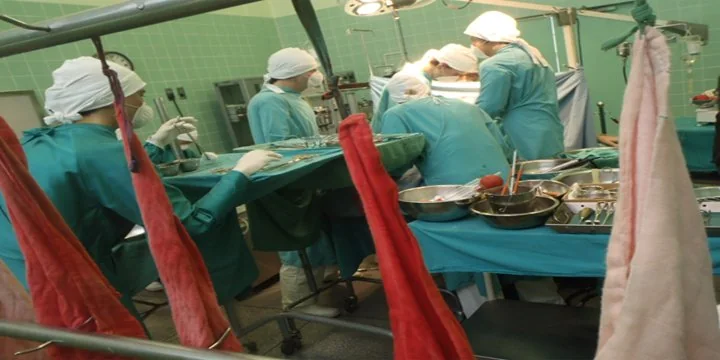
Context: Recently, Delhi High Court has prescribed an ideal timeline of 6-8 weeks to complete the process of transplanting organs from living donors. The judge held that prolonged delays can cause significant mental and physical anguish for donors, recipients, and their families. It is also directed that the Ministry of Health and Family Welfare to ensure that timelines under The Transplantation of Human Organs and Tissues Act, 1994, and Rules, 2014 are prescribed for all steps in the process of considering organ-donation applications.
Context:
- Recently, Delhi High Court has prescribed an ideal timeline of 6-8 weeks to complete the process of transplanting organs from living donors.
- The judge held that prolonged delays can cause significant mental and physical anguish for donors, recipients, and their families.
- It is also directed that the Ministry of Health and Family Welfare to ensure that timelines under The Transplantation of Human Organs and Tissues Act, 1994, and Rules, 2014 are prescribed for all steps in the process of considering organ-donation applications.
What does the 1994 Act say?
- The law governs the transplantation of human organs and tissues in India which include the donation of organs after death.
- It lays down regulations governing healthcare providers and hospitals, and also stipulates penalties for violations.
- A transplant can be either from a pool of organs of deceased persons donated by their relatives or from a living person who is known to the recipient.
- In most cases, the Act allows living donations from close relatives such as parents, siblings, children, spouses, grandparents, and grandchildren.
- Altruistic donations from distant relatives, in-laws, or long-time friends are allowed after additional scrutiny to ensure there is no financial exchange.
- Living donations from close relatives involving Indians or foreigners must be accompanied by documents establishing their identities, family trees, and pictures that prove the donor-recipient relationship.
- Donations from unrelated persons require documents and photographic evidence to prove their long-term association or friendship with the recipient.
- These are examined by an external committee to prevent illegal dealings in organ transplantation.
- Under the act offering to pay for organs or supplying them for payment; initiating, negotiating, or advertising such arrangements; looking for persons to supply organs; and abetting in preparing false documents can attract a jail term up to 10 years and a fine up to Rs 1 crore.
- The Authorisation Committee plays a critical role in the transplantation process.
What is the Authorisation Committee?
- The Authorisation Committee oversees and approves organ transplant procedures involving donors and recipients who are not near relatives.
- This approval is very important especially in cases where organs are donated for reasons of affection, attachment, or other special circumstances, to ensure ethical compliance and prevent illegal practices.
- Under Section 9(5) of the act, the Committee is expected to conduct a thorough inquiry while reviewing applications for transplant approval.
- A crucial aspect of the inquiry is to verify the authenticity of the donor and recipient, and ensure that the donation is not driven by commercial motives.
- Section 24 of the Act allows the Centre to make rules, subject to parliamentary approval, for carrying out the various purposes of the Act.
What do the 2014 Rules say?
- Rule 7 of the 2014 Rules provides for the constitution of the Authorisation Committee and the nature of enquiry and evaluation conducted by it.
- Rule 7(3) says the Committee must ensure there is no commercial transaction involved in cases where the donor and recipient are not near relatives.
- But Rule 7(5) says that if a recipient is in a critical condition and needs transplantation within a week, the hospital can be approached for an expedited evaluation of work.
- Prelims: Key facts, institutions, locations and terminology in the article.
- Mains: Connect the topic with Economy, International Relations, Polity & Governance.
- Revision: Use the article headings to prepare concise notes and answer-writing points.
Test your understanding
Questions from this article
Prelims practiceWith reference to Organs Transplantation, consider the following statements:
- Recently, Delhi High Court has prescribed an ideal timeline of 6-8 weeks to complete the process of transplanting organs from living donors.
- The judge held that prolonged delays can cause significant mental and physical anguish for donors, recipients, and their families.
- It is also directed that the Ministry of Health and Family Welfare to ensure that timelines under The Transplantation of Human Organs and Tissues Act, 1994, and Rules, 2014 are prescribed for all steps in the process of…
Which of the statements given above are correct?
- 1 and 2 only
- 2 and 3 only
- 1 and 3 only
- 1, 2 and 3
View answer
Answer: (d) 1, 2 and 3. All three statements are drawn from the article.
Mains practiceDiscuss the background, key issues and significance of Organs Transplantation for India.
Answer in 250 words.
View answer approach
- Context:
- What does the 1994 Act say?
- What is the Authorisation Committee?
- What do the 2014 Rules say?
Frequently asked questionsFrequently asked questions
Why is Organs Transplantation in the news?
Context: Recently, Delhi High Court has prescribed an ideal timeline of 6-8 weeks to complete the process of transplanting organs from living donors. The judge held that prolonged delays can cause significant mental and physical anguish for donors, recipients, and their families.
What are the key facts about Organs Transplantation?
It is also directed that the Ministry of Health and Family Welfare to ensure that timelines under The Transplantation of Human Organs and Tissues Act, 1994, and Rules, 2014 are prescribed for all steps in the process of considering organ-donation applications. The law governs the transplantation of human organs and tissues in India which include the donation of organs after death. It lays down regulations governing healthcare providers and hospitals, and also stipulates penalties for violations.
Why is Organs Transplantation important for UPSC preparation?
The topic connects current developments with Economy, International Relations, Polity & Governance and is relevant for both objective revision and analytical answer writing.