UPSC Current Affairs
Op Sarvashakti
Context: Recently the Army has launched Operation Sarvashakti in the Rajouri-Poonch sector of Jammu and Kashmir, deploying forces on both sides of the Pir Panjal range to target terrorists against those who have carried out a series of attacks on troops in the… About: There were three major attacks on the security forces in the year 2023, and over the past few years, nearly 20 soldiers have been killed in terrorist ambushes in this area. Most terrorists in the area are believed to be foreigners.
VRAuthor Desk
3 min read
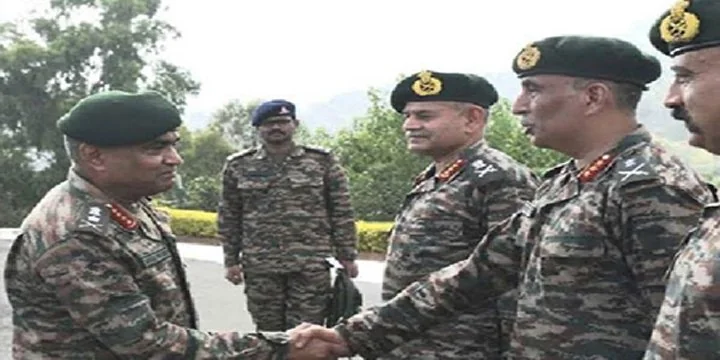
Context: Recently the Army has launched Operation Sarvashakti in the Rajouri-Poonch sector of Jammu and Kashmir, deploying forces on both sides of the Pir Panjal range to target terrorists against those who have carried out a series of attacks on troops in the… About: There were three major attacks on the security forces in the year 2023, and over the past few years, nearly 20 soldiers have been killed in terrorist ambushes in this area. Most terrorists in the area are believed to be foreigners.
Context:
- Recently the Army has launched Operation Sarvashakti in the Rajouri-Poonch sector of Jammu and Kashmir, deploying forces on both sides of the Pir Panjal range to target terrorists against those who have carried out a series of attacks on troops in the area.
About:
- There were three major attacks on the security forces in the year 2023, and over the past few years, nearly 20 soldiers have been killed in terrorist ambushes in this area.
- Most terrorists in the area are believed to be foreigners.
- As part of Operation Sarvashakti at least three brigades of additional troops are being deployed in the sector from various reserve and strike corps formations in order to increase the density of troops.
- Indian forces launched Operation Sarpvinash back in 2003 to flush out terrorists who had infiltrated from across the border and set up camps in the thick forests south of the Pir Panjal range, especially in the Hilkaka area in Poonch.
What was Operation Sarpvinash?
- The Army carried out, from April 2003 onward, its biggest counter-insurgency operation in Jammu and Kashmir following several encounters in the area.
- The roughly three-month-long operation took place in high forested mountains, in an approximately 150 sq km area bound by three major ridges in the area.
- Some 10,000 troops under the 15 Corps and 16 Corps were involved in the operation.
- Mi-17 helicopters were used to airlift soldiers to Hilkaka, a Bakerwal village that had been taken over by terrorists, and also Lancer attack helicopters were used to bust concrete bunkers built by the infiltrators.
- About 100 terrorists were killed in the operation. A large number of weapons of various kinds, dumps of explosives, and stores including some 7,000 kg of ration, medicines, and communication equipment were recovered during the operation.
- Also some 40-50 terrorist hideouts were demolished in the operation.
Why is this area important strategically?
- The areas south of Mendhar leading to the Pir Panjal range through Hilkaka constitute one of the shortest routes of access for infiltrators from across the LoC into the Kashmir valley.
- The terrorists chose this region to set up camps because controlling this area can potentially provide a conduit to personnel in the event of a military operation by the Pakistanis.
- The dense forests and steep mountain slopes offer both adequate cover and visual domination of the area.
- Terrorists were able to merge with the foliage whenever Indian troops carried out searches in the area, and to inflict casualties in case of contact.
- All of these locational advantages for terrorists remain intact to some degree now.
- Prelims: Key facts, institutions, locations and terminology in the article.
- Mains: Connect the topic with Environment, Economy, International Relations.
- Revision: Use the article headings to prepare concise notes and answer-writing points.
Test your understanding
Questions from this article
Prelims practiceWith reference to Op Sarvashakti, consider the following statements:
- Recently the Army has launched Operation Sarvashakti in the Rajouri-Poonch sector of Jammu and Kashmir, deploying forces on both sides of the Pir Panjal range to target terrorists against those who have carried out a…
- There were three major attacks on the security forces in the year 2023, and over the past few years, nearly 20 soldiers have been killed in terrorist ambushes in this area.
- Most terrorists in the area are believed to be foreigners.
Which of the statements given above are correct?
- 1 and 2 only
- 2 and 3 only
- 1 and 3 only
- 1, 2 and 3
View answer
Answer: (d) 1, 2 and 3. All three statements are drawn from the article.
Mains practiceDiscuss the background, key issues and significance of Op Sarvashakti for India.
Answer in 250 words.
View answer approach
- Context:
- About:
- What was Operation Sarpvinash?
- Why is this area important strategically?
Frequently asked questionsFrequently asked questions
Why is Op Sarvashakti in the news?
Context: Recently the Army has launched Operation Sarvashakti in the Rajouri-Poonch sector of Jammu and Kashmir, deploying forces on both sides of the Pir Panjal range to target terrorists against those who have carried out a series of attacks on troops in the… About: There were three major attacks on the security forces in the year 2023, and over the past few years, nearly 20 soldiers have been killed in terrorist ambushes in this area.
What are the key facts about Op Sarvashakti?
Most terrorists in the area are believed to be foreigners. As part of Operation Sarvashakti at least three brigades of additional troops are being deployed in the sector from various reserve and strike corps formations in order to increase the density of troops. Indian forces launched Operation Sarpvinash back in 2003 to flush out terrorists who had infiltrated from across the border and set up camps in the thick forests south of the Pir Panjal range, especially in the Hilkaka area in Poonch.
Why is Op Sarvashakti important for UPSC preparation?
The topic connects current developments with Environment, Economy, International Relations and is relevant for both objective revision and analytical answer writing.