UPSC Current Affairs
MRNA Vaccine and noble prize
Context: The 2023 Nobel Prize in Physiology or Medicine has gone to scientists katalin Kariko and Drew Weissman, whose work enabled the development of mRNA vaccines against Covid-19. What are mRNA vaccines and their importance during covid? Traditionally, vaccines have depended on introducing dead or weakened viruses into the human body, so it can develop antibodies against them.
VRAuthor Desk
3 min read
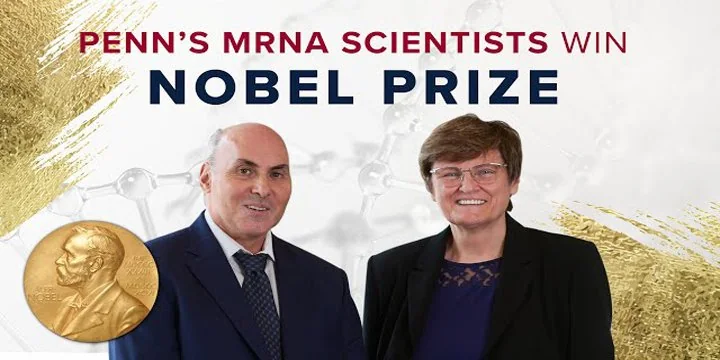
Context: The 2023 Nobel Prize in Physiology or Medicine has gone to scientists katalin Kariko and Drew Weissman, whose work enabled the development of mRNA vaccines against Covid-19. What are mRNA vaccines and their importance during covid? Traditionally, vaccines have depended on introducing dead or weakened viruses into the human body, so it can develop antibodies against them.
Context:
- The 2023 Nobel Prize in Physiology or Medicine has gone to scientists katalin Kariko and Drew Weissman, whose work enabled the development of mRNA vaccines against Covid-19.
What are mRNA vaccines and their importance during covid?
- Traditionally, vaccines have depended on introducing dead or weakened viruses into the human body, so it can develop antibodies against them.
- Thus, when the actual virus infects someone, their body is prepared to fight it.
- As technology evolved, instead of the whole virus, just a part of the viral genetic code, instead of the whole virus, began to be introduced through vaccines.
- But the large-scale development of such vaccines requires cell culture (growing of cells under controlled conditions) and takes time.
- Messenger RNA is a type of RNA that is necessary for protein production.
- Once cells finish making a protein, they quickly break down the mRNA.
- mRNA from vaccines does not enter the nucleus and does not alter DNA.
- mRNA vaccines work by introducing a piece of mRNA that corresponds to a viral protein, usually a small piece of a protein found on the virus’s outer membrane.
- By using this mRNA, cells can produce the viral protein.
- As part of a normal immune response, the immune system recognizes that the protein is foreign and produces specialized proteins called antibodies.
- Antibodies help protect the body against infection by recognizing individual viruses or other pathogens, attaching to them, and marking the pathogens for destruction.
- Once produced, antibodies remain in the body, even after the body has rid itself of the pathogen, so that the immune system can quickly respond if exposed again.
- If a person is exposed to a virus after receiving mRNA vaccination for it, antibodies can quickly recognize it, attach to it, and mark it for destruction before it can cause serious illness.
- Currently vaccines for COVID-19, the disease caused by the SARS-CoV-2 coronavirus, are the only authorized or approved mRNA vaccines.
- These vaccines use mRNA that directs cells to produce copies of a protein on the outside of the coronavirus known as the “spike protein”.
- Researchers are studying how mRNA might be used to develop vaccines for additional diseases.
Noble prize:
- Nobel Prizes are awarded in the fields of Physics, Chemistry, Physiology or Medicine, Literature, and Peace.
- The prize ceremonies take place annually. Each recipient (known as a "laureate") receives a green goldmedal plated with 24 karat gold, a diploma, and a monetary award.
- A prize may not be shared among more than three individuals, although the Nobel Peace Prize can be awarded to organisations of more than three people.
- Although Nobel Prizes are not awarded posthumously, if a person is awarded a prize and dies before receiving it, the prize is presented.
Syllabus: Prelims
- Prelims: Key facts, institutions, locations and terminology in the article.
- Mains: Connect the topic with Economy, International Relations, Polity & Governance.
- Revision: Use the article headings to prepare concise notes and answer-writing points.
Test your understanding
Questions from this article
Prelims practiceWith reference to MRNA Vaccine and noble prize, consider the following statements:
- The 2023 Nobel Prize in Physiology or Medicine has gone to scientists katalin Kariko and Drew Weissman, whose work enabled the development of mRNA vaccines against Covid-19.
- Traditionally, vaccines have depended on introducing dead or weakened viruses into the human body, so it can develop antibodies against them.
- Thus, when the actual virus infects someone, their body is prepared to fight it.
Which of the statements given above are correct?
- 1 and 2 only
- 2 and 3 only
- 1 and 3 only
- 1, 2 and 3
View answer
Answer: (d) 1, 2 and 3. All three statements are drawn from the article.
Mains practiceDiscuss the background, key issues and significance of MRNA Vaccine and noble prize for India.
Answer in 250 words.
View answer approach
- Context:
- What are mRNA vaccines and their importance during covid?
- Noble prize:
Frequently asked questionsFrequently asked questions
Why is Mrna Vaccine And Noble Prize in the news?
Context: The 2023 Nobel Prize in Physiology or Medicine has gone to scientists katalin Kariko and Drew Weissman, whose work enabled the development of mRNA vaccines against Covid-19. What are mRNA vaccines and their importance during covid?
What are the key facts about Mrna Vaccine And Noble Prize?
Traditionally, vaccines have depended on introducing dead or weakened viruses into the human body, so it can develop antibodies against them. Thus, when the actual virus infects someone, their body is prepared to fight it. As technology evolved, instead of the whole virus, just a part of the viral genetic code, instead of the whole virus, began to be introduced through vaccines.
Why is Mrna Vaccine And Noble Prize important for UPSC preparation?
The topic connects current developments with Economy, International Relations, Polity & Governance and is relevant for both objective revision and analytical answer writing.