UPSC Current Affairs
Jaintia tribe
Context: The state government ceremoniously released an official state anthem marking Meghalaya’s 52nd statehood day on January 21 this year. The government’s notices ordered that the anthem not be played as the Standard Operating Procedure (SOP) for the same still being prepared. This ‘hold’ on the state anthem comes amidst an ongoing controversy over the languages that find a place in the song.
VRAuthor Desk
2 min read
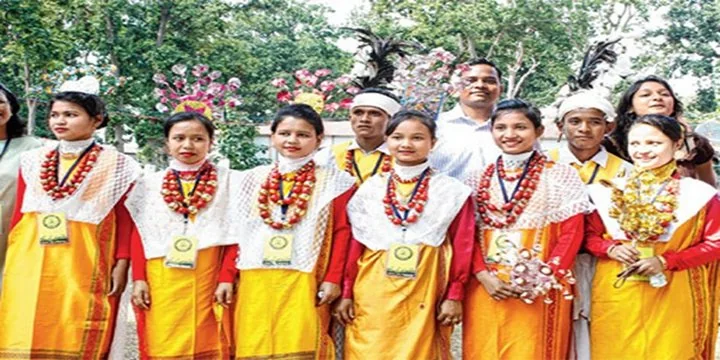
Context: The state government ceremoniously released an official state anthem marking Meghalaya’s 52nd statehood day on January 21 this year. The government’s notices ordered that the anthem not be played as the Standard Operating Procedure (SOP) for the same still being prepared. This ‘hold’ on the state anthem comes amidst an ongoing controversy over the languages that find a place in the song.
Context:
- The state government ceremoniously released an official state anthem marking Meghalaya’s 52nd statehood day on January 21 this year.
- The government’s notices ordered that the anthem not be played as the Standard Operating Procedure (SOP) for the same still being prepared.
- This ‘hold’ on the state anthem comes amidst an ongoing controversy over the languages that find a place in the song.
- The two-minute-long anthem features segments in three languages – Khasi, Garo and English.
- Soon after it was launched, the discontent began over the Jaintia or Pnar language for not being represented in it.
About Jaintia tribe:
- The Pnar tribe also known as Jaintia is a sub-tribal group of the Khasi peoplein Meghalaya, India.
- The Pnar people are matrilineal.
- They speak the Pnar Language which is also known as Jaintia language.
- The language belongs to the Austro-Asiatic language family and is very similar to the Khasi language.
- The Pnar people are natives of West Jaintia Hills and East Jaintia Hills District of Meghalaya, India.
- The original tribal religion of the Pnars is known as Niamtre.
- Religious wise out of 4 lakh Jaintias, around 2.4 lakh (60% of the ethnic population) professed Christian faith of various denominations particularly (Protestant and Catholic) & rest remaining 1.6 lakh (40% of ethnic population) practice their original tribal religion which is called "Ka Niamtre".
- Prelims: Key facts, institutions, locations and terminology in the article.
- Mains: Connect the topic with Polity & Governance.
- Revision: Use the article headings to prepare concise notes and answer-writing points.
Test your understanding
Questions from this article
Prelims practiceWith reference to Jaintia tribe, consider the following statements:
- The state government ceremoniously released an official state anthem marking Meghalaya’s 52nd statehood day on January 21 this year.
- The government’s notices ordered that the anthem not be played as the Standard Operating Procedure (SOP) for the same still being prepared.
- This ‘hold’ on the state anthem comes amidst an ongoing controversy over the languages that find a place in the song.
Which of the statements given above are correct?
- 1 and 2 only
- 2 and 3 only
- 1 and 3 only
- 1, 2 and 3
View answer
Answer: (d) 1, 2 and 3. All three statements are drawn from the article.
Mains practiceDiscuss the background, key issues and significance of Jaintia tribe for India.
Answer in 250 words.
View answer approach
- Context:
- About Jaintia tribe:
- Background and context
- Key facts and institutional framework
- Significance and way forward
Frequently asked questionsFrequently asked questions
Why is Jaintia Tribe in the news?
Context: The state government ceremoniously released an official state anthem marking Meghalaya’s 52nd statehood day on January 21 this year. The government’s notices ordered that the anthem not be played as the Standard Operating Procedure (SOP) for the same still being prepared.
What are the key facts about Jaintia Tribe?
This ‘hold’ on the state anthem comes amidst an ongoing controversy over the languages that find a place in the song. The two-minute-long anthem features segments in three languages – Khasi, Garo and English. Soon after it was launched, the discontent began over the Jaintia or Pnar language for not being represented in it.
Why is Jaintia Tribe important for UPSC preparation?
The topic connects current developments with Polity & Governance and is relevant for both objective revision and analytical answer writing.