UPSC Current Affairs
HPV VACCINE
Recently, an immunisation campaign against Human Papillomavirus (HPV) is likely to be initiated by the government. MORE ABOUT THE NEWS: Under the government’s programme, the girls between the ages of 9 and 14 years will be vaccinated free of cost in three phases over the next three years. Later, the HPV vaccine will be included in the government’s routine immunisation programme for 9-year-old girls.
VRAuthor Desk
2 min read
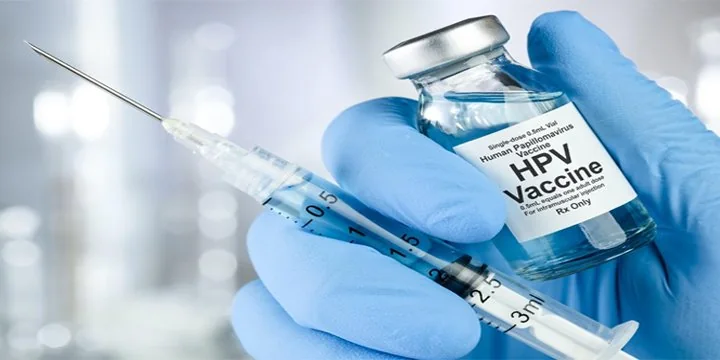
Recently, an immunisation campaign against Human Papillomavirus (HPV) is likely to be initiated by the government. MORE ABOUT THE NEWS: Under the government’s programme, the girls between the ages of 9 and 14 years will be vaccinated free of cost in three phases over the next three years. Later, the HPV vaccine will be included in the government’s routine immunisation programme for 9-year-old girls.
WHY IN NEWS?
- Recently, an immunisation campaign against Human Papillomavirus (HPV) is likely to be initiated by the government.
MORE ABOUT THE NEWS:
- Under the government’s programme, the girls between the ages of 9 and 14 years will be vaccinated free of cost in three phases over the next three years.
- Later, the HPV vaccine will be included in the government’s routine immunisation programme for 9-year-old girls.
ABOUT HPV:
- The HPV infection is a type of viral infection which commonly causes skin or mucous membrane growths (warts).
- More than 100 varieties of human papillomavirus (HPV) are reported till yet.
- Few human papillomavirus (HPV) infection can cause warts, and some can cause even different types of cancer.
- The infections are transmitted sexually or through other skin-to-skin contact.
- Vaccines help in protecting against the strains of HPV, which are most likely to cause genital warts or cervical cancer.
- Around 95% of all cervical cancer cases are associated to the persistent infection with certain high-risk strains of HPV.
- The vaccines can protect an already HPV infected person from other types of HPV infections.
ABOUT HPV VACCINATION PROGRAMME:
- The quadrivalent vaccines prevents the entry of four of the most commons types of HPV 16, 18, 6 and 11, which are reposnsible for infections, genital warts, and eventually cancers.
- The indigenously developed Cervavac vaccine by the Serum Institute of India will be used in the government campaign.
- Universal immunisation of girls also protects the transmission of the infection to boys and protects them from other cancers.
- As the vaccine is preventive in nature, thus it has to be administered in adolescent girls before they are sexually active.
- The Cervavac vaccine is 97% effective in preventing cervical cancer.
- Prelims: Key facts, institutions, locations and terminology in the article.
- Mains: Connect the topic with Polity & Governance, Health.
- Revision: Use the article headings to prepare concise notes and answer-writing points.
Test your understanding
Questions from this article
Prelims practiceWith reference to HPV VACCINE, consider the following statements:
- Recently, an immunisation campaign against Human Papillomavirus (HPV) is likely to be initiated by the government.
- Under the government’s programme, the girls between the ages of 9 and 14 years will be vaccinated free of cost in three phases over the next three years.
- Later, the HPV vaccine will be included in the government’s routine immunisation programme for 9-year-old girls.
Which of the statements given above are correct?
- 1 and 2 only
- 2 and 3 only
- 1 and 3 only
- 1, 2 and 3
View answer
Answer: (d) 1, 2 and 3. All three statements are drawn from the article.
Mains practiceDiscuss the background, key issues and significance of HPV VACCINE for India.
Answer in 250 words.
View answer approach
- WHY IN NEWS?
- MORE ABOUT THE NEWS:
- ABOUT HPV:
- ABOUT HPV VACCINATION PROGRAMME:
Frequently asked questionsFrequently asked questions
Why is Hpv Vaccine in the news?
Recently, an immunisation campaign against Human Papillomavirus (HPV) is likely to be initiated by the government. MORE ABOUT THE NEWS: Under the government’s programme, the girls between the ages of 9 and 14 years will be vaccinated free of cost in three phases over the next three years.
What are the key facts about Hpv Vaccine?
Later, the HPV vaccine will be included in the government’s routine immunisation programme for 9-year-old girls. ABOUT HPV: The HPV infection is a type of viral infection which commonly causes skin or mucous membrane growths (warts). More than 100 varieties of human papillomavirus (HPV) are reported till yet.
Why is Hpv Vaccine important for UPSC preparation?
The topic connects current developments with Polity & Governance, Health and is relevant for both objective revision and analytical answer writing.