UPSC Current Affairs
How Are Symbols Allotted to Political Parties?
The Naam Tamilar Katchi (NTK) that secured 9% and 6.5% votes in Tamil Nadu in 2019 and 2021 respectively, has been allotted a new symbol (Mike). The Viduthalai Chiruthaigal Katchi (VCK) that secured 09% and 0.99% votes in 2019 and 2021 has been denied a common symbol (Pot). This has raised questions about the allotment of symbols to ‘registered unrecognised parties’.
VRAuthor Desk
5 min read
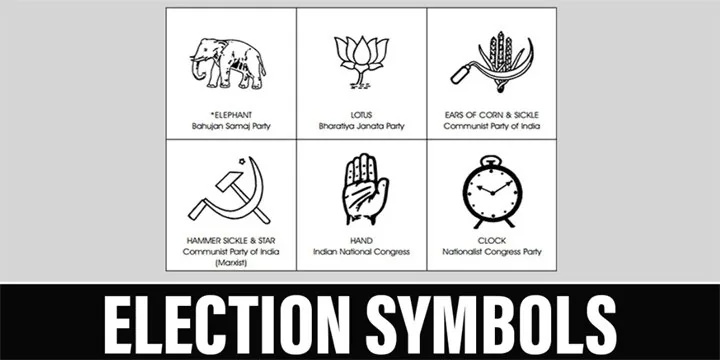
The Naam Tamilar Katchi (NTK) that secured 9% and 6.5% votes in Tamil Nadu in 2019 and 2021 respectively, has been allotted a new symbol (Mike). The Viduthalai Chiruthaigal Katchi (VCK) that secured 09% and 0.99% votes in 2019 and 2021 has been denied a common symbol (Pot). This has raised questions about the allotment of symbols to ‘registered unrecognised parties’.
- The Naam Tamilar Katchi (NTK) that secured 9% and 6.5% votes in Tamil Nadu in 2019 and 2021 respectively, has been allotted a new symbol (Mike).
- The Viduthalai Chiruthaigal Katchi (VCK) that secured 09% and 0.99% votes in 2019 and 2021 has been denied a common symbol (Pot).
This has raised questions about the allotment of symbols to ‘registered unrecognised parties’.
WHO ISSUES SYMBOLS?
Election Commission of India. A party is recognised as a
‘national’ or ‘state’ party under the provisions of the
Election Symbols (Reservation and Allotment) Order, 1968 (Symbols Order) by the Election Commission of India (ECI).
WHAT IS THE CRITERIA TO BECOME A STATE PARTY?
A registered party is
recognised as a state party only if it
fulfils any one of the five conditions listed below:
- A party should secure at least 6% of valid votes polled in an election to the state legislative assembly and win at least 2 seats in that state assembly.
- A party should secure at least 6% of valid votes polled in an election to Lok Sabha and win at least 1 seat in Lok Sabha.
- A party should win at least 3% of the total number of seats or a minimum of three seats in the Legislative Assembly, whichever is higher.
- A party should win at least one seat in the Lok Sabha for every 25 seats or any fraction thereof allotted to that State.
- Under the liberalised criteria, one more clause that it will be eligible for recognition as state party if it secures 8% or more of the total valid votes polled in the state.
WHAT IS THE CRITERIA TO BECOME A NATIONAL PARTY?
A registered party is recognised as a national party only if it fulfils any one of the three conditions listed below:
- The party win 2% of seats in the Lok Sabha from at least three different states.
- At a general election to Lok Sabha or Legislative Assembly, the party polls 6% of votes in any four or more states and in addition it wins four Lok Sabha seats.
- The party gets recognition as a state party in four states.
WHAT ARE THE RULES FOR ALLOTMENT OF SYMBOLS?
- As per the Election Symbols (Reservation and Allotment) Order, 1968, the Election Commission allots symbols for anyone contesting in polls.
- A person contesting on behalf of a recognised political party will inherit the party's symbol.
- An independent candidate or someone contesting on behalf of an unrecognised political party has to approach the Commission and get a symbol allotted from the list of 'free' symbols available.
- A candidate will have to provide three symbols from the free list at the time of submission of nomination papers, one of which will be allocated to him/her.
- Any choice other than from the EC’s list will be summarily rejected.
- In the case of a recognised political party, the Commission allows it to 'reserve' a symbol.
- For example, if a political party recognised in a particular State wishes to contest in elections in another State, it can ‘reserve’ the symbol being used by it.
- The Commission will oblige, provided the symbol is not being used by anyone else.
- Two or more recognised political parties can have the same symbol provided they are not contenders in the same state or Union Territory.
- Both Federal Party of Manipur and Dravida Munnetra Kazhagam (DMK) use ‘Rising Sun’ as their symbol.
- But if one of the parties wish to open their account in the other State, it will have to contest on a different symbol.
WHAT IS THE CRITERIA FOR DERECOGNITION OF A PARTY?
The ECI may also
derecognise a political party if it has:
- Not polled at least 6% of votes or
- Won two seats in the State elections.
In case of a national party:
- It should have polled minimum 6% votes and 2 MLAs in at least four States.
Until 1997, unrecognised parties would lose their symbols. Later, the EC modified its order to allow them to retain its symbol.
WHAT HAPPENS IN CASE OF A PARTY SPLIT?
In case a recognised political party splits,
the Commission decides which faction can use the symbol.
The
Commission may also choose to freeze the symbol and ask both factions to contest in fresh symbols.
WHAT HAPPENED IN THE CURRENT CASE?
Rule 10 B of the Symbols Order provides that the
concession of a common free symbol shall be available for a
registered unrecognised party for
2 general elections. Furthermore a
party shall be eligible for a common symbol in any subsequent General Election
if it had secured at least 1% votes polled in the State in the previous elections.
Such
unrecognised party will have to
apply for a symbol every time. The symbols are allotted thereafter on
First come first serve basis.
- Although NTK secured more that 1% votes, but the symbol on which it contested earlier (Ganna Kisan) has been allotted to Bhartiya Praja Aikyata Party on first come first serve basis)
- The VCK was denied allotment of a common symbol because it failed to secure 1% of votes polled in the previous elections to legislative assembly.
- Prelims: Key facts, institutions, locations and terminology in the article.
- Mains: Connect the topic with Polity & Governance.
- Revision: Use the article headings to prepare concise notes and answer-writing points.
Test your understanding
Questions from this article
Prelims practiceWith reference to How Are Symbols Allotted to Political Parties?, consider the following statements:
- The Naam Tamilar Katchi (NTK) that secured 9% and 6.5% votes in Tamil Nadu in 2019 and 2021 respectively, has been allotted a new symbol (Mike).
- The Viduthalai Chiruthaigal Katchi (VCK) that secured 09% and 0.99% votes in 2019 and 2021 has been denied a common symbol (Pot).
- A party should secure at least 6% of valid votes polled in an election to the state legislative assembly and win at least 2 seats in that state assembly.
Which of the statements given above are correct?
- 1 and 2 only
- 2 and 3 only
- 1 and 3 only
- 1, 2 and 3
View answer
Answer: (d) 1, 2 and 3. All three statements are drawn from the article.
Mains practiceDiscuss the background, key issues and significance of How Are Symbols Allotted to Political Parties? for India.
Answer in 250 words.
View answer approach
- WHAT ARE THE RULES FOR ALLOTMENT OF SYMBOLS?
- WHAT HAPPENED IN THE CURRENT CASE?
- Background and context
- Key facts and institutional framework
- Significance and way forward
Frequently asked questionsFrequently asked questions
Why is How Are Symbols Allotted To Political Parties in the news?
The Naam Tamilar Katchi (NTK) that secured 9% and 6.5% votes in Tamil Nadu in 2019 and 2021 respectively, has been allotted a new symbol (Mike). The Viduthalai Chiruthaigal Katchi (VCK) that secured 09% and 0.99% votes in 2019 and 2021 has been denied a common symbol (Pot).
What are the key facts about How Are Symbols Allotted To Political Parties?
This has raised questions about the allotment of symbols to ‘registered unrecognised parties’. A party is recognised as a ‘national’ or ‘state’ party under the provisions of the Election Symbols (Reservation and Allotment) Order, 1968 (Symbols Order) by the Election Commission of India (ECI). WHAT IS THE CRITERIA TO BECOME A STATE PARTY?
Why is How Are Symbols Allotted To Political Parties important for UPSC preparation?
The topic connects current developments with Polity & Governance and is relevant for both objective revision and analytical answer writing.