UPSC Current Affairs
Heatwaves in India
India Meteorological Department (IMD) on Monday announced above-average heat wave days for India, impacting southern, central, east, and northwestern regions. The announcement comes even as India is already struggling to keep up with its power demand. IMPACT OF INDIA’S STRUGGLE TO KEEP UP WITH ITS POWER DEMAND: A Reuters analysis reported that India’s hydroelectricity output fell at the steepest pace in at least 38 years.
VRAuthor Desk
3 min read
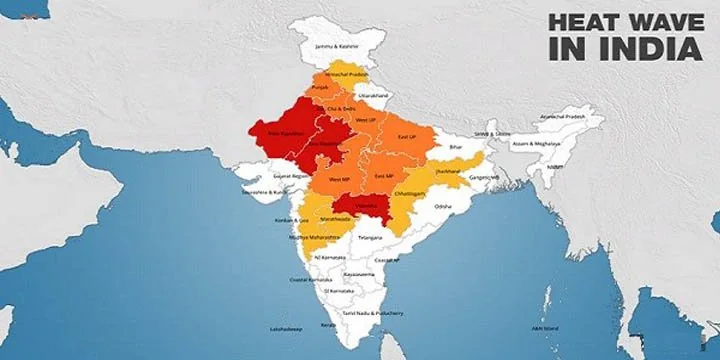
India Meteorological Department (IMD) on Monday announced above-average heat wave days for India, impacting southern, central, east, and northwestern regions. The announcement comes even as India is already struggling to keep up with its power demand. IMPACT OF INDIA’S STRUGGLE TO KEEP UP WITH ITS POWER DEMAND: A Reuters analysis reported that India’s hydroelectricity output fell at the steepest pace in at least 38 years.
India Meteorological Department (IMD) on Monday announced
above-average heat wave days for India, impacting
southern, central, east, and northwestern regions. The announcement comes even as
India is already struggling to keep up with its power demand.
IMPACT OF INDIA’S STRUGGLE TO KEEP UP WITH ITS POWER DEMAND:
A Reuters analysis reported that India’s hydroelectricity output fell at the steepest pace in at least 38 years.
Hydroelectric output will remain low in the coming months, leading to a
greater dependence on coal at a time when India has, in its
Nationally Determined Contributions under the Paris Agreement, promised to
reduce the emissions intensity of its GDP by 45% by 2030, compared to the 2005 level.
THE FORECAST
- The IMD forecast has said most of India will experience above-normal maximum and minimum temperatures.
- The El Niño event, which causes weak rainfall and more heat over India, has weakened since the beginning of the year, the forecast noted. However, moderate El Niño conditions still exist over the equatorial Pacific, increasing the sea surface temperature.
- The heat redistribution effects airflows above the ocean. Since the Pacific Ocean covers almost a third of the earth, changes in its temperature and changes in wind patterns can disrupt weather worldwide.
- January 2024 was the warmest in 175 years, the U.S. National Oceanic and Atmospheric Administration noted. The average global land and ocean surface temperature was also higher.
- The El Niño is, however, likely to weaken during the upcoming season. Some models have even predicted the possibility of La Niña conditions developing during the monsoon, which can intensify rainfall across South Asia.
WHAT IS A HEATWAVE?
- A period of abnormally high temperatures is called a heat wave.
- The IMD declares a heat wave if the maximum temperature of a weather station reaches at least 40 degrees C in the plains and at least 30 degrees C in hilly regions, with a departure of around 5-6.4 degrees C from the normal maximum temperature.
- The IMD can also declare a heat wave if the actual maximum temperature crosses 45 degrees C, and a ‘severe heat wave’ if it crosses 47 degrees C.
- Qualitatively, a heat wave can also occur when the temperature of the air becomes fatal to the human body.
Heat waves in India are typically recorded between
March and June and tend to
peak in May.
WHAT IS CAUSING AN INCREASE IN HEAT WAVE DAYS?
- A study published in the journal PLOS Climate in April 2023 found heat waves all over the world are getting more “recurrent, intense and lethal” due to climate change.
- The ongoing El Niño weather condition also contributes to higher-than-usual temperatures, driving an increased occurrence of heat waves.
WHAT ARE THE PROBABLE IMPACTS OF HEATWAVES?
An increase in the number of heat-wave days and their intensity
can exact steep costs affecting
livelihoods, food production, disease spread, and more, the study noted.
Higher temperatures can affect
human health by
causing heat stress and
even death, according to the
World Health Organization.
- Prelims: Key facts, institutions, locations and terminology in the article.
- Mains: Connect the topic with Environment, International Relations, Polity & Governance.
- Revision: Use the article headings to prepare concise notes and answer-writing points.
Test your understanding
Questions from this article
Prelims practiceWith reference to Heatwaves in India, consider the following statements:
- The IMD forecast has said most of India will experience above-normal maximum and minimum temperatures.
- The El Niño event, which causes weak rainfall and more heat over India, has weakened since the beginning of the year, the forecast noted. However, moderate El Niño conditions still exist over the equatorial Pacific…
- The heat redistribution effects airflows above the ocean. Since the Pacific Ocean covers almost a third of the earth, changes in its temperature and changes in wind patterns can disrupt weather worldwide.
Which of the statements given above are correct?
- 1 and 2 only
- 2 and 3 only
- 1 and 3 only
- 1, 2 and 3
View answer
Answer: (d) 1, 2 and 3. All three statements are drawn from the article.
Mains practiceDiscuss the background, key issues and significance of Heatwaves in India for India.
Answer in 250 words.
View answer approach
- THE FORECAST
- WHAT IS A HEATWAVE?
- WHAT IS CAUSING AN INCREASE IN HEAT WAVE DAYS?
Frequently asked questionsFrequently asked questions
Why is Heatwaves In India in the news?
India Meteorological Department (IMD) on Monday announced above-average heat wave days for India, impacting southern, central, east, and northwestern regions. The announcement comes even as India is already struggling to keep up with its power demand.
What are the key facts about Heatwaves In India?
IMPACT OF INDIA’S STRUGGLE TO KEEP UP WITH ITS POWER DEMAND: A Reuters analysis reported that India’s hydroelectricity output fell at the steepest pace in at least 38 years. Hydroelectric output will remain low in the coming months, leading to a greater dependence on coal at a time when India has, in its Nationally Determined Contributions under the Paris Agreement, promised to reduce the emissions intensity of its GDP by 45% by… THE FORECAST The IMD forecast has said most of India will experience above-normal maximum and minimum temperatures.
Why is Heatwaves In India important for UPSC preparation?
The topic connects current developments with Environment, International Relations, Polity & Governance and is relevant for both objective revision and analytical answer writing.