UPSC Current Affairs
GENDER PAY GAP
World Bank Group report found that globally, women earn just 77 cents for every dollar paid to men. This difference has been cited in the past as an example of the “gender pay gap” – women earning less than men on average. Different figures have also been given over the years across various reports, with some critics even disputing the existence of such a gap.
VRAuthor Desk
3 min read
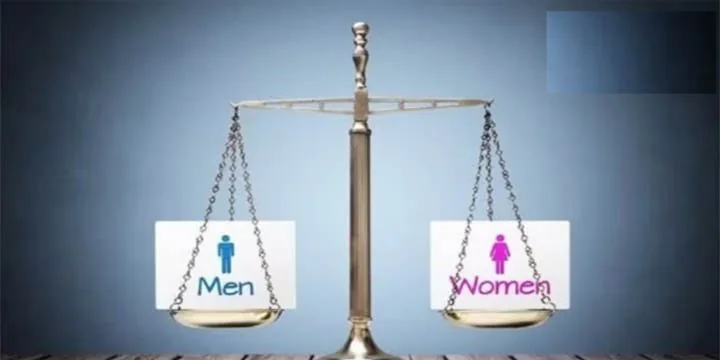
World Bank Group report found that globally, women earn just 77 cents for every dollar paid to men. This difference has been cited in the past as an example of the “gender pay gap” – women earning less than men on average. Different figures have also been given over the years across various reports, with some critics even disputing the existence of such a gap.
World Bank Group report found that globally,
women earn just 77 cents for every dollar paid to men.
This difference has been cited in the past as an example of the
“gender pay gap” – women earning less than men on average.
Different figures have also been given over the years across various reports, with some critics even disputing the existence of such a gap. The
International Labour Organisation terms the
gender pay gap as a “measurable indicator” of inequality between women and men.
HOW IS THE GENDER PAY GAP CALCULATED?
According to the ILO, the gender pay gap is defined as
the gap between the average wage level of all women and all men working in the labour market for a monthly salary, hourly or daily wage.
“this gap is not the wage gap between a man and a woman with the same observable characteristics, doing the same work; it is the difference between the average wage levels of all working women and men,”
Therefore, it is
distinct from the concept of
“equal pay for equal work”, which says if women and men have the same qualifications and do the same work, they need to be paid equally.
WHAT EXPLAINS THE GENDER PAY GAP?
- The simple fact that women are not involved in paying jobs as much as men are, owing to notions about gender roles.
- The labour force participation rate gives an idea about this. It is the number of people looking for work or working already and above 15 years of age, divided by the total population.
- According to ILO, the current global labour force participation rate for women is just under 47%. For men, it is 72%. In India, as per the 2011 Census, the workforce participation rate for women is 51% against 53.26% for men.
- Other institutional and socio-economic issues – the view that men should be breadwinners, lower investments in women’s education, and issues of safety in commute and at the workplace.
- The second factor is the type of jobs women are employed in, once they join the workforce.
- ILO’s Women in Business and Management report found that “Far fewer women than men are in management and leadership positions, especially at higher levels.
- When women are managers, they tend to be more concentrated in management support functions such as human resources and financial administration than in more strategic roles. This brings down the average salary of female managers compared to that of male managers.
- In as many as 73 countries (based on 2018 data), women outnumber men as part-time workers. Women’s opportunities for full-time employment may be more limited than men’s, resulting in women taking part-time employment.
- Prelims: Key facts, institutions, locations and terminology in the article.
- Mains: Connect the topic with Economy, Polity & Governance.
- Revision: Use the article headings to prepare concise notes and answer-writing points.
Test your understanding
Questions from this article
Prelims practiceWith reference to GENDER PAY GAP, consider the following statements:
- The simple fact that women are not involved in paying jobs as much as men are, owing to notions about gender roles. The labour force participation rate gives an idea about this. It is the number of people looking for…
- The labour force participation rate gives an idea about this. It is the number of people looking for work or working already and above 15 years of age, divided by the total population.
- According to ILO, the current global labour force participation rate for women is just under 47%. For men, it is 72%. In India, as per the 2011 Census, the workforce participation rate for women is 51% against 53.26% for…
Which of the statements given above are correct?
- 1 and 2 only
- 2 and 3 only
- 1 and 3 only
- 1, 2 and 3
View answer
Answer: (d) 1, 2 and 3. All three statements are drawn from the article.
Mains practiceDiscuss the background, key issues and significance of GENDER PAY GAP for India.
Answer in 250 words.
View answer approach
- WHAT EXPLAINS THE GENDER PAY GAP?
- Background and context
- Key facts and institutional framework
- Significance and way forward
Frequently asked questionsFrequently asked questions
Why is Gender Pay Gap in the news?
World Bank Group report found that globally, women earn just 77 cents for every dollar paid to men. This difference has been cited in the past as an example of the “gender pay gap” – women earning less than men on average.
What are the key facts about Gender Pay Gap?
Different figures have also been given over the years across various reports, with some critics even disputing the existence of such a gap. The International Labour Organisation terms the gender pay gap as a “measurable indicator” of inequality between women and men. HOW IS THE GENDER PAY GAP CALCULATED?
Why is Gender Pay Gap important for UPSC preparation?
The topic connects current developments with Economy, Polity & Governance and is relevant for both objective revision and analytical answer writing.