UPSC Current Affairs
Centre plans to replace the Indian Stamp Act, 1899
Context: Recently the Centre has proposed to repeal the Indian Stamp Act, 1899 and bringing in a new law for the stamp duty regime in the country. In accordance with the proposal, the Ministry of Finance invited suggestions on the draft ‘Indian Stamp Bill, 2023’ from the public on Jan 17. A stamp duty is generally a government tax, which is levied to register documents, like an agreement or transaction paper between two or more parties, with the registrar.
VRAuthor Desk
3 min read
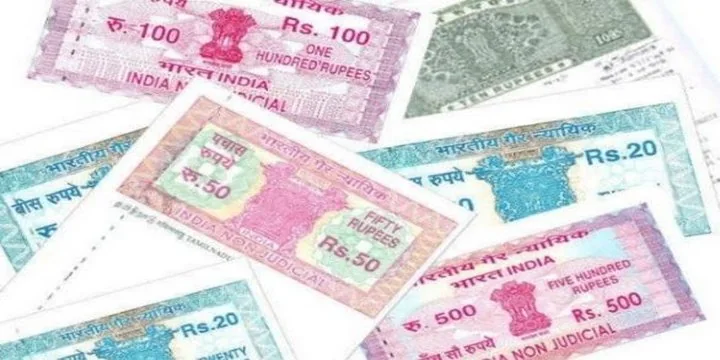
Context: Recently the Centre has proposed to repeal the Indian Stamp Act, 1899 and bringing in a new law for the stamp duty regime in the country. In accordance with the proposal, the Ministry of Finance invited suggestions on the draft ‘Indian Stamp Bill, 2023’ from the public on Jan 17. A stamp duty is generally a government tax, which is levied to register documents, like an agreement or transaction paper between two or more parties, with the registrar.
Context:
- Recently the Centre has proposed to repeal the Indian Stamp Act, 1899 and bringing in a new law for the stamp duty regime in the country.
- In accordance with the proposal, the Ministry of Finance invited suggestions on the draft ‘Indian Stamp Bill, 2023’ from the public on Jan 17.
What is stamp duty?
- A stamp duty is generally a government tax, which is levied to register documents, like an agreement or transaction paper between two or more parties, with the registrar.
- Generally the amount specified is fixed based on the document’s nature or is charged at a certain percentage of the agreement value stated in the document.
- Stamp duties can be levied on bills of exchange, cheques, promissory notes, bills of lading, letters of credit, policies of insurance, transfer of shares, debentures, proxies and receipts.
- It is accepted as valid evidence in a court of law.
- Under Article 268 of the Constitution it is important to note that Stamp duties are levied by the Centre but appropriated by the concerned states within their territories.
Why is the Indian Stamp Bill, 2023 being proposed?
- According to the statement released by the Finance Ministry, several provisions of the Indian Stamp Act, 1899 have now become “redundant” or “inoperative”.
- For example, there is a lack of provisions for digital e-stamping and a lack of uniform legislation for all Indian states regarding stamp duties.
- The 1899 Act extended to 30 states and Union Territories combined while six states followed their own stamp acts and rules.
- Therefore, the ministry has proposed repealing the existing Act and substituting it with new legislation to reflect the current realities and objectives.
What are the notable provisions of the draft Bill?
- The draft Bill has introduced provisions for digital e-stamping.
- Electronic stamp or e-stamp refers to an electronically generated impression denoting the payment of stamp duty by electronic means or otherwise, according to Section 2 (18) of the Bill.
- There are also provisions for digital signatures.
- Under Section 2 (17) of the Bill states that the words “executed” and “execution”, used for instruments, will mean “signed” and “signature” and include attribution of electronic records and electronic signatures, as defined under the Information Technology (IT) Act, 2000.
- The IT Act defines “electronic records” as data, record or data generated, image or sound stored, received or sent in an electronic form or micro film or computer generated microfiche.
- Digital or electronic signature signifies to the authentication of any electronic record by a subscriber through an electronic method or procedure.
- The draft Bill also proposes to raise penalties.
- It seeks to increase the maximum penalty amount from Rs 5,000 to Rs 25,000 for contravening any provisions of the law and impose Rs 1,000 per day for repeated offences.
- Prelims: Key facts, institutions, locations and terminology in the article.
- Mains: Connect the topic with Economy, International Relations, Polity & Governance.
- Revision: Use the article headings to prepare concise notes and answer-writing points.
Test your understanding
Questions from this article
Prelims practiceWith reference to Centre plans to replace the Indian Stamp Act, 1899, consider the following statements:
- Recently the Centre has proposed to repeal the Indian Stamp Act, 1899 and bringing in a new law for the stamp duty regime in the country.
- In accordance with the proposal, the Ministry of Finance invited suggestions on the draft ‘Indian Stamp Bill, 2023’ from the public on Jan 17.
- A stamp duty is generally a government tax, which is levied to register documents, like an agreement or transaction paper between two or more parties, with the registrar.
Which of the statements given above are correct?
- 1 and 2 only
- 2 and 3 only
- 1 and 3 only
- 1, 2 and 3
View answer
Answer: (d) 1, 2 and 3. All three statements are drawn from the article.
Mains practiceDiscuss the background, key issues and significance of Centre plans to replace the Indian Stamp Act, 1899 for India.
Answer in 250 words.
View answer approach
- Context:
- What is stamp duty?
- Why is the Indian Stamp Bill, 2023 being proposed?
- What are the notable provisions of the draft Bill?
Frequently asked questionsFrequently asked questions
Why is Centre Plans To Replace The Indian Stamp Act, 1899 in the news?
Context: Recently the Centre has proposed to repeal the Indian Stamp Act, 1899 and bringing in a new law for the stamp duty regime in the country. In accordance with the proposal, the Ministry of Finance invited suggestions on the draft ‘Indian Stamp Bill, 2023’ from the public on Jan 17.
What are the key facts about Centre Plans To Replace The Indian Stamp Act, 1899?
A stamp duty is generally a government tax, which is levied to register documents, like an agreement or transaction paper between two or more parties, with the registrar. Generally the amount specified is fixed based on the document’s nature or is charged at a certain percentage of the agreement value stated in the document. Stamp duties can be levied on bills of exchange, cheques, promissory notes, bills of lading, letters of credit, policies of insurance, transfer of shares, debentures, proxies and receipts.
Why is Centre Plans To Replace The Indian Stamp Act, 1899 important for UPSC preparation?
The topic connects current developments with Economy, International Relations, Polity & Governance and is relevant for both objective revision and analytical answer writing.