UPSC Current Affairs
Cabinet Committees
BJP — with 240 seats in Lok Sabha — will not cede the four big portfolios of Home, Defence, Finance, and External Affairs to its alliance partners, so it is able to retain its hold on the Cabinet Committees. LIST OF IMPORTANT CABINET COMMITTEES: Cabinet Committee of Security (CCS) Cabinet Committee on Economic Affairs (CCEA) and Cabinet Committee on Political Affairs (CCPA) WHEN ARE CABINET COMMITTEES FORMED? Once the Union Cabinet is sworn in and ministerial portfolios are allocated, the next step would be the formation of the high-profile Cabinet committees.
VRAuthor Desk
3 min read
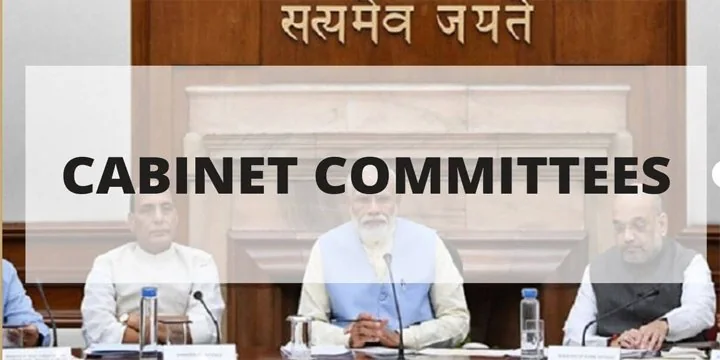
BJP — with 240 seats in Lok Sabha — will not cede the four big portfolios of Home, Defence, Finance, and External Affairs to its alliance partners, so it is able to retain its hold on the Cabinet Committees. LIST OF IMPORTANT CABINET COMMITTEES: Cabinet Committee of Security (CCS) Cabinet Committee on Economic Affairs (CCEA) and Cabinet Committee on Political Affairs (CCPA) WHEN ARE CABINET COMMITTEES FORMED? Once the Union Cabinet is sworn in and ministerial portfolios are allocated, the next step would be the formation of the high-profile Cabinet committees.
BJP — with 240 seats in Lok Sabha — will not cede the four big portfolios of Home, Defence, Finance, and External Affairs to its alliance partners, so it is able to retain its
hold on the Cabinet Committees.
LIST OF IMPORTANT CABINET COMMITTEES:
- Cabinet Committee of Security (CCS)
- Cabinet Committee on Economic Affairs (CCEA) and
- Cabinet Committee on Political Affairs (CCPA)
WHEN ARE CABINET COMMITTEES FORMED?
Once the
Union Cabinet is sworn in and
ministerial portfolios are allocated, the next step would be the formation of the high-profile Cabinet committees.
WHO SETS UP THESE COMMITTEES?
The
Prime Minister sets up these committees with selected members of the Cabinet and assigns specific functions to these committees.
ARE THE NUMBER OF COMMITTEES & THEIR COMPOSITION FIXED?
The Prime Minister
may change the numbers of committees, and
modify the functions assigned to them. The
membership of each committee
varies from three to eight. Usually, only Cabinet ministers are members of these committees. However,
it is not unheard of for non-Cabinet ministers to be members or special invitees to committees.
If the Prime Minister himself is a member of any such committee, he acts as the head of that committee.
HOW MANY CABINET COMMITTEES ARE THERE?
There are eight Cabinet committees at present —
- The Appointments Committee of the Cabinet,
- Cabinet Committee on Economic Affairs,
- Cabinet Committee on Political Affairs,
- Cabinet Committee on Accommodation.
- Cabinet Committee on Security,
- Cabinet Committee on Parliamentary Affairs,
- Cabinet Committee on Employment & Skill Development Introduced in
- Cabinet Committee on Investment and Growth, 2019
All committees
except the cabinet committee on accommodation and cabinet committee on parliamentary affairs are headed by the pm.
THE IMPORTANCE OF CCS
With the
Prime Minister helming it, the CCS has the ministers for
Finance, Defence, Home Affairs and External Affairs as its members. It is responsible for
- Debates, discussions and appointments of/ in the national security bodies.
- Major decisions with respect to the significant appointments, issues of national security, defence expenditure of India are taken by CCS.
- Besides dealing with defence related issues, the CCS also brainstorms on issues relating to law and order and internal security, and policy matters concerning foreign affairs on security-related issues.
- It also considers matters relating to atomic energy.
HAVE ALLIANCE PARTNERS BEEN PART OF CCS?
YES.
- The most notable example was of the H D Deve Gowda government of 1996, Samajwadi Party’s Mulayam Singh Yadav became Defence Minister, P Chidambaram, who had formed the Tamil Maanila Congress earlier that year, became Finance Minister, and CPI’s Indrajit Gupta became Home Minister.
- In 2001, with Vajpayee heading the NDA government, Samata Party founder George Fernandes was appointed the Defence Minister and remained in the post for three years.
- Prelims: Key facts, institutions, locations and terminology in the article.
- Mains: Connect the topic with Economy, International Relations, Defence.
- Revision: Use the article headings to prepare concise notes and answer-writing points.
Test your understanding
Questions from this article
Prelims practiceWith reference to Cabinet Committees, consider the following statements:
- Cabinet Committee of Security (CCS)
- Cabinet Committee on Economic Affairs (CCEA) and
- Cabinet Committee on Political Affairs (CCPA)
Which of the statements given above are correct?
- 1 and 2 only
- 2 and 3 only
- 1 and 3 only
- 1, 2 and 3
View answer
Answer: (d) 1, 2 and 3. All three statements are drawn from the article.
Mains practiceDiscuss the background, key issues and significance of Cabinet Committees for India.
Answer in 250 words.
View answer approach
- LIST OF IMPORTANT CABINET COMMITTEES:
- HAVE ALLIANCE PARTNERS BEEN PART OF CCS?
- YES.
Frequently asked questionsFrequently asked questions
Why is Cabinet Committees in the news?
BJP — with 240 seats in Lok Sabha — will not cede the four big portfolios of Home, Defence, Finance, and External Affairs to its alliance partners, so it is able to retain its hold on the Cabinet Committees. LIST OF IMPORTANT CABINET COMMITTEES: Cabinet Committee of Security (CCS) Cabinet Committee on Economic Affairs (CCEA) and Cabinet Committee on Political Affairs (CCPA) WHEN ARE CABINET COMMITTEES FORMED?
What are the key facts about Cabinet Committees?
Once the Union Cabinet is sworn in and ministerial portfolios are allocated, the next step would be the formation of the high-profile Cabinet committees. The Prime Minister sets up these committees with selected members of the Cabinet and assigns specific functions to these committees. ARE THE NUMBER OF COMMITTEES & THEIR COMPOSITION FIXED?
Why is Cabinet Committees important for UPSC preparation?
The topic connects current developments with Economy, International Relations, Defence and is relevant for both objective revision and analytical answer writing.