UPSC Current Affairs
Bird flu
Context: Recently in a disturbing observation, the Scientific Committee on Antarctic Research (SCAR) has reported the first known cases of a deadly bird flu strain in gentoo penguins. The H5N1 avian influenza virus was detected after nearly 35 penguins were found dead on the Falkland Islands on January 19, 2024. As per the reports the situation appears to be worsening, with over 200 gentoo penguin chicks and several adults found dead as of January 30th.
VRAuthor Desk
2 min read
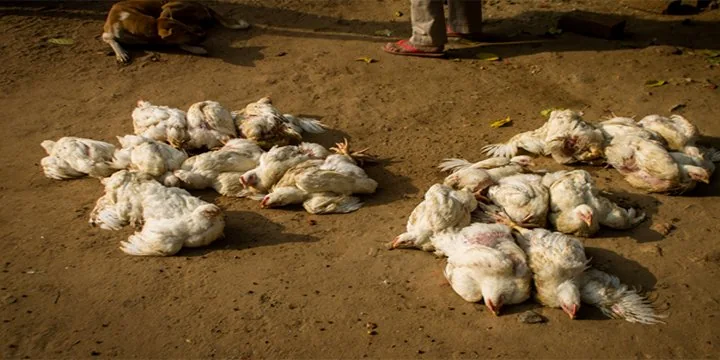
Context: Recently in a disturbing observation, the Scientific Committee on Antarctic Research (SCAR) has reported the first known cases of a deadly bird flu strain in gentoo penguins. The H5N1 avian influenza virus was detected after nearly 35 penguins were found dead on the Falkland Islands on January 19, 2024. As per the reports the situation appears to be worsening, with over 200 gentoo penguin chicks and several adults found dead as of January 30th.
Context:
- Recently in a disturbing observation, the Scientific Committee on Antarctic Research (SCAR) has reported the first known cases of a deadly bird flu strain in gentoo penguins.
- The H5N1 avian influenza virus was detected after nearly 35 penguins were found dead on the Falkland Islands on January 19, 2024.
- As per the reports the situation appears to be worsening, with over 200 gentoo penguin chicks and several adults found dead as of January 30th.
- This marks a significant increase in fatalities, raising alarms about the potential impact on local wildlife populations of the region.
About Gentoo penguins:
- Gentoo penguins which are scientifically known as Pygoscelis papua.
- They are renowned for their streamlined bodies and impressive swimming capabilities, reaching speeds up to 22 miles per hour underwater.
- The gentoo penguin is one of three species in the genus called Pygoscelis.
- The breeding colonies of these gentoo penguins are located on ice-free surfaces.
- The species prefer shallow coastal areas and often nest between tufts of grass.
About Bird Flu:
- Avian influenza or bird flu refers to the disease which is caused by infection with avian (bird) influenza (flu) Type A viruses.
- These viruses naturally spread among wild aquatic birds worldwide and it can infect domestic poultry and other bird and animal species.
- Bird flu viruses do not normally infect humans. However, sporadic human infections with bird flu viruses have occurred over the period.
- Influenza A virus subtype H5N1 (A/H5N1)is a subtype of the influenza A virus that can cause illness in humans and many other species.
- A bird-adapted strain of H5N1, called HPAI A(H5N1)for highly pathogenic avian influenza virus of type A of subtype H5N1, is the highly pathogenic causative agent of H5N1 flu, which is commonly known as avian influenza ("bird flu").
- It is enzootic (maintained in the population) in many bird populations especially in Southeast Asia region.
- Prelims: Key facts, institutions, locations and terminology in the article.
- Mains: Connect the topic with Economy, Polity & Governance, Health.
- Revision: Use the article headings to prepare concise notes and answer-writing points.
Test your understanding
Questions from this article
Prelims practiceWith reference to Bird flu, consider the following statements:
- Recently in a disturbing observation, the Scientific Committee on Antarctic Research (SCAR) has reported the first known cases of a deadly bird flu strain in gentoo penguins.
- The H5N1 avian influenza virus was detected after nearly 35 penguins were found dead on the Falkland Islands on January 19, 2024.
- As per the reports the situation appears to be worsening, with over 200 gentoo penguin chicks and several adults found dead as of January 30th.
Which of the statements given above are correct?
- 1 and 2 only
- 2 and 3 only
- 1 and 3 only
- 1, 2 and 3
View answer
Answer: (d) 1, 2 and 3. All three statements are drawn from the article.
Mains practiceDiscuss the background, key issues and significance of Bird flu for India.
Answer in 250 words.
View answer approach
- Context:
- About Gentoo penguins:
- About Bird Flu:
Frequently asked questionsFrequently asked questions
Why is Bird Flu in the news?
Context: Recently in a disturbing observation, the Scientific Committee on Antarctic Research (SCAR) has reported the first known cases of a deadly bird flu strain in gentoo penguins. The H5N1 avian influenza virus was detected after nearly 35 penguins were found dead on the Falkland Islands on January 19, 2024.
What are the key facts about Bird Flu?
As per the reports the situation appears to be worsening, with over 200 gentoo penguin chicks and several adults found dead as of January 30th. This marks a significant increase in fatalities, raising alarms about the potential impact on local wildlife populations of the region. About Gentoo penguins: Gentoo penguins which are scientifically known as Pygoscelis papua.
Why is Bird Flu important for UPSC preparation?
The topic connects current developments with Economy, Polity & Governance, Health and is relevant for both objective revision and analytical answer writing.