UPSC Current Affairs
Bihar caste survey data out: What it says
The “forward” castes or “General” category is only 15.5% of the population, the survey data, which were released by the state Development Commissioner Are the data unexpected? The share of the OBC population, in both Bihar and elsewhere, has been widely believed to be much more 27%, which is the quantum of reservation that these castes get in government jobs and admissions to educational institutions. The Mandal Commission, which presented its report in 1980, had put the share of the OBC population in the country as a whole at 52%.
VRAuthor Desk
3 min read
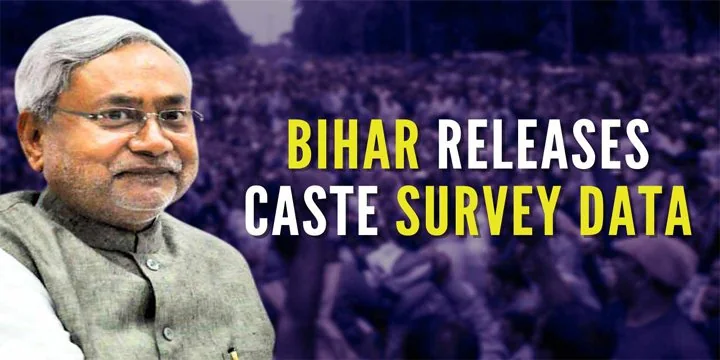
The “forward” castes or “General” category is only 15.5% of the population, the survey data, which were released by the state Development Commissioner Are the data unexpected? The share of the OBC population, in both Bihar and elsewhere, has been widely believed to be much more 27%, which is the quantum of reservation that these castes get in government jobs and admissions to educational institutions. The Mandal Commission, which presented its report in 1980, had put the share of the OBC population in the country as a whole at 52%.
What about the forward castes?
The “forward” castes or “General” category is only 15.5% of the population, the survey data, which were released by the state Development Commissioner
Are the data unexpected?
- The share of the OBC population, in both Bihar and elsewhere, has been widely believed to be much more 27%, which is the quantum of reservation that these castes get in government jobs and admissions to educational institutions.
- The Mandal Commission, which presented its report in 1980, had put the share of the OBC population in the country as a whole at 52%.
- The OBCs have long argued that even with reservations, the so-called forward castes have cornered a disproportionately large share of government jobs in comparison to their population.
What is the political import of this survey?
- The caste survey is a key component of Chief Minister Nitish Kumar’s bid political strategy, not only to stay relevant in state politics but to also play a leading role in the national opposition to the BJP.
- The Chief Minister has woven his politics explicitly around the caste survey since 2022. While issues like the Uniform Civil Code and the inauguration of the Ram Temple in Ayodhya in January next year are likely to play a major role in the BJP’s Lok Sabha campaign, Nitish is likely to use the survey data to give a rallying call for “social justice” and “development with justice”.
- The process of carrying out a caste survey in Bihar has found support from all political parties, including the Bihar BJP. The state unit of the BJP has repeatedly backed the proposals to conduct the caste survey.
How did the survey come about?
- On June 1, 2022, after an all-party meeting, Nitish Kumar announced that “all nine parties (including the Bihar BJP unit) unanimously decided to go ahead with the caste census.”
- The next day, the state’s Council of Ministers approved the proposal to conduct the survey, using Bihar’s own resources and Rs 500 crore from its contingency fund for the exercise.
- The survey’s first phase, which involved counting the total number of households in Bihar, began on January 7 and ended on January 21. The second and final phase kickstarted on April 15 to collect data on people from all castes, religions and economic backgrounds, among other aspects like the number of family members living in and outside the state.
- The new phase was slated to wrap up on May 15 but it was stopped mid-way after the Patna High Court put a stay on it, saying the state government wasn’t competent to carry out the survey. Subsequently, the Bihar government approached the Supreme Court, seeking a stay on the order.
- A huge relief came for the state government on August 1, when the High Court ultimately said the survey was “perfectly valid”. The next day, the caste survey resumed. On August 25, Nitish said the survey had concluded.
Conclusion- The caste survey has highlighted the share of different castes in Bihar based on population . Going forward inclusive development should guide the policy framework.
Syllabus- GS-1; Population
Source- Indian Express
- Prelims: Key facts, institutions, locations and terminology in the article.
- Mains: Connect the topic with Economy, Defence, Polity & Governance.
- Revision: Use the article headings to prepare concise notes and answer-writing points.
Test your understanding
Questions from this article
Prelims practiceWith reference to Bihar caste survey data out: What it says, consider the following statements:
- The share of the OBC population, in both Bihar and elsewhere, has been widely believed to be much more 27%, which is the quantum of reservation that these castes get in government jobs and admissions to educational…
- The Mandal Commission, which presented its report in 1980, had put the share of the OBC population in the country as a whole at 52%.
- The OBCs have long argued that even with reservations, the so-called forward castes have cornered a disproportionately large share of government jobs in comparison to their population.
Which of the statements given above are correct?
- 1 and 2 only
- 2 and 3 only
- 1 and 3 only
- 1, 2 and 3
View answer
Answer: (d) 1, 2 and 3. All three statements are drawn from the article.
Mains practiceDiscuss the background, key issues and significance of Bihar caste survey data out: What it says for India.
Answer in 250 words.
View answer approach
- Are the data unexpected?
- What is the political import of this survey?
- How did the survey come about?
Frequently asked questionsFrequently asked questions
Why is Bihar Caste Survey Data Out: What It Says in the news?
The “forward” castes or “General” category is only 15.5% of the population, the survey data, which were released by the state Development Commissioner Are the data unexpected? The share of the OBC population, in both Bihar and elsewhere, has been widely believed to be much more 27%, which is the quantum of reservation that these castes get in government jobs and admissions to educational institutions.
What are the key facts about Bihar Caste Survey Data Out: What It Says?
The Mandal Commission, which presented its report in 1980, had put the share of the OBC population in the country as a whole at 52%. The OBCs have long argued that even with reservations, the so-called forward castes have cornered a disproportionately large share of government jobs in comparison to their population. What is the political import of this survey?
Why is Bihar Caste Survey Data Out: What It Says important for UPSC preparation?
The topic connects current developments with Economy, Defence, Polity & Governance and is relevant for both objective revision and analytical answer writing.