UPSC Current Affairs
Article 244A Of The Constitution
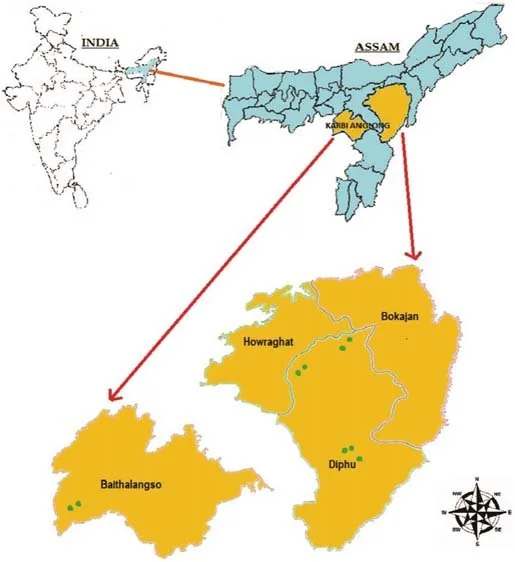
Diphu Lok Sabha constituency, which votes on April 26, candidates of all parties have promised the implementation of Article 244(A) of the Constitution to create an autonomous ‘state within a state’. Article 244(A) was inserted by The Constitution (Twenty-second Amendment) Act, 1969, which enabled Parliament to pass an Act to form within the State of Assam an autonomous State comprising (whether wholly or in part) all or any of [certain specified] tribal… WHAT IS SPECIAL ABOUT THIS ARTICLE?
VRAuthor Desk
2 min read
Diphu Lok Sabha constituency, which votes on April 26, candidates of all parties have promised the implementation of Article 244(A) of the Constitution to create an autonomous ‘state within a state’. Article 244(A) was inserted by The Constitution (Twenty-second Amendment) Act, 1969, which enabled Parliament to pass an Act to form within the State of Assam an autonomous State comprising (whether wholly or in part) all or any of [certain specified] tribal… WHAT IS SPECIAL ABOUT THIS ARTICLE?
Diphu Lok Sabha constituency, which votes on
April 26, candidates of all parties have promised the implementation of
Article 244(A) of the Constitution to create an autonomous
‘state within a state’.
WHAT IS ARTICLE 244 A?
Article 244(A) was inserted by
The Constitution (Twenty-second Amendment) Act, 1969, which enabled Parliament to pass an Act to
form within the State of Assam an autonomous State comprising (whether wholly or in part) all or any of [certain specified] tribal areas.
WHAT IS SPECIAL ABOUT THIS ARTICLE?
This autonomous state would
have its own Legislature or Council of Ministers or both. This provision
goes a step further than the provisions under the Sixth Schedule, which are already in place in these areas.
AREN’T THESE PROVISIONS AVAILABLE IN 6TH SCHEDULE?
NO.
The autonomous councils under the Sixth Schedule have
elected representatives for more decentralised governance of these tribal areas, but
- They have limited legislative powers,
- Do not have control over law and order, and
- Have only limited financial powers.
THE TIMELINE OF THE DEMAND
- The demand for autonomy is as old as the movement in the hill areas of undivided Assam, which began in the 1950s, seeking a separate hill state.
- This movement resulted in the creation of the full-fledged state of Meghalaya in 1972 — however, because of the promise extended through Article 244(A), the leaders of the Karbi Anglong region opted to remain with Assam.
- The Autonomous State Demand Committee (ASDC) — which was set up as a mass organisation to press for the region’s autonomy, and which continues to operate today — along with student bodies in the region, signed a Memorandum of Settlement with the state and central governments in 1995 for enhancing the powers of the two autonomous councils in the region by increasing the number of departments under their charge to 30 from 10.
- However, over the years, as autonomy for the region remained elusive, the demand for implementation of Article 244(A) also took the form of an armed insurgency.
- In 2021, a peace settlement was reached with five militant groups in Karbi Anglong — Karbi People’s Liberation Tigers, People’s Democratic Council of Karbi Longri, Karbi Longri NC Hills Liberation Front, Kuki Liberation Front, and United People’s Liberation Army — under which greater autonomy and a special development package of
1,000 crore over five years were promised.
- Last year, an agreement was signed with the Dimasa National Liberation Army along the same lines.
- Prelims: Key facts, institutions, locations and terminology in the article.
- Mains: Connect the topic with Economy, International Relations, Polity & Governance.
- Revision: Use the article headings to prepare concise notes and answer-writing points.
Test your understanding
Questions from this article
Prelims practiceWith reference to Article 244A Of The Constitution, consider the following statements:
- They have limited legislative powers,
- Do not have control over law and order, and
- Have only limited financial powers.
Which of the statements given above are correct?
- 1 and 2 only
- 2 and 3 only
- 1 and 3 only
- 1, 2 and 3
View answer
Answer: (d) 1, 2 and 3. All three statements are drawn from the article.
Mains practiceDiscuss the background, key issues and significance of Article 244A Of The Constitution for India.
Answer in 250 words.
View answer approach
- WHAT IS ARTICLE 244 A?
- THE TIMELINE OF THE DEMAND
- Background and context
- Key facts and institutional framework
- Significance and way forward
Frequently asked questionsFrequently asked questions
Why is Article 244A Of The Constitution in the news?
Diphu Lok Sabha constituency, which votes on April 26, candidates of all parties have promised the implementation of Article 244(A) of the Constitution to create an autonomous ‘state within a state’. Article 244(A) was inserted by The Constitution (Twenty-second Amendment) Act, 1969, which enabled Parliament to pass an Act to form within the State of Assam an autonomous State comprising (whether wholly or in part) all or any of [certain specified] tribal…
What are the key facts about Article 244A Of The Constitution?
WHAT IS SPECIAL ABOUT THIS ARTICLE? This autonomous state would have its own Legislature or Council of Ministers or both. This provision goes a step further than the provisions under the Sixth Schedule, which are already in place in these areas.
Why is Article 244A Of The Constitution important for UPSC preparation?
The topic connects current developments with Economy, International Relations, Polity & Governance and is relevant for both objective revision and analytical answer writing.