UPSC Current Affairs
Antimicrobial Resistance
Antimicrobial resistant infections kill millions every year. They have the potential to take us back to the dark ages, when common infections like urinary tract infections (UTIs) or pneumonia were lethal and untreatable. Antimicrobial resistance (AMR) occurs when the germs that cause infections — bacteria, viruses, or fungi — develop ways to evade the drugs used to treat them.
VRAuthor Desk
2 min read
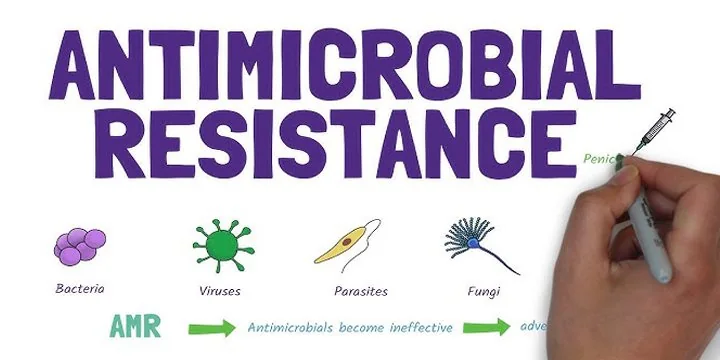
Antimicrobial resistant infections kill millions every year. They have the potential to take us back to the dark ages, when common infections like urinary tract infections (UTIs) or pneumonia were lethal and untreatable. Antimicrobial resistance (AMR) occurs when the germs that cause infections — bacteria, viruses, or fungi — develop ways to evade the drugs used to treat them.
Antimicrobial resistant infections kill millions every year. They have the potential to take us back to the dark ages, when common infections like urinary tract infections (UTIs) or pneumonia were lethal and untreatable.
Antimicrobial resistance (AMR) occurs when the germs that cause infections — bacteria, viruses, or fungi — develop ways to evade the drugs used to treat them.
WHY IS AMR ON THE RISE?
Overuse of antibiotics in places like
chicken farms and
healthcare clinics has become a leading driver of AMR.
The good news is that
a major scientific push is making significant progress in the fight against AMR.
USE OF AI
The study used
machine learning to search for
potential antibiotic agents in a huge database of microbes which live in environments such as soil, the ocean, and human and animal guts.
THE POTENTIAL ANTIBIOTIC AGENTS:
Bacteria fight against each other constantly in these environments, using
warfare tools called peptides which are
shot against other bacteria to kill them. The researchers mined this space for antibiotic peptides and found some hidden gems.
In total,
863,498 new antimicrobial peptides were predicted, more than
90% of which had never been described before.
PEPTIDES AS ANTIBIOTICS
- To find out which of these peptides could be useful as antibiotics, the researchers synthesized 100 peptides and tested them against 11 disease-causing bacterial strains in laboratory dishes.
- They found that 79 peptides disrupted bacterial membranes and 63 peptides specifically targeted antibiotic-resistant bacteria, such as Escherichia coli (E.coli) and Staphylococcus aureus.
- The researchers also tested the compounds in mice with infected skin abscesses, but only three of the peptides showed antimicrobial effects in vivo (in a living organism).
- This indicates that their efficacy may be limited in vivo. Still, this is a remarkable result.
- Prelims: Key facts, institutions, locations and terminology in the article.
- Mains: Connect the topic with Environment, Polity & Governance, Health.
- Revision: Use the article headings to prepare concise notes and answer-writing points.
Test your understanding
Questions from this article
Prelims practiceWith reference to Antimicrobial Resistance, consider the following statements:
- To find out which of these peptides could be useful as antibiotics, the researchers synthesized 100 peptides and tested them against 11 disease-causing bacterial strains in laboratory dishes. They found that 79 peptides…
- They found that 79 peptides disrupted bacterial membranes and 63 peptides specifically targeted antibiotic-resistant bacteria, such as Escherichia coli (E.coli) and Staphylococcus aureus.
- The researchers also tested the compounds in mice with infected skin abscesses, but only three of the peptides showed antimicrobial effects in vivo (in a living organism). This indicates that their efficacy may be…
Which of the statements given above are correct?
- 1 and 2 only
- 2 and 3 only
- 1 and 3 only
- 1, 2 and 3
View answer
Answer: (d) 1, 2 and 3. All three statements are drawn from the article.
Mains practiceDiscuss the background, key issues and significance of Antimicrobial Resistance for India.
Answer in 250 words.
View answer approach
- WHY IS AMR ON THE RISE?
- THE POTENTIAL ANTIBIOTIC AGENTS:
- PEPTIDES AS ANTIBIOTICS
Frequently asked questionsFrequently asked questions
Why is Antimicrobial Resistance in the news?
Antimicrobial resistant infections kill millions every year. They have the potential to take us back to the dark ages, when common infections like urinary tract infections (UTIs) or pneumonia were lethal and untreatable.
What are the key facts about Antimicrobial Resistance?
Antimicrobial resistance (AMR) occurs when the germs that cause infections — bacteria, viruses, or fungi — develop ways to evade the drugs used to treat them. Overuse of antibiotics in places like chicken farms and healthcare clinics has become a leading driver of AMR. The good news is that a major scientific push is making significant progress in the fight against AMR.
Why is Antimicrobial Resistance important for UPSC preparation?
The topic connects current developments with Environment, Polity & Governance, Health and is relevant for both objective revision and analytical answer writing.