UPSC Current Affairs
WHO DECLARES INDIA FREE OF TRACHOMA
Context: Recently, in his 'Mann Ki Baat' programme (June 29, 2025), the Prime Minister of India announced that India has been declared free of Trachoma by the World Health Organization (WHO). ABOUT TRACHOMA Definition: A bacterial infection primarily affecting the eyes. Causative Agent: Caused by the bacterium Chlamydia trachomatis.
VRAuthor Desk
3 min read
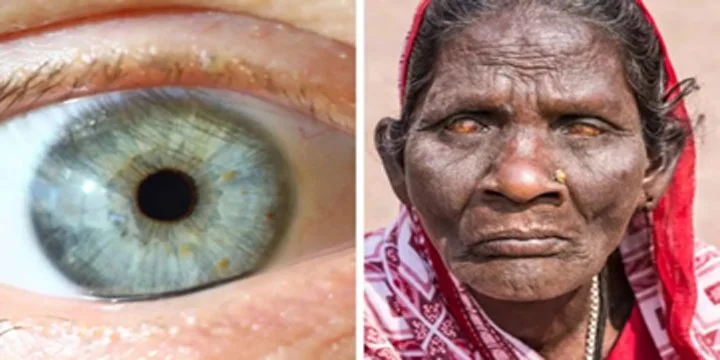
Context: Recently, in his 'Mann Ki Baat' programme (June 29, 2025), the Prime Minister of India announced that India has been declared free of Trachoma by the World Health Organization (WHO). ABOUT TRACHOMA Definition: A bacterial infection primarily affecting the eyes. Causative Agent: Caused by the bacterium Chlamydia trachomatis.
Context:
Recently, in his
'Mann Ki Baat' programme (June 29, 2025), the Prime Minister of India announced that India has been declared free of Trachoma by the World Health Organization (WHO).
ABOUT TRACHOMA
- Definition: A bacterial infection primarily affecting the eyes.
- Causative Agent: Caused by the bacterium Chlamydia trachomatis.
- Spread: Highly contagious; spreads through contact with eye, eyelid, nose, or throat secretions of infected individuals.
- Impact: If left untreated, it can cause irreversible blindness.
- Risk Factors: Prevalent in communities living in poor environmental conditions, with inadequate access to clean water and sanitation, and overcrowded living.
- Global Status: The WHO terms Trachoma as a Neglected Tropical Disease (NTD). Globally, an estimated 1.9 million people have their vision damaged by the infection.
GoI’S INITIATIVE & MILESTONE
- National Trachoma Control Program (NTCP): Launched in 1963.
- Integration: Trachoma control efforts were later integrated into India's National Program for Control of Blindness (NPCB), launched in 1976 (now NPCBVI - National Programme for Control of Blindness & Visual Impairment).
KEY MILESTONE
- 2017: India was initially declared free from infective Trachoma.
- 2019-2024: Continuous surveillance for trachoma cases was maintained across all districts of India.
- 2021-2024: The National Trachomatous Trichiasis (TT only) Survey was conducted in 200 endemic districts under NPCBVI. This survey was a mandate set by WHO for official elimination declaration.
- October 2024 (Official WHO Declaration): WHO officially declared that India has eliminated Trachoma as a public health problem. India became the third country in the South-East Asia Region to achieve this milestone (after Nepal and Myanmar).
- May 2025 (Certification): The official Certificate of Elimination was handed to India at the 78th World Health Assembly in Geneva.
WHO RECOMMENDS SAFE STRATEGY
To eliminate trachoma as a public health problem, the WHO recommends the
SAFE strategy:
- S - Surgery: To treat the blinding stage (trachomatous trichiasis), where eyelashes turn inwards and scratch the eye.
- A - Antibiotics: To clear the infection, particularly through mass drug administration of the antibiotic azithromycin.
- F - Facial Cleanliness: Promotion of clean faces to reduce transmission, especially among children.
- E - Environmental Improvement: Particularly improving access to water and sanitation facilities (WASH initiatives), which reduces breeding grounds for flies and promotes hygiene.
SIGNIFICANCE OF ELIMINATION
- Major Public Health Achievement: Represents a significant victory in India's fight against preventable blindness and neglected tropical diseases.
- Improved Public Health System: Symbolizes the strengthening of public healthcare systems, hygiene, and sanitation practices nationwide.
- Global Leadership: India's success provides a roadmap and inspiration for other nations still battling trachoma.
- Contribution to SDGs: Aligns with Sustainable Development Goals (SDGs) related to health and well-being, clean water, and sanitation.
- Prelims: Key facts, institutions, locations and terminology in the article.
- Mains: Connect the topic with Polity & Governance, Health.
- Revision: Use the article headings to prepare concise notes and answer-writing points.
Test your understanding
Questions from this article
Prelims practiceWith reference to WHO DECLARES INDIA FREE OF TRACHOMA, consider the following statements:
- Definition: A bacterial infection primarily affecting the eyes.
- Causative Agent: Caused by the bacterium Chlamydia trachomatis.
- Spread: Highly contagious; spreads through contact with eye, eyelid, nose, or throat secretions of infected individuals.
Which of the statements given above are correct?
- 1 and 2 only
- 2 and 3 only
- 1 and 3 only
- 1, 2 and 3
View answer
Answer: (d) 1, 2 and 3. All three statements are drawn from the article.
Mains practiceDiscuss the background, key issues and significance of WHO DECLARES INDIA FREE OF TRACHOMA for India.
Answer in 250 words.
View answer approach
- ABOUT TRACHOMA
- KEY MILESTONE
- SIGNIFICANCE OF ELIMINATION
Frequently asked questionsFrequently asked questions
Why is Who Declares India Free Of Trachoma in the news?
Context: Recently, in his 'Mann Ki Baat' programme (June 29, 2025), the Prime Minister of India announced that India has been declared free of Trachoma by the World Health Organization (WHO). ABOUT TRACHOMA Definition: A bacterial infection primarily affecting the eyes.
What are the key facts about Who Declares India Free Of Trachoma?
Causative Agent: Caused by the bacterium Chlamydia trachomatis. Spread: Highly contagious; spreads through contact with eye, eyelid, nose, or throat secretions of infected individuals. Impact: If left untreated, it can cause irreversible blindness.
Why is Who Declares India Free Of Trachoma important for UPSC preparation?
The topic connects current developments with Polity & Governance, Health and is relevant for both objective revision and analytical answer writing.