UPSC Current Affairs
TUVALU RESIDENTS PREPARE FOR WORLD’S FIRST MIGRATION OF THE ENTIRE COUNTRY
Tuvalu, a small island nation in the South Pacific, is preparing for the world’s first planned migration of an entire nation due to climate change. On July 18, 2025, applications closed for a first-of-its-kind visa program under the Australia–Tuvalu Falepili Union Treaty, which allows 280 Tuvaluans annually to migrate to Australia. The program is a legal and humanitarian response to the existential threat posed by sea level rise and climate vulnerability, and over 5,000 people — nearly half of Tuvalu’s adult population — have already applied.
VRAuthor Desk
2 min read
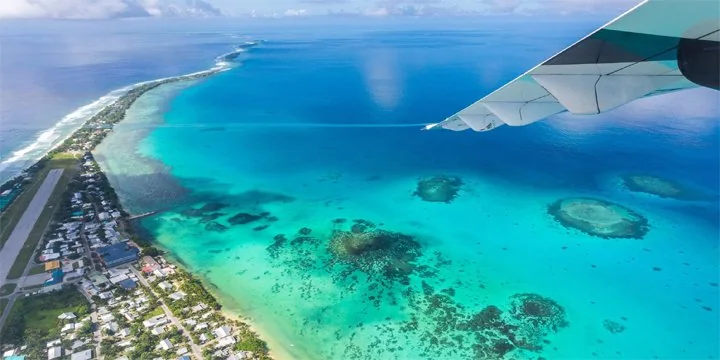
Tuvalu, a small island nation in the South Pacific, is preparing for the world’s first planned migration of an entire nation due to climate change. On July 18, 2025, applications closed for a first-of-its-kind visa program under the Australia–Tuvalu Falepili Union Treaty, which allows 280 Tuvaluans annually to migrate to Australia. The program is a legal and humanitarian response to the existential threat posed by sea level rise and climate vulnerability, and over 5,000 people — nearly half of Tuvalu’s adult population — have already applied.
Why in News?
- Tuvalu, a small island nation in the South Pacific, is preparing for the world’s first planned migration of an entire nation due to climate change.
- On July 18, 2025, applications closed for a first-of-its-kind visa program under the Australia–Tuvalu Falepili Union Treaty, which allows 280 Tuvaluans annually to migrate to Australia.
- The program is a legal and humanitarian response to the existential threat posed by sea level rise and climate vulnerability, and over 5,000 people — nearly half of Tuvalu’s adult population — have already applied.
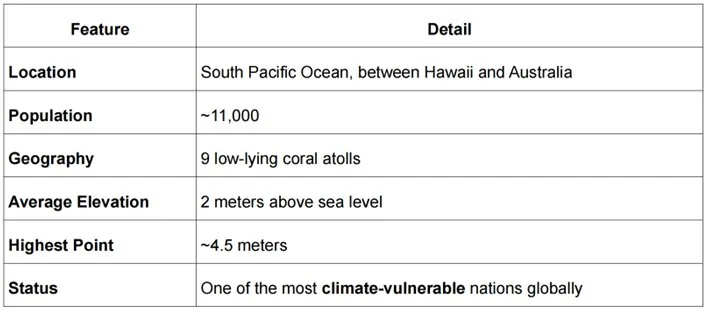
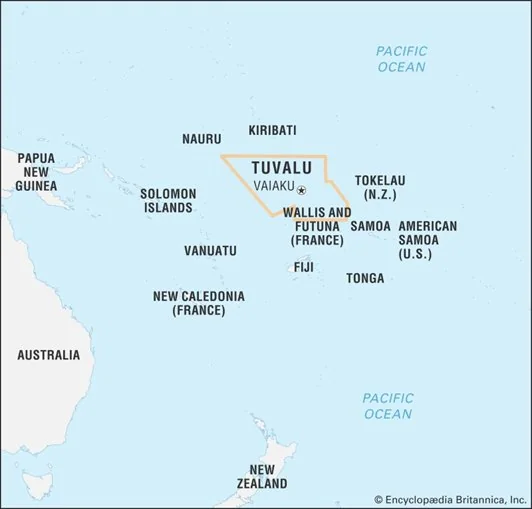
ABOUT TUVALU
AUSTRALIA-TUVALU FALE PILI UNION TREATY
Key Features:
- A bilateral climate-mobility treaty signed in 2023, implemented from 2024.
- “Falepili” = Tuvaluan term meaning “neighborly care”.
- Recognized as the first international treaty that:
- Formally links climate change to the legal right of mobility.
- Creates a voluntary, structured migration path.
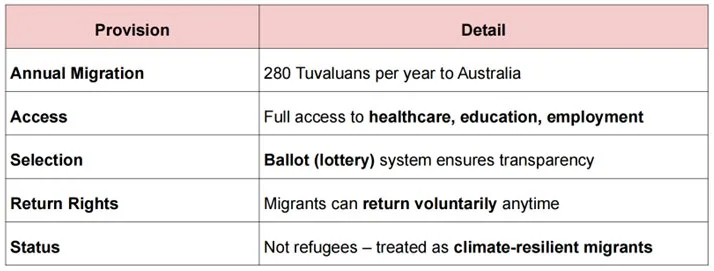
MIGRATION VISA PROVISIONS
CLIMATE IMPACT ON TUVALU
Vulnerabilities:
- Sea level rise: ~15 cm over the past 30 years.
- By 2050: Most infrastructure may lie below high-tide level.
- Saltwater intrusion: Contaminating freshwater aquifers, impacting agriculture.
- Storm surges & flooding: Damaging homes, schools, and coastlines.
- Adaptation challenges: People raising crops to combat soil salinization.
KEY RISKS:
- Food insecurity
- Water scarcity
- Loss of habitability
- Threat to national sovereignty
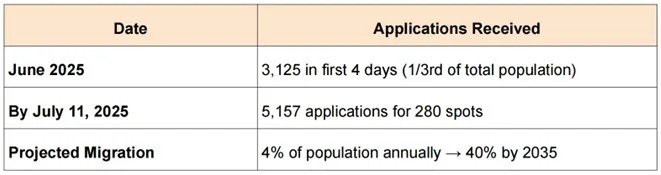
MIGRATION DEMAND TRENDS
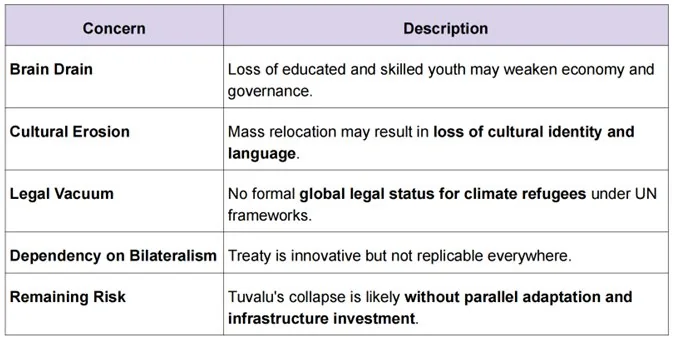
CHALLENGES & CONCERNS
GLOBAL SIGNIFICANCE & INDIAN CONTEXT
- Sets precedent for climate-linked migration treaties
- May inspire similar deals for low-lying countries like Maldives, Kiribati, Marshall Islands
- For India:
- Lessons for managing climate-driven displacement in coastal & Himalayan regions
- Act East policy may adapt to address SIDS' climate needs
- Prelims: Key facts, institutions, locations and terminology in the article.
- Mains: Connect the topic with Environment, International Relations, Polity & Governance.
- Revision: Use the article headings to prepare concise notes and answer-writing points.
Test your understanding
Questions from this article
Prelims practiceWith reference to TUVALU RESIDENTS PREPARE FOR WORLD’S FIRST MIGRATION OF THE ENTIRE COUNTRY, consider the following statements:
- Tuvalu, a small island nation in the South Pacific, is preparing for the world’s first planned migration of an entire nation due to climate change.
- On July 18, 2025, applications closed for a first-of-its-kind visa program under the Australia–Tuvalu Falepili Union Treaty, which allows 280 Tuvaluans annually to migrate to Australia.
- The program is a legal and humanitarian response to the existential threat posed by sea level rise and climate vulnerability, and over 5,000 people — nearly half of Tuvalu’s adult population — have already applied.
Which of the statements given above are correct?
- 1 and 2 only
- 2 and 3 only
- 1 and 3 only
- 1, 2 and 3
View answer
Answer: (d) 1, 2 and 3. All three statements are drawn from the article.
Mains practiceDiscuss the background, key issues and significance of TUVALU RESIDENTS PREPARE FOR WORLD’S FIRST MIGRATION OF THE ENTIRE COUNTRY for India.
Answer in 250 words.
View answer approach
- Why in News?
- ABOUT TUVALU
- AUSTRALIA-TUVALU FALE PILI UNION TREATY
- Key Features:
- MIGRATION VISA PROVISIONS
Frequently asked questionsFrequently asked questions
Why is Tuvalu Residents Prepare For World’S First Migration Of The Entire Country in the news?
Tuvalu, a small island nation in the South Pacific, is preparing for the world’s first planned migration of an entire nation due to climate change. On July 18, 2025, applications closed for a first-of-its-kind visa program under the Australia–Tuvalu Falepili Union Treaty, which allows 280 Tuvaluans annually to migrate to Australia.
What are the key facts about Tuvalu Residents Prepare For World’S First Migration Of The Entire Country?
The program is a legal and humanitarian response to the existential threat posed by sea level rise and climate vulnerability, and over 5,000 people — nearly half of Tuvalu’s adult population — have already applied. ABOUT TUVALU AUSTRALIA-TUVALU FALE PILI UNION TREATY Key Features: A bilateral climate-mobility treaty signed in 2023, implemented from 2024. “Falepili” = Tuvaluan term meaning “neighborly care”.
Why is Tuvalu Residents Prepare For World’S First Migration Of The Entire Country important for UPSC preparation?
The topic connects current developments with Environment, International Relations, Polity & Governance and is relevant for both objective revision and analytical answer writing.