UPSC Current Affairs
Southern California Wildfires
In January 2025, Southern California, particularly Los Angeles, is facing some of the most destructive wildfires in recent history. Palisades fire, Eaton fire, Sunset fire, Hurst fire, and Lidia fire have claimed 10 lives, forced over 130,000 people to evacuate, and destroyed many homes, including those of high-profile celebrities like Paris Hilton, Adam Brody, and Billy Crystal. What makes these fires particularly alarming is that they are happening in winter, a time not typically associated with wildfires in California.
VRAuthor Desk
7 min read
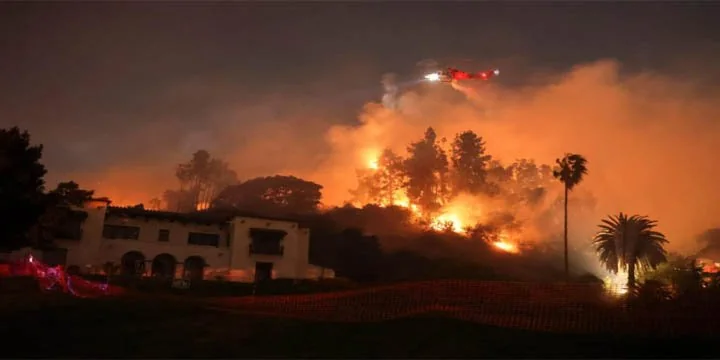
In January 2025, Southern California, particularly Los Angeles, is facing some of the most destructive wildfires in recent history. Palisades fire, Eaton fire, Sunset fire, Hurst fire, and Lidia fire have claimed 10 lives, forced over 130,000 people to evacuate, and destroyed many homes, including those of high-profile celebrities like Paris Hilton, Adam Brody, and Billy Crystal. What makes these fires particularly alarming is that they are happening in winter, a time not typically associated with wildfires in California.
- In January 2025, Southern California, particularly Los Angeles, is facing some of the most destructive wildfires in recent history.
- Palisades fire, Eaton fire, Sunset fire, Hurst fire, and Lidia fire have claimed 10 lives, forced over 130,000 people to evacuate, and destroyed many homes, including those of high-profile celebrities like Paris Hilton, Adam Brody, and Billy Crystal.
- What makes these fires particularly alarming is that they are happening in winter, a time not typically associated with wildfires in California.
So, why are these fires occurring in winter, and why are they so fierce and destructive?
- This event is getting attention not only for its unusual timing but also because of several factors that have combined to make this wildfire season so deadly.
KEY FACTORS BEHIND SEVERITY OF WINDS
Although the
exact cause of the fires is still under investigation, experts believe there are
three key factors that have contributed to the intensity and rapid spread of these wildfires:
- Wet Weather Followed by Extremely Dry Conditions
- Wet Winters of 2022-2023:
- Southern California experienced unusually wet winters in 2022 and 2023, which resulted in an abundance of vegetation—trees, shrubs, and grasses grew thick and healthy.
- This lush landscape created an abundance of fuel for wildfires.
- Dry Winter of 2024:
- However, the current winter (2024) has been exceptionally dry.
- This means the vegetation that grew during the wet seasons has now dried out completely, creating highly flammable kindling for wildfires.
- Dry vegetation is much more susceptible to burning, helping fires spread faster.
- Rainfall Statistics:
- According to NASA, Southern California has received very little rain since October 2024.
- Daniel Swain, a climate scientist, stated that this winter has seen the driest start to the water year on record.
- For example, Los Angeles International Airport (LAX) recorded just 03 inches (0.08 cm) of rain since October 1, making it the driest start in National Weather Service records dating back to 1944.
- The Role of Santa Ana Winds
- What Are Santa Ana Winds?:
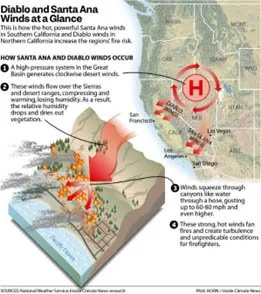
- The Santa Ana winds are strong, dry winds that blow across Southern California from October to January.
- These winds occur when high-pressure systems in the Great Basin desert create a clockwise air circulation, which pushes dry air towards the coast.
- These winds are common in this season, but this year they have been unusually strong.
- How Santa Ana Winds Impact Wildfires:
- As the winds blow across the Sierra Nevada and Santa Ana Mountains, they pick up speed and dry out, becoming hot and fast-moving.
- Once they reach Southern California, they carry flames across the region, helping the fire spread quickly.
- These winds also dry out the vegetation even more, making the forests, grasslands, and shrubs more flammable.
- Intensity of Winds:
- The strong Santa Ana winds have been crucial in the spread of the current wildfires.
- These winds, combined with dry vegetation, have allowed flames to spread quickly across populated regions like Hollywood Hills and Los Angeles, making it difficult for firefighters to keep up.
- The Impact of Climate Change
- Global Warming and Wildfires:
- Experts agree that climate change is contributing to the growing frequency and intensity of wildfires globally.
- In California, rising global temperatures are causing warmer springs and summers, and triggering early snowmelt in the mountains.
- These conditions extend the fire season and increase the opportunities for wildfires to ignite and spread.
- Longer Wildfire Seasons:
- A 2021 study in Nature Scientific Reports found that California's wildfire season has grown longer in recent decades.
- The study showed that the annual wildfire season has lengthened by several weeks over the past 20 years, with the peak fire season shifting from August to July.
- This is largely due to warmer temperatures and earlier snowmelt, which result in drier conditions for longer periods.
- These longer dry seasons make it easier for vegetation to dry out and catch fire.
- More Intense Fires:
- As a result of warmer temperatures and longer dry seasons, the vegetation in California faces more moisture stress, making it more vulnerable to burning.
- Fires are not only starting earlier but are also becoming more intense as hotter, drier conditions create a perfect environment for wildfires to thrive.
- Global Warming and Extreme Weather:
- Climate change is causing more extreme weather events, and California’s wildfires are part of this global trend.
- The growing threat of wildfires due to climate change has placed additional pressure on firefighting efforts, as fires grow larger, more frequent, and harder to control.
WHY ARE THESE FIRES SO DANGEROUS?
The combination of dry vegetation, strong winds, and climate change has created an ideal environment for wildfires to spread rapidly. The following factors make these fires particularly dangerous:
- Rapid Spread:
- The Santa Ana winds have helped the fires spread quickly.
- Once the fires started, the winds pushed flames rapidly through dry vegetation, reaching populated areas like Hollywood Hills, where they damaged homes, including those of Paris Hilton and Adam Brody.
- Difficult to Control:
- The fires have spread so rapidly and with such intensity that firefighters have struggled to keep up.
- As a result, over 130,000 people have been forced to evacuate from the affected areas.
- Health and Safety:
- The thick smoke from the fires has contributed to poor air quality, impacting the health of residents and firefighters in the area.
- The scale of the disaster has also put immense pressure on emergency services and complicated rescue operations.
PINK FIRE RETARDANTS
As the wildfires rage across Southern California, authorities have been using
planes and
helicopters to drop
large amounts of pink fire retardant in an attempt to control the spread of the flames. This method has been widely used, but concerns about its
environmental impact are growing.
What is Pink Fire Retardant?
- Composition: The pink fire retardant, such as the Phos-Chek brand, is made from a mix of chemicals, primarily ammonium phosphate.
- These chemicals help stop the spread of fires by coating plants and making it harder for fires to burn by limiting the oxygen they need to sustain.
- Why is it Pink?: The pink color is added to make the fire retardant visible.
- This helps firefighters see where the retardant has been dropped and plan their next steps in fighting the fire.
HOW PINK FIRE RETARDANTS WORK?
- Fire Suppression: Pink fire retardant is sprayed ahead of the fire to coat vegetation, slowing the fire’s progress.
- By creating a barrier, it gives firefighters time to manage the fire.
- Effectiveness: While the fire retardant does help slow down fires, its effectiveness is unclear.
- Studies show that its success depends on factors such as weather, terrain, and vegetation.
- A S. Forest Service study found that the conditions where retardants work best are becoming rarer due to climate change.
- Difficulty in Measuring Success: Since fire retardants are used along with other firefighting methods, it’s hard to measure how much of a difference they actually make in putting out the fire.
ENVIRONMENTAL CONCERNS
Though pink fire retardants are useful in controlling fires, they raise several
environmental and health concerns:
- Toxicity of Heavy Metals:
- Pink fire retardants contain chromium and cadmium, two heavy metals linked to cancer and damage to the kidneys and liver.
- A 2024 study by the University of Southern California (USC) found that 850,000 pounds of these toxic metals have been released into the environment since 2009.
- Harm to Aquatic Life:
- When fire retardants wash into rivers and streams, the heavy metals can harm or kill fish and other aquatic life.
- These chemicals disrupt ecosystems and can also affect water quality, making the water unsafe for both wildlife and humans.
- Soil and Long-Term Pollution:
- Fire retardants can also affect the soil.
- The chemicals can seep into the ground and remain there for years, harming plants and soil health.
- They can also lead to algal blooms in water, further polluting the environment.
- Ongoing Environmental Damage:
- Fire retardants don’t break down quickly, meaning they stay in the environment, continuing to pollute the soil and water.
- From 2009 to 2021, over 440 million gallons of fire retardant were used across U.S. lands, releasing more than 400 tons of heavy metals into the environment.
- As wildfires become more frequent and intense due to climate change, the use of fire retardants is expected to increase. More than 440 million gallons of fire retardant have been used across the U.S. from 2009 to 2021, raising concerns about the long-term environmental impact of these chemicals.
- Prelims: Key facts, institutions, locations and terminology in the article.
- Mains: Connect the topic with Environment, Polity & Governance, Health.
- Revision: Use the article headings to prepare concise notes and answer-writing points.
Test your understanding
Questions from this article
Prelims practiceWith reference to Southern California Wildfires, consider the following statements:
- In January 2025, Southern California, particularly Los Angeles, is facing some of the most destructive wildfires in recent history.
- Palisades fire, Eaton fire, Sunset fire, Hurst fire, and Lidia fire have claimed 10 lives, forced over 130,000 people to evacuate, and destroyed many homes, including those of high-profile celebrities like Paris Hilton…
- What makes these fires particularly alarming is that they are happening in winter, a time not typically associated with wildfires in California.
Which of the statements given above are correct?
- 1 and 2 only
- 2 and 3 only
- 1 and 3 only
- 1, 2 and 3
View answer
Answer: (d) 1, 2 and 3. All three statements are drawn from the article.
Mains practiceDiscuss the background, key issues and significance of Southern California Wildfires for India.
Answer in 250 words.
View answer approach
- So, why are these fires occurring in winter, and why are they so fierce and destructive?
- What is Pink Fire Retardant?
- HOW PINK FIRE RETARDANTS WORK?
Frequently asked questionsFrequently asked questions
Why is Southern California Wildfires in the news?
In January 2025, Southern California, particularly Los Angeles, is facing some of the most destructive wildfires in recent history. Palisades fire, Eaton fire, Sunset fire, Hurst fire, and Lidia fire have claimed 10 lives, forced over 130,000 people to evacuate, and destroyed many homes, including those of high-profile celebrities like Paris Hilton, Adam Brody, and Billy Crystal.
What are the key facts about Southern California Wildfires?
What makes these fires particularly alarming is that they are happening in winter, a time not typically associated with wildfires in California. So, why are these fires occurring in winter, and why are they so fierce and destructive? This event is getting attention not only for its unusual timing but also because of several factors that have combined to make this wildfire season so deadly.
Why is Southern California Wildfires important for UPSC preparation?
The topic connects current developments with Environment, Polity & Governance, Health and is relevant for both objective revision and analytical answer writing.