UPSC Current Affairs
SOHRAI ART
Context: The indigenous mural tradition of Sohrai Art from Jharkhand recently received national recognition at the 2nd edition of Kala Utsav 2025 – Artists in Residence Programme, held at Rashtrapati Bhavan. President Droupadi Murmu praised the art form, stating it reflects "the soul of India," emphasizing its deep connection to nature, mythology, and community life. SOHRAI ART: AN OVERVIEW Origin and Tradition: Sohrai is a ritualistic wall-painting tradition predominantly practiced by tribal communities, primarily women, in the Hazaribagh district of Jharkhand, India.
VRAuthor Desk
3 min read
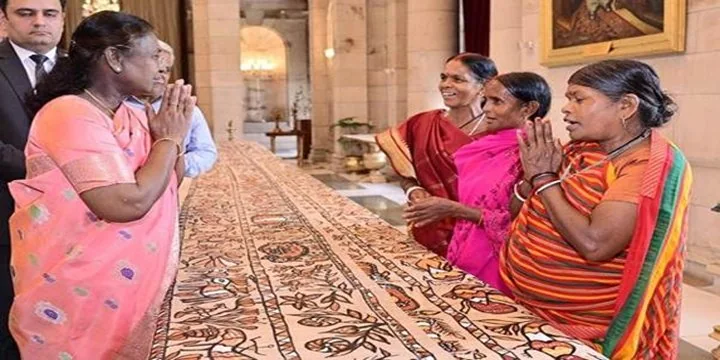
Context: The indigenous mural tradition of Sohrai Art from Jharkhand recently received national recognition at the 2nd edition of Kala Utsav 2025 – Artists in Residence Programme, held at Rashtrapati Bhavan. President Droupadi Murmu praised the art form, stating it reflects "the soul of India," emphasizing its deep connection to nature, mythology, and community life. SOHRAI ART: AN OVERVIEW Origin and Tradition: Sohrai is a ritualistic wall-painting tradition predominantly practiced by tribal communities, primarily women, in the Hazaribagh district of Jharkhand, India.
Context:
- The indigenous mural tradition of Sohrai Art from Jharkhand recently received national recognition at the 2nd edition of Kala Utsav 2025 – Artists in Residence Programme, held at Rashtrapati Bhavan.
- President Droupadi Murmu praised the art form, stating it reflects "the soul of India," emphasizing its deep connection to nature, mythology, and community life.
SOHRAI ART: AN OVERVIEW
- Origin and Tradition: Sohrai is a ritualistic wall-painting tradition predominantly practiced by tribal communities, primarily women, in the Hazaribagh district of Jharkhand, India.
- It is also found in parts of Bihar and West Bengal.
- Cultural Significance: This art form is deeply intertwined with the Sohrai festival, a major harvest festival celebrated after the monsoons (October-November, coinciding with Diwali, and also in January for Rabi crop harvest).
- It is a way to express gratitude to nature, ancestors, and livestock, symbolizing fertility, prosperity, and communal harmony.
- Medium: Traditionally created on the mud walls of homes and huts.
- Artists: Exclusively made by women from various tribal communities such as Santhal, Munda, Oraon, Kurmi, Agaria, and Ghatwal.
- The knowledge and techniques are passed down matrilineally from mother to daughter, highlighting its matriarchal background.
PROCESS
- Walls are first prepared by coating the surface with a mixture of soil and cow dung.
- A layer of white clay (kaolin) is then applied.
- While the layer is still wet, patterns are created using fingers, broken combs, twigs, or fabric swabs.
- Pigments are applied in a specific order: red (blood of ancestors, reproduction, fertility), black (eternal death, Shiva), and white (food, prosperity).
MATERIALS
Artists use
natural earth pigments and other organic elements, showcasing their deep connection to the environment.
- Colors: The customary palette is limited to earthy tones: red (from red ochre/hematite), black (from manganese-rich clay/charcoal), yellow (from yellow earth ochre/riverine pebbles), and white (from kaolin/rice gruel).
- Brushes: Often made from bamboo twigs or fingers.
THEMES & MOTIFS
- Sohrai paintings are characterized by vivid depictions of:
- Animals: Cattle (especially buffalo, cows, horses), wild animals (tigers, elephants, peacocks, snakes, birds). These are often depicted with their young, signifying fertility.
- Plants and Flowers: Lotuses, trees (like the tree of life), and other flora, reflecting the region's natural environment.
- Geometric Motifs: Intricate patterns and shapes, often symbolizing interconnectedness.
- Deities: Representation of Shiva in the form of Pashupati (lord of the animals) in anthropomorphic and zoomorphic forms.
- GI Tag: Sohrai-Khovar Painting from Hazaribagh, Jharkhand, received the Geographical Indication (GI) tag in 2020, recognizing its unique cultural significance and origin.
KALA UTSAV 2025
- Host: Held at Rashtrapati Bhavan, the official residence of the President of India.
- Edition: This was the second edition of the 'Kala Utsav 2025 – Artists in Residence Programme'.
- Duration: A ten-day residency program (July 14 to 24, 2025).
- President's Engagement: President Droupadi Murmu visited the exhibition, interacted personally with the artists, and praised their dedication, remarking, "These artworks reflect the soul of India - our connection to nature, our mythology, and our community life. I deeply admire how each of you continues to uphold these invaluable traditions."
- Prelims: Key facts, institutions, locations and terminology in the article.
- Mains: Connect the topic with Environment, Polity & Governance.
- Revision: Use the article headings to prepare concise notes and answer-writing points.
Test your understanding
Questions from this article
Prelims practiceWith reference to SOHRAI ART, consider the following statements:
- The indigenous mural tradition of Sohrai Art from Jharkhand recently received national recognition at the 2nd edition of Kala Utsav 2025 – Artists in Residence Programme, held at Rashtrapati Bhavan.
- President Droupadi Murmu praised the art form, stating it reflects "the soul of India," emphasizing its deep connection to nature, mythology, and community life.
- Origin and Tradition: Sohrai is a ritualistic wall-painting tradition predominantly practiced by tribal communities, primarily women, in the Hazaribagh district of Jharkhand, India.
Which of the statements given above are correct?
- 1 and 2 only
- 2 and 3 only
- 1 and 3 only
- 1, 2 and 3
View answer
Answer: (d) 1, 2 and 3. All three statements are drawn from the article.
Mains practiceDiscuss the background, key issues and significance of SOHRAI ART for India.
Answer in 250 words.
View answer approach
- Context:
- SOHRAI ART: AN OVERVIEW
- PROCESS
- THEMES & MOTIFS
- KALA UTSAV 2025
Frequently asked questionsFrequently asked questions
Why is Sohrai Art in the news?
Context: The indigenous mural tradition of Sohrai Art from Jharkhand recently received national recognition at the 2nd edition of Kala Utsav 2025 – Artists in Residence Programme, held at Rashtrapati Bhavan. President Droupadi Murmu praised the art form, stating it reflects "the soul of India," emphasizing its deep connection to nature, mythology, and community life.
What are the key facts about Sohrai Art?
SOHRAI ART: AN OVERVIEW Origin and Tradition: Sohrai is a ritualistic wall-painting tradition predominantly practiced by tribal communities, primarily women, in the Hazaribagh district of Jharkhand, India. It is also found in parts of Bihar and West Bengal. Cultural Significance: This art form is deeply intertwined with the Sohrai festival, a major harvest festival celebrated after the monsoons (October-November, coinciding with Diwali, and also in January for Rabi crop harvest).
Why is Sohrai Art important for UPSC preparation?
The topic connects current developments with Environment, Polity & Governance and is relevant for both objective revision and analytical answer writing.