UPSC Current Affairs
SMALL MODULAR REACTORS
SMRs are advanced nuclear reactors that have a power capacity of up to 300 MW(e) per unit, which is about one-third of the generating capacity of traditional nuclear power reactors. SMRs, which can produce a large amount of low-carbon electricity, are: Small – physically a fraction of the size of a conventional nuclear power reactor. Modular – making it possible for systems and components to be factory-assembled and transported as a unit to a location for installation.
VRAuthor Desk
2 min read
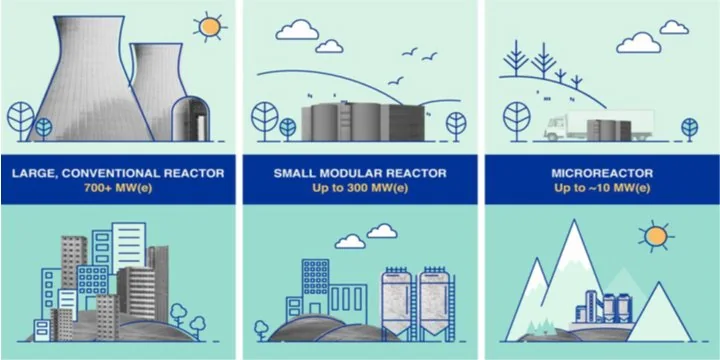
SMRs are advanced nuclear reactors that have a power capacity of up to 300 MW(e) per unit, which is about one-third of the generating capacity of traditional nuclear power reactors. SMRs, which can produce a large amount of low-carbon electricity, are: Small – physically a fraction of the size of a conventional nuclear power reactor. Modular – making it possible for systems and components to be factory-assembled and transported as a unit to a location for installation.
WHAT ARE SMALL MODULAR REACTORS?
SMRs are
advanced nuclear reactors that have a
power capacity of up to 300 MW(e) per unit, which is about one-third of the generating capacity of traditional nuclear power reactors. SMRs, which can produce a large amount of low-carbon electricity, are:
- Small – physically a fraction of the size of a conventional nuclear power reactor.
- Modular – making it possible for systems and components to be factory-assembled and transported as a unit to a location for installation.
- Reactors – harnessing nuclear fission to generate heat to produce energy.
ADVANTAGES OF SMRs
- SMR, with up to 300 MW capacity by nature, is flexible in design and requires a smaller footprint. Given their smaller footprint, SMRs can be sited on locations not suitable for larger nuclear power plants.
- Being mobile and agile technology, SMR can be factory-built unlike the conventional nuclear reactors that are built on–site. Thus, SMRs offers significant savings in cost and construction time.
- SMR is a promising technology in industrial de-carbonization especially where there is a requirement of reliable and continuous supply of power. It is said that SMR is simpler and safer as compared to large nuclear plants.
DISADVANTAGES
- Lack of development: They do not currently exist as reactors for power generation.
- Cost-effectiveness depends on production: Large-scale production of SMRs is required to achieve its economic benefits.
- Licensing issues: Historically, the licensing process was developed for large commercial reactors and the licensing process for new reactor designs is a lengthy and costly process.
- Prelims: Key facts, institutions, locations and terminology in the article.
- Mains: Connect the topic with Economy, Polity & Governance, Science & Technology.
- Revision: Use the article headings to prepare concise notes and answer-writing points.
Test your understanding
Questions from this article
Prelims practiceWith reference to SMALL MODULAR REACTORS, consider the following statements:
- Small – physically a fraction of the size of a conventional nuclear power reactor.
- Modular – making it possible for systems and components to be factory-assembled and transported as a unit to a location for installation.
- Reactors – harnessing nuclear fission to generate heat to produce energy.
Which of the statements given above are correct?
- 1 and 2 only
- 2 and 3 only
- 1 and 3 only
- 1, 2 and 3
View answer
Answer: (d) 1, 2 and 3. All three statements are drawn from the article.
Mains practiceDiscuss the background, key issues and significance of SMALL MODULAR REACTORS for India.
Answer in 250 words.
View answer approach
- DISADVANTAGES
- Background and context
- Key facts and institutional framework
- Significance and way forward
Frequently asked questionsFrequently asked questions
Why is Small Modular Reactors in the news?
SMRs are advanced nuclear reactors that have a power capacity of up to 300 MW(e) per unit, which is about one-third of the generating capacity of traditional nuclear power reactors. SMRs, which can produce a large amount of low-carbon electricity, are: Small – physically a fraction of the size of a conventional nuclear power reactor.
What are the key facts about Small Modular Reactors?
Modular – making it possible for systems and components to be factory-assembled and transported as a unit to a location for installation. Reactors – harnessing nuclear fission to generate heat to produce energy. ADVANTAGES OF SMRs SMR, with up to 300 MW capacity by nature, is flexible in design and requires a smaller footprint.
Why is Small Modular Reactors important for UPSC preparation?
The topic connects current developments with Economy, Polity & Governance, Science & Technology and is relevant for both objective revision and analytical answer writing.