UPSC Current Affairs
Shrinking Caspian Sea
Introduction The Caspian Sea, recognized as the world’s largest inland body of water, is undergoing a critical decline. This alarming situation is attributed to a combination of environmental, climatic, and human factors, raising concerns among experts that the Caspian may never recover from its current state. KEY FACTS ABOUT CASPIAN SEA Size: Approximately the size of Montana.
VRAuthor Desk
3 min read
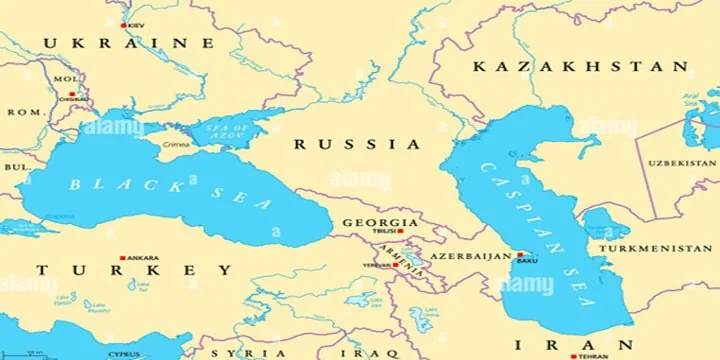
Introduction The Caspian Sea, recognized as the world’s largest inland body of water, is undergoing a critical decline. This alarming situation is attributed to a combination of environmental, climatic, and human factors, raising concerns among experts that the Caspian may never recover from its current state. KEY FACTS ABOUT CASPIAN SEA Size: Approximately the size of Montana.
Introduction
- The Caspian Sea, recognized as the world’s largest inland body of water, is undergoing a critical decline.
- This alarming situation is attributed to a combination of environmental, climatic, and human factors, raising concerns among experts that the Caspian may never recover from its current state.
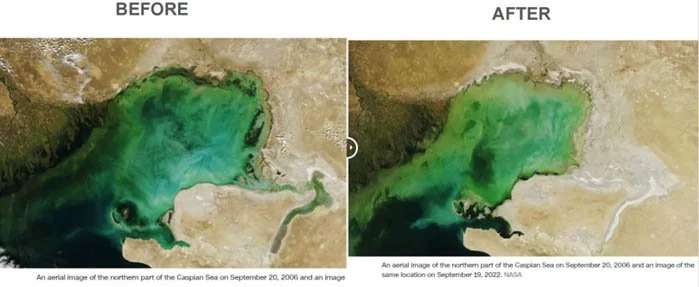
KEY FACTS ABOUT CASPIAN SEA
- Size: Approximately the size of Montana.
- Coastline: Extends over 4,000 miles.
- Countries Involved: Shared by 5 nations:
- Kazakhstan,
- Iran,
- Azerbaijan,
- Russia, and
- Uses: Essential for fishing, farming, tourism, drinking water, and rich in oil and gas reserves.
- Climate Regulation: Helps regulate climate by providing rainfall and moisture to Central Asia.
CAUSES OF DECLINE
- Human Activities
- Damming and Water Extraction: The Caspian is fed by 130 rivers, with about 80% of its water coming from the Volga River, Europe's longest river.
- Russia has constructed 40 dams, with 18 more under development, which significantly reduces water flow into the Caspian Sea.
- Pollution: Industrial runoff, agricultural chemicals, and urban waste are contributing to the declining water quality.
- Historical Context
- The Caspian Sea has naturally fluctuated over thousands of years due to temperature changes and ice sheet movements.
- However, human activities have accelerated this decline in recent decades.
- Climate Change
- Increased Evaporation: Rising global temperatures are leading to higher evaporation rates and erratic rainfall patterns.
- Accelerated Decline: Water levels in the Caspian Sea have been falling since the mid-1990s, with a more pronounced decline observed since 2005, dropping by about 5 feet.
- Projections indicate potential declines of 8 to 18 meters (26 to 59 feet) by the end of the century, depending on the global response to fossil fuel emissions.
- Some studies suggest drops of up to 30 meters (98 feet) are possible by 2100.
IMPLICATIONS OF DECLINE
Environmental Impact
- Wildlife Crisis: The Caspian is home to hundreds of species, including the endangered wild sturgeon, which is crucial for caviar production.
- The receding waters are depleting oxygen levels, endangering these unique species.
- Caspian Seals: These endangered marine mammals, found nowhere else on Earth, are losing their pupping sites as pollution and overfishing threaten their survival.
- Aerial surveys indicate a drastic reduction in seal populations; from 25,000 counted in 2009 at one site to none observed by 2020.
Economic Consequences
- Fishing and Tourism: Shrinking fishing grounds and polluted waters threaten local economies reliant on fishing and tourism.
- The shipping industry faces challenges as shallow waters hinder docking capabilities in cities like Aktau.
- Geopolitical Tensions: Competition for diminishing resources could escalate tensions among the 5 bordering countries, leading to conflicts over water and hydrocarbon reserves.
CALL TO ACTION
Experts warn that without coordinated international efforts, the
Caspian Sea could experience a fate similar to that of the
Aral Sea, which has
largely dried up due to mismanagement and climate factors.
Global Context
- The urgency of addressing the Caspian Sea's plight will be highlighted at COP29 in Baku, Azerbaijan, where global leaders will discuss climate actions amid the backdrop of ongoing fossil fuel extraction in the region.
- Azerbaijan's President Ilham Aliyev has described the Caspian Sea's decline as “catastrophic,” yet the country plans to expand fossil fuel production, complicating recovery efforts.
- Prelims: Key facts, institutions, locations and terminology in the article.
- Mains: Connect the topic with Environment, Economy, International Relations.
- Revision: Use the article headings to prepare concise notes and answer-writing points.
Test your understanding
Questions from this article
Prelims practiceWith reference to Shrinking Caspian Sea, consider the following statements:
- The Caspian Sea, recognized as the world’s largest inland body of water, is undergoing a critical decline.
- This alarming situation is attributed to a combination of environmental, climatic, and human factors, raising concerns among experts that the Caspian may never recover from its current state.
- Size: Approximately the size of Montana.
Which of the statements given above are correct?
- 1 and 2 only
- 2 and 3 only
- 1 and 3 only
- 1, 2 and 3
View answer
Answer: (d) 1, 2 and 3. All three statements are drawn from the article.
Mains practiceDiscuss the background, key issues and significance of Shrinking Caspian Sea for India.
Answer in 250 words.
View answer approach
- KEY FACTS ABOUT CASPIAN SEA
- CAUSES OF DECLINE
- IMPLICATIONS OF DECLINE
- Note:
Frequently asked questionsFrequently asked questions
Why is Shrinking Caspian Sea in the news?
Introduction The Caspian Sea, recognized as the world’s largest inland body of water, is undergoing a critical decline. This alarming situation is attributed to a combination of environmental, climatic, and human factors, raising concerns among experts that the Caspian may never recover from its current state.
What are the key facts about Shrinking Caspian Sea?
KEY FACTS ABOUT CASPIAN SEA Size: Approximately the size of Montana. Coastline: Extends over 4,000 miles. Countries Involved: Shared by 5 nations: Kazakhstan, Iran, Azerbaijan, Russia, and Uses: Essential for fishing, farming, tourism, drinking water, and rich in oil and gas reserves.
Why is Shrinking Caspian Sea important for UPSC preparation?
The topic connects current developments with Environment, Economy, International Relations and is relevant for both objective revision and analytical answer writing.