UPSC Current Affairs
Olive Ridley Turtle Protection
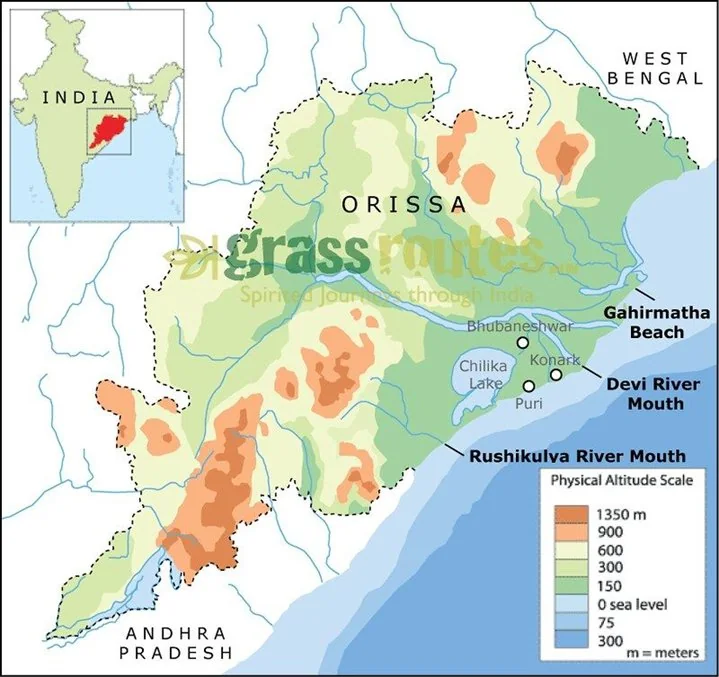
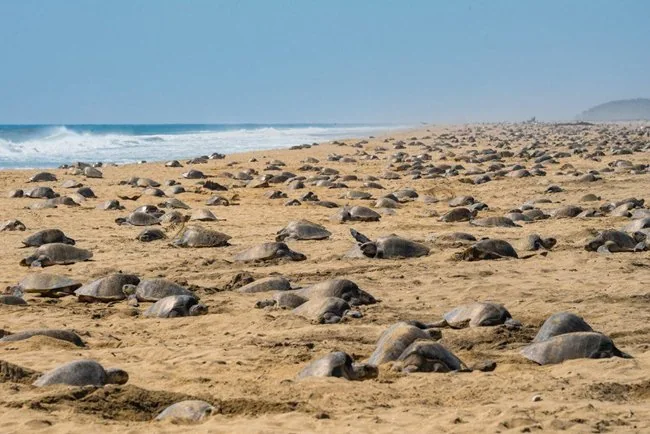
Location & Restrictions: Recently, Forest officials have restricted entry along a 5-km stretch from Gokharakuda to Bateshwar, near the Rushikulya river mouth in Ganjam district, Odisha, to protect Olive Ridley turtle eggs. Reason for Restrictions: The restrictions were imposed after a record number of 6.98 lakh female Olive Ridley turtles laid eggs during the mass nesting period from February 16 to 23. Safety Measures: The area has been re-fenced and declared a ‘no-entry zone’ to ensure the safety of the eggs.
VRAuthor Desk
3 min read
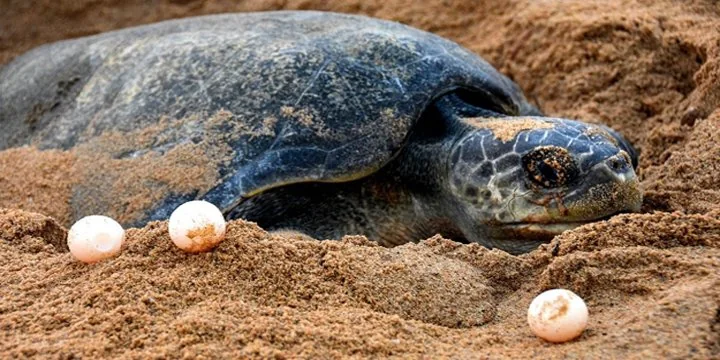
Location & Restrictions: Recently, Forest officials have restricted entry along a 5-km stretch from Gokharakuda to Bateshwar, near the Rushikulya river mouth in Ganjam district, Odisha, to protect Olive Ridley turtle eggs. Reason for Restrictions: The restrictions were imposed after a record number of 6.98 lakh female Olive Ridley turtles laid eggs during the mass nesting period from February 16 to 23. Safety Measures: The area has been re-fenced and declared a ‘no-entry zone’ to ensure the safety of the eggs.
- Location & Restrictions:
- Recently, Forest officials have restricted entry along a 5-km stretch from Gokharakuda to Bateshwar, near the Rushikulya river mouth in Ganjam district, Odisha, to protect Olive Ridley turtle eggs.
- Reason for Restrictions:
- The restrictions were imposed after a record number of 6.98 lakh female Olive Ridley turtles laid eggs during the mass nesting period from February 16 to 23.
- Safety Measures:
- The area has been re-fenced and declared a ‘no-entry zone’ to ensure the safety of the eggs.
- Over 140 personnel (including local volunteers) have been deployed to protect the eggs.
- The entire stretch has been divided into 50 sectors, with personnel assigned to specific areas for continuous monitoring.
- Sea Patrolling:
- Patrolling has also been conducted in the sea to monitor and protect turtles that may still be in deep waters.
- Three boats have been used for this purpose, one of which has been provided by Gopalpur port authorities.
- Future Predictions:
- Experts expects a second phase of mass nesting to take place in the rookery later this year.
ABOUT OLIVE RIDLEY TURTLES
- Scientific Name: Chelonia mydas
- Physical Features:
- Size: They can grow up to 120 cm in length & weight between 136-159 kg.
- Shell: They have Smooth carapace (upper shell) with color variations like black, grey, green, brown, and yellow. And their plastron (bottom shell) is yellowishwhite.
- Head: they have a Comparatively small head.
- Beak: They have modified “beaks” instead of teeth suited to their herbivorous diet.
- Vision: they have Good underwater vision, but nearsighted out of water.
- Hearing: Eardrums covered by skin, hearing best at low frequencies.
- Diet:
- Herbivorous: they mostly feed on seagrasses & algae.
- This gives their fat a greenish hue but not the shell. This unique diet differentiates them from other sea turtles.
- Lifespan: they are Estimated to live for 60-70 years.
- Distribution:
- They are Found in tropical and subtropical waters globally.
- They make Nest along the coastlines of over 80 countries.
- Largest nesting populations: Found in Costa Rica and Australia.
- Migration: Green sea turtles migrate long distances between feeding grounds and nesting sites, with recorded migrations exceeding 2,600 km
- Conservation Status:
- Classified as ‘Endangered’ on the IUCN Red List due to threats like habitat loss, poaching, and climate change impacts.
OTHER TURTLE SPECIES
| Sea Turtle Species |
Habitat |
IUCN Status |
Indian Wildlife (Protection) Act |
| Leatherback Turtle |
They are Found in all oceans except the Arctic and the Antarctic |
Vulnerable |
Schedule I |
| Loggerhead Turtle |
They Found in the Atlantic, Pacific, and Indian Oceans, as well as the Mediterranean Sea |
Vulnerable |
Schedule I |
| Hawksbill Turtle |
They are Found in tropical reefs of the Indian, Pacific, and Atlantic Oceans |
Critically Endangered |
Schedule I |
| Green Turtle |
They are Found mainly in tropical and subtropical waters |
Endangered |
Schedule I |
- Prelims: Key facts, institutions, locations and terminology in the article.
- Mains: Connect the topic with Environment, Economy, Polity & Governance.
- Revision: Use the article headings to prepare concise notes and answer-writing points.
Test your understanding
Questions from this article
Prelims practiceWith reference to Olive Ridley Turtle Protection, consider the following statements:
- Location & Restrictions: Recently, Forest officials have restricted entry along a 5-km stretch from Gokharakuda to Bateshwar, near the Rushikulya river mouth in Ganjam district, Odisha, to protect Olive Ridley turtle…
- Recently, Forest officials have restricted entry along a 5-km stretch from Gokharakuda to Bateshwar, near the Rushikulya river mouth in Ganjam district, Odisha, to protect Olive Ridley turtle eggs.
- Reason for Restrictions: The restrictions were imposed after a record number of 6.98 lakh female Olive Ridley turtles laid eggs during the mass nesting period from February 16 to 23.
Which of the statements given above are correct?
- 1 and 2 only
- 2 and 3 only
- 1 and 3 only
- 1, 2 and 3
View answer
Answer: (d) 1, 2 and 3. All three statements are drawn from the article.
Mains practiceDiscuss the background, key issues and significance of Olive Ridley Turtle Protection for India.
Answer in 250 words.
View answer approach
- ABOUT OLIVE RIDLEY TURTLES
- OTHER TURTLE SPECIES
- Background and context
- Key facts and institutional framework
- Significance and way forward
Frequently asked questionsFrequently asked questions
Why is Olive Ridley Turtle Protection in the news?
Location & Restrictions: Recently, Forest officials have restricted entry along a 5-km stretch from Gokharakuda to Bateshwar, near the Rushikulya river mouth in Ganjam district, Odisha, to protect Olive Ridley turtle eggs. Reason for Restrictions: The restrictions were imposed after a record number of 6.98 lakh female Olive Ridley turtles laid eggs during the mass nesting period from February 16 to 23.
What are the key facts about Olive Ridley Turtle Protection?
Safety Measures: The area has been re-fenced and declared a ‘no-entry zone’ to ensure the safety of the eggs. Over 140 personnel (including local volunteers) have been deployed to protect the eggs. The entire stretch has been divided into 50 sectors, with personnel assigned to specific areas for continuous monitoring.
Why is Olive Ridley Turtle Protection important for UPSC preparation?
The topic connects current developments with Environment, Economy, Polity & Governance and is relevant for both objective revision and analytical answer writing.