UPSC Current Affairs
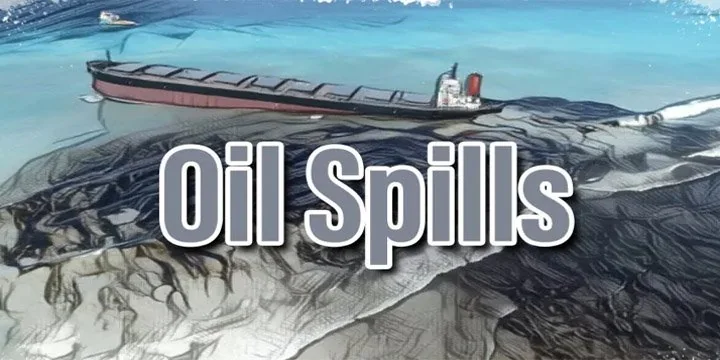
Oil Spills
Typhoon Gaemi has wreaked havoc across Taiwan, the Philippines and parts of southeastern China. The resultant heavy rains also led to the sinking of the oil tanker MT Terra Nova, laden with 1.4 million litres of oil, in Manila Bay on July 25. One crew member died while 16 others were rescued.
VRAuthor Desk
3 min read
Typhoon Gaemi has wreaked havoc across Taiwan, the Philippines and parts of southeastern China. The resultant heavy rains also led to the sinking of the oil tanker MT Terra Nova, laden with 1.4 million litres of oil, in Manila Bay on July 25. One crew member died while 16 others were rescued.
Typhoon Gaemi has wreaked havoc across
Taiwan, the Philippines and parts of southeastern China. The resultant heavy rains also led to the
sinking of the oil tanker MT Terra Nova, laden with
1.4 million litres of oil, in
Manila Bay on July 25.
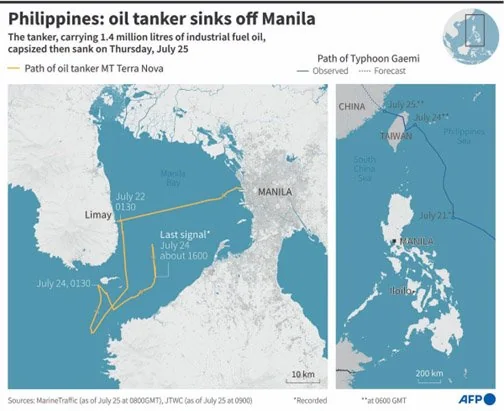
One crew member died while 16 others were rescued.
WHAT IS AN OIL SPILL?
An oil spill is the
release of liquid petroleum into the environment, typically water.
This can
happen accidentally during the
extraction, transportation, or refining of oil.
Accidents involving
oil tankers, drilling rigs, pipelines, or refineries, can be triggered by
natural disasters, human error, or equipment failure.
HOW CAN THE SEVERITY OF OIL SPILL BE DETECTED?
The severity of an oil spill
can range from small, localized leaks to catastrophic events that cause widespread environmental damage.
IMPACTS OF OIL SPILLS
The
consequences of oil spills are far-reaching and devastating.
- Environmental Damage:
- Marine life: Oil coats the feathers of birds and fur of marine mammals, disrupting their ability to regulate body temperature and leading to death. Fish, invertebrates, and other aquatic life are also affected by oil ingestion, contact, and habitat destruction.
- Coastal ecosystems: Oil can smother beaches, destroying habitats for plants and animals. It also harms wetlands, marshes, and mangroves, which are crucial for coastal protection and biodiversity.
- Water pollution: Oil can contaminate water sources, making them unsafe for drinking, agriculture, and recreation.
- Economic Impacts:
- Fisheries: Oil spills can devastate fishing industries, leading to job losses and economic hardship for coastal communities.
- Tourism: Contaminated beaches and damaged ecosystems can deter tourists, impacting local businesses and economies.
- Cleanup costs: The costs of cleaning up oil spills are often substantial, burdening governments and responsible parties.
- Human Health:
- Respiratory problems: Oil fumes can cause respiratory issues in humans.
- Skin irritation: Contact with oil can lead to skin irritation.
- Contaminated food: Oil-contaminated seafood can pose health risks if consumed.
HOW TO DEAL WITH OIL SPILLS?
- Containment: Booms are used to contain the oil slick and prevent its spread.
- Dispersants: Chemicals can be applied to break up the oil into smaller droplets, making it easier to biodegrade. However, the use of dispersants can also have negative environmental impacts.
- Skimming: Oil can be skimmed from the water surface using specialized equipment.
- Burning: In certain conditions, oil can be burned off the water surface.
- Bioremediation: Using microorganisms to break down oil is a more environmentally friendly approach but can be slow.
- Shoreline cleanup: Manual removal of oil from beaches and shorelines is often necessary.
- Wildlife rescue and rehabilitation: Injured animals are rescued, cleaned, and rehabilitated.
MAJOR OIL SPILLS OF THE PAST
Major oil spills from the past point to the complex challenges of recovery. One of the worst such cases was the
Exxon Valdez spill in 1989, which released approximately
11 million gallons of crude oil into
Prince William Sound off the Gulf of Alaska.
IMPACT:
The oil spill
killed an estimated 250,000 seabirds,
2,800 sea otters, 300 harbour seals, 250 bald eagles, as many as 22 killer whales, and billions of salmon and herring eggs, according to the EPA.
Despite extensive cleanup efforts,
the region continues to suffer environmental damage, and wildlife populations have not fully recovered yet.
Studies by the United States Geological Survey (USGS) have revealed persistent contamination in sediments,
ongoing declines in certain fish populations, and continued challenges in restoring kelp forests and other essential habitats.
- Prelims: Key facts, institutions, locations and terminology in the article.
- Mains: Connect the topic with Environment, Economy, Polity & Governance.
- Revision: Use the article headings to prepare concise notes and answer-writing points.
Test your understanding
Questions from this article
Prelims practiceWith reference to Oil Spills, consider the following statements:
- Environmental Damage: Marine life: Oil coats the feathers of birds and fur of marine mammals, disrupting their ability to regulate body temperature and leading to death. Fish, invertebrates, and other aquatic life are…
- Marine life: Oil coats the feathers of birds and fur of marine mammals, disrupting their ability to regulate body temperature and leading to death. Fish, invertebrates, and other aquatic life are also affected by oil…
- Coastal ecosystems: Oil can smother beaches, destroying habitats for plants and animals. It also harms wetlands, marshes, and mangroves, which are crucial for coastal protection and biodiversity.
Which of the statements given above are correct?
- 1 and 2 only
- 2 and 3 only
- 1 and 3 only
- 1, 2 and 3
View answer
Answer: (d) 1, 2 and 3. All three statements are drawn from the article.
Mains practiceDiscuss the background, key issues and significance of Oil Spills for India.
Answer in 250 words.
View answer approach
- HOW TO DEAL WITH OIL SPILLS?
- Background and context
- Key facts and institutional framework
- Significance and way forward
Frequently asked questionsFrequently asked questions
Why is Oil Spills in the news?
Typhoon Gaemi has wreaked havoc across Taiwan, the Philippines and parts of southeastern China. The resultant heavy rains also led to the sinking of the oil tanker MT Terra Nova, laden with 1.4 million litres of oil, in Manila Bay on July 25.
What are the key facts about Oil Spills?
One crew member died while 16 others were rescued. An oil spill is the release of liquid petroleum into the environment, typically water. This can happen accidentally during the extraction, transportation, or refining of oil.
Why is Oil Spills important for UPSC preparation?
The topic connects current developments with Environment, Economy, Polity & Governance and is relevant for both objective revision and analytical answer writing.