UPSC Current Affairs
Nipah Outbreak
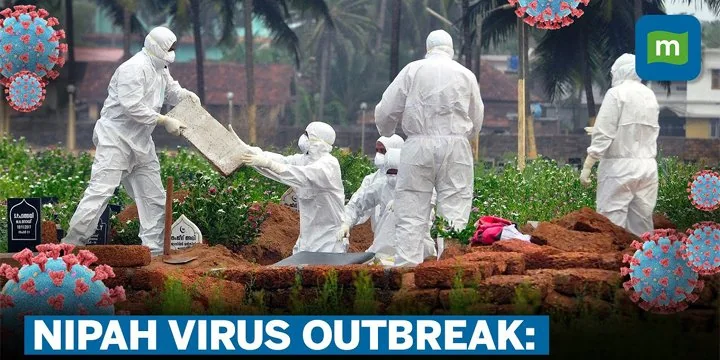
Context: On September 11, samples sent to Calicut Medical College for testing were confirmed as Nipah virus. The Nipah Virus (NiV) infection reported from Kozhikode, Kerala, coming in the aftermath of the Covid-19 pandemic, has attracted worldwide attention. The previous outbreaks in Kerala were recorded in 2018, 2019 and 2021.
VRAuthor Desk
2 min read
Context: On September 11, samples sent to Calicut Medical College for testing were confirmed as Nipah virus. The Nipah Virus (NiV) infection reported from Kozhikode, Kerala, coming in the aftermath of the Covid-19 pandemic, has attracted worldwide attention. The previous outbreaks in Kerala were recorded in 2018, 2019 and 2021.
Context:
- On September 11, samples sent to Calicut Medical College for testing were confirmed as Nipah virus.
- The Nipah Virus (NiV) infection reported from Kozhikode, Kerala, coming in the aftermath of the Covid-19 pandemic, has attracted worldwide attention.
- The previous outbreaks in Kerala were recorded in 2018, 2019 and 2021.
- In all these instances, the state’s public health system responded efficiently and was able to contain these outbreaks effectively.
About Nipah Virus:
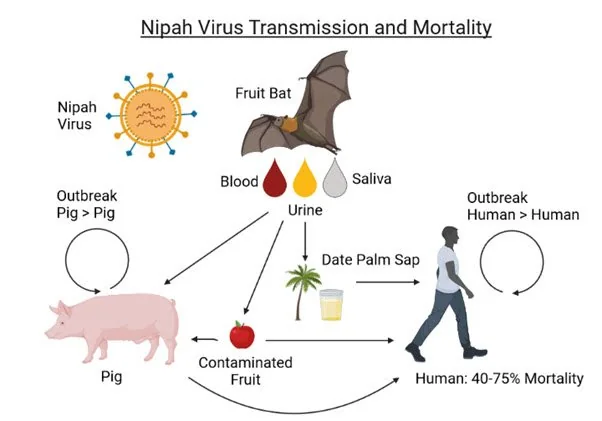
- Nipah virus (NiV) is a zoonotic virus (it is transmitted from animals to humans) and can also be transmitted through contaminated food or directly between people.
- In infected people, it causes a range of illnesses from asymptomatic (subclinical) infection to acute respiratory illness and fatal encephalitis.
- The virus can also cause severe disease in animals such as pigs, resulting in significant economic losses for farmers.
- Although Nipah virus has caused only a few known outbreaks in Asia, it infects a wide range of animals and causes severe disease and death in people, making it a public health concern.
Transmission:
- During the first recognized outbreak in Malaysia, which also affected Singapore, most human infections resulted from direct contact with sick pigs or their contaminated tissues.
- Transmission is thought to have occurred via unprotected exposure to secretions from the pigs, or unprotected contact with the tissue of a sick animal.
- In subsequent outbreaks in Bangladesh and India, consumption of fruits or fruit products (such as raw date palm juice) contaminated with urine or saliva from infected fruit bats was the most likely source of infection.
- There are currently no studies on viral persistence in bodily fluids or the environment including fruits.
- Human-to-human transmission of Nipah virus has also been reported among family and care givers of infected patients.
Signs and symptoms:
- Human infections range from asymptomatic infection to acute respiratory infection (mild, severe), and fatal encephalitis.
- Infected people initially develop symptoms including fever, headaches, myalgia (muscle pain), vomiting and sore throat.
- This can be followed by dizziness, drowsiness, altered consciousness, and neurological signs that indicate acute encephalitis.
- Some people can also experience atypical pneumonia and severe respiratory problems, including acute respiratory distress.
- Encephalitis and seizures occur in severe cases, progressing to coma within 24 to 48 hours.
- The incubation period (interval from infection to the onset of symptoms) is believed to range from 4 to 14 days.
- However, an incubation period as long as 45 days has been reported.
Syllabus: Prelims
- Prelims: Key facts, institutions, locations and terminology in the article.
- Mains: Connect the topic with Economy, Polity & Governance, Health.
- Revision: Use the article headings to prepare concise notes and answer-writing points.
Test your understanding
Questions from this article
Prelims practiceWith reference to Nipah Outbreak, consider the following statements:
- On September 11, samples sent to Calicut Medical College for testing were confirmed as Nipah virus.
- The Nipah Virus (NiV) infection reported from Kozhikode, Kerala, coming in the aftermath of the Covid-19 pandemic, has attracted worldwide attention.
- The previous outbreaks in Kerala were recorded in 2018, 2019 and 2021.
Which of the statements given above are correct?
- 1 and 2 only
- 2 and 3 only
- 1 and 3 only
- 1, 2 and 3
View answer
Answer: (d) 1, 2 and 3. All three statements are drawn from the article.
Mains practiceDiscuss the background, key issues and significance of Nipah Outbreak for India.
Answer in 250 words.
View answer approach
- Context:
- About Nipah Virus:
- Transmission:
- Signs and symptoms:
Frequently asked questionsFrequently asked questions
Why is Nipah Outbreak in the news?
Context: On September 11, samples sent to Calicut Medical College for testing were confirmed as Nipah virus. The Nipah Virus (NiV) infection reported from Kozhikode, Kerala, coming in the aftermath of the Covid-19 pandemic, has attracted worldwide attention.
What are the key facts about Nipah Outbreak?
The previous outbreaks in Kerala were recorded in 2018, 2019 and 2021. In all these instances, the state’s public health system responded efficiently and was able to contain these outbreaks effectively. About Nipah Virus: Nipah virus (NiV) is a zoonotic virus (it is transmitted from animals to humans) and can also be transmitted through contaminated food or directly between people.
Why is Nipah Outbreak important for UPSC preparation?
The topic connects current developments with Economy, Polity & Governance, Health and is relevant for both objective revision and analytical answer writing.