UPSC Current Affairs
MIG 21 RETIRE
Introduction: MiG-21's Final Flight The Indian Air Force (IAF) is set to retire the Russian-origin MiG-21 fighter jets by September 19, 2025. Although pivotal in India's military history, the MiG-21 earned the controversial label of "flying coffin" due to its high accident rate. HISTORICAL SIGNIFICANCE The MiG-21 was inducted into the IAF in 1963 to perform high-altitude interception, especially against aircraft like the U-2 spy plane.
VRAuthor Desk
3 min read
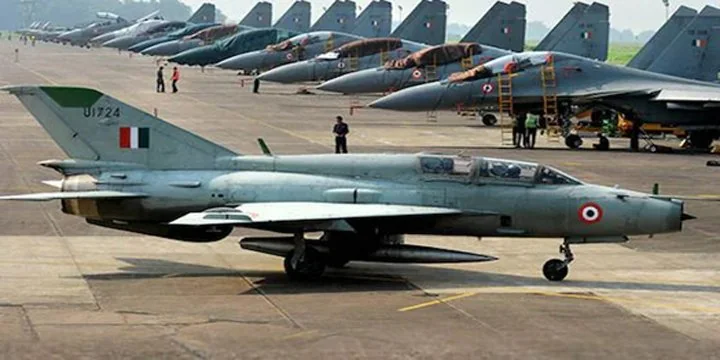
Introduction: MiG-21's Final Flight The Indian Air Force (IAF) is set to retire the Russian-origin MiG-21 fighter jets by September 19, 2025. Although pivotal in India's military history, the MiG-21 earned the controversial label of "flying coffin" due to its high accident rate. HISTORICAL SIGNIFICANCE The MiG-21 was inducted into the IAF in 1963 to perform high-altitude interception, especially against aircraft like the U-2 spy plane.
Introduction: MiG-21's Final Flight
- The Indian Air Force (IAF) is set to retire the Russian-origin MiG-21 fighter jets by September 19, 2025.
- Although pivotal in India's military history, the MiG-21 earned the controversial label of "flying coffin" due to its high accident rate.
HISTORICAL SIGNIFICANCE
- The MiG-21 was inducted into the IAF in 1963 to perform high-altitude interception, especially against aircraft like the U-2 spy plane.
- Over the decades, the IAF operated between 800–1,000 MiG-21s, making it one of the largest MiG-21 fleets in the world.
- The aircraft saw service in major conflicts such as the 1971 war, Kargil war (1999), and the 2019 Balakot operation.
EVOLUTION OF ROLE
- Although originally designed as a high-altitude interceptor, the MiG-21 was used for:
- Ground attack missions
- Fighter reconnaissance
- Air defence
- Jet pilot training
- According to expert, this evolution beyond its design intent was a major reason for operational challenges.
THE “FLYING COFFIN” LABEL
- The MiG-21 is often criticized for its accident rate, with around 300 crashes.
- Experts says that cause was not the aircraft's design, but rather:
- Gaps in pilot training
- Rapid and unplanned acquisition
- Inappropriate use as a training aircraft
PROCUREMENT & TRAINING CHALLENGES
- Post-1965, India's squadron strength rose sharply, pushing the IAF to acquire aircraft rapidly.
- The USSR offered a technology transfer deal, allowing local manufacturing of MiG-21s, which India accepted quickly.
- Initially, only experienced pilots flew the MiG-21, but as numbers grew, inexperienced pilots were assigned.
- The MiG-21U trainer variant was poorly suited for effective pilot training.
- Subsonic trainers like Kiran and Iskra failed to prepare pilots for the MiG-21’s supersonic handling.
THE ROLE OF HUMAN ERROR
- Many MiG-21 crashes were attributed to "human error", which is often misinterpreted as blaming the pilot.
- In aviation, human error includes issues like:
- Inadequate training
- Lack of experience
- Psychological stress or disorientation
Emotional Bond with the Aircraft
- Despite its dangers, many pilots held the MiG-21 in high regard.
- Experts noted that pilots loved the aircraft, but were deeply affected by the loss of colleagues.
COMBAT RECORDS & OPERATIONAL SUCCESS
- In the 1971 war, the MiG-21FL (Type 77) earned the title of "runway buster", playing a crucial role in India's success.
- During the 1999 Kargil War, MiG-21s provided effective air support, although some losses occurred.
- Post-Kargil, the MiG-21 was involved in intercepting a Pakistani Atlantique
- In 2019, Wing Commander Abhinandan Varthaman, flying a MiG-21 Bison, downed a Pakistani F-16, showcasing its enduring combat capabilities.
THE MIG-21 BISON VARIANT
- The MiG-21 Bison, upgraded in the 2000s, includes:
- Israeli electronic jammers
- Russian R-77 and R-73 missiles
- Helmet-mounted sight
- Partial glass cockpit
- The Bison variant remains effective for quick-response operations, especially from forward airbases like Srinagar.
OPERATIONAL READINESS ROLE
- The MiG-21 served as the Operational Readiness Platform (ORP) due to its:
- Short scramble time
- Simplicity and ease of deployment from frontline bases
- According to experts , even the MiG-29 is less ideal for ORP duties at high-altitude bases like Srinagar.
THE FUTURE: REPLACING THE MIG-21
- The IAF intends to replace the MiG-21 with the Light Combat Aircraft (LCA) Tejas.
- However, concerns remain about whether the LCA can match the MiG-21's rapid response capability in certain operational theatres.
Conclusion
The MiG-21’s legacy is a mix of
remarkable service and systemic flaws in training and planning. Its retirement marks the end of an era, but also emphasizes the need for
better pilot preparation and suitable aircraft role allocation in the future.
- Prelims: Key facts, institutions, locations and terminology in the article.
- Mains: Connect the topic with International Relations, Defence, Polity & Governance.
- Revision: Use the article headings to prepare concise notes and answer-writing points.
Test your understanding
Questions from this article
Prelims practiceWith reference to MIG 21 RETIRE, consider the following statements:
- The Indian Air Force (IAF) is set to retire the Russian-origin MiG-21 fighter jets by September 19, 2025.
- Although pivotal in India's military history, the MiG-21 earned the controversial label of "flying coffin" due to its high accident rate.
- The MiG-21 was inducted into the IAF in 1963 to perform high-altitude interception, especially against aircraft like the U-2 spy plane.
Which of the statements given above are correct?
- 1 and 2 only
- 2 and 3 only
- 1 and 3 only
- 1, 2 and 3
View answer
Answer: (d) 1, 2 and 3. All three statements are drawn from the article.
Mains practiceDiscuss the background, key issues and significance of MIG 21 RETIRE for India.
Answer in 250 words.
View answer approach
- HISTORICAL SIGNIFICANCE
- EVOLUTION OF ROLE
- THE “FLYING COFFIN” LABEL
- PROCUREMENT & TRAINING CHALLENGES
- THE ROLE OF HUMAN ERROR
Frequently asked questionsFrequently asked questions
Why is Mig 21 Retire in the news?
Introduction: MiG-21's Final Flight The Indian Air Force (IAF) is set to retire the Russian-origin MiG-21 fighter jets by September 19, 2025. Although pivotal in India's military history, the MiG-21 earned the controversial label of "flying coffin" due to its high accident rate.
What are the key facts about Mig 21 Retire?
HISTORICAL SIGNIFICANCE The MiG-21 was inducted into the IAF in 1963 to perform high-altitude interception, especially against aircraft like the U-2 spy plane. Over the decades, the IAF operated between 800–1,000 MiG-21s, making it one of the largest MiG-21 fleets in the world. The aircraft saw service in major conflicts such as the 1971 war, Kargil war (1999), and the 2019 Balakot operation.
Why is Mig 21 Retire important for UPSC preparation?
The topic connects current developments with International Relations, Defence, Polity & Governance and is relevant for both objective revision and analytical answer writing.