UPSC Current Affairs
J&K QUOTA ISSUE
Background In Jammu & Kashmir, reservation quotas for government jobs and college seats suddenly went up to 70% after the Centre added new groups under ST and OBC categories in 2024. This left only 30% seats for the general/open merit Most people in J&K fall under the general category. So this created anger among many young people.
VRAuthor Desk
3 min read
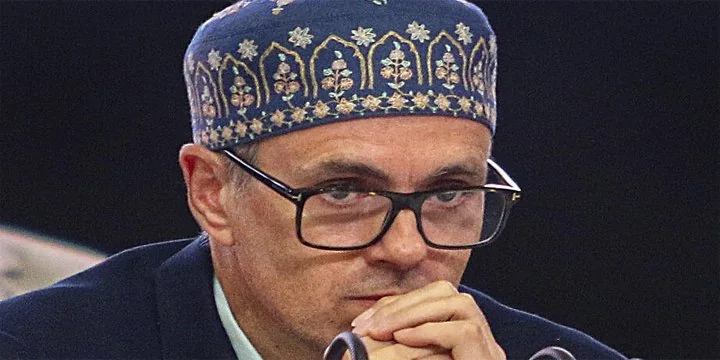
Background In Jammu & Kashmir, reservation quotas for government jobs and college seats suddenly went up to 70% after the Centre added new groups under ST and OBC categories in 2024. This left only 30% seats for the general/open merit Most people in J&K fall under the general category. So this created anger among many young people.
Background
- In Jammu & Kashmir, reservation quotas for government jobs and college seats suddenly went up to 70% after the Centre added new groups under ST and OBC categories in 2024.
- This left only 30% seats for the general/open merit
- Most people in J&K fall under the general category. So this created anger among many young people.
- Opposition parties and even some leaders from Omar Abdullah’s own National Conference (NC) protested.
WHY DID THE QUOTAS INCREASE TO 70%?
What changed in 2024?
- Parliament added many new groups to the Scheduled Tribe (ST)
- ST quota in J&K increased from 10% to 20%.
- New groups were also added to OBC, increasing the OBC quota.
- Together, total reservations rose from 43% ₹ 70%.
This is why youth felt that open merit seats had become “too few”.
THE PROTESTS
- Many young people came out on the streets.
- NC MP Aga Ruhulla Mehdi joined the protest—even though his own party was in power.
- Mehdi said he would protest again after Parliament’s Winter Session if the government did not review the quota structure.
The pressure on the Omar Abdullah government kept increasing.
GOVERNMENT DILEMMA
The NC government promised earlier that reservations would reflect
population numbers. But now they were stuck.
Why?
- ST quotas cannot be reduced, because they were changed by Parliament.
- Cutting ST seats would break the law.
- Changing quotas for newly included groups could also create backlash.
So the government needed another way to increase open merit seats
without touching ST and SC quotas.
WHAT THE CABINET SUB COMMITTEE DECIDED?
A Cabinet Sub Committee studied the situation and gave a solution.
The Cabinet has accepted this plan.
What the plan does:
- SC and ST quotas stay the same. Not touched.
- More seats/jobs will be taken from RBA (Residents of Backward Areas) and EWS (Economically Weaker Sections).
- These seats will be added to open merit/general category to bring it back closer to 50%.
WHY RBA WAS CHOSEN?
A senior official explained:
- Most of the population that earlier fell under RBA in J&K is now in Ladakh after the 2019 reorganisation.
- So the RBA share inside J&K is much smaller now.
- That means shifting some seats from RBA to open category “makes sense”.
WHY COMMITTEE AVOIDED TOUCHING ST QUOTA?
- Parliament created two new sub-groups: ST-I and ST-II.
- Many communities were added.
- This change is protected by law.
- State or UT government cannot reduce these percentages.
So the only flexible categories were
RBA and
EWS.
EXPECTED OUTCOME
- Open merit seats are expected to rise again, possibly close to 50%.
- Youth anger may reduce.
- The government avoids a direct clash with newly included ST and OBC communities.
- But political debates may continue, because all groups want their share protected.
- Prelims: Key facts, institutions, locations and terminology in the article.
- Mains: Connect the topic with Economy.
- Revision: Use the article headings to prepare concise notes and answer-writing points.
Test your understanding
Questions from this article
Prelims practiceWith reference to J&K QUOTA ISSUE, consider the following statements:
- In Jammu & Kashmir, reservation quotas for government jobs and college seats suddenly went up to 70% after the Centre added new groups under ST and OBC categories in 2024.
- This left only 30% seats for the general/open merit
- Most people in J&K fall under the general category. So this created anger among many young people.
Which of the statements given above are correct?
- 1 and 2 only
- 2 and 3 only
- 1 and 3 only
- 1, 2 and 3
View answer
Answer: (d) 1, 2 and 3. All three statements are drawn from the article.
Mains practiceDiscuss the background, key issues and significance of J&K QUOTA ISSUE for India.
Answer in 250 words.
View answer approach
- WHY DID THE QUOTAS INCREASE TO 70%?
- What changed in 2024?
- THE PROTESTS
- What the plan does:
- WHY COMMITTEE AVOIDED TOUCHING ST QUOTA?
Frequently asked questionsFrequently asked questions
Why is J&K Quota Issue in the news?
Background In Jammu & Kashmir, reservation quotas for government jobs and college seats suddenly went up to 70% after the Centre added new groups under ST and OBC categories in 2024. This left only 30% seats for the general/open merit Most people in J&K fall under the general category.
What are the key facts about J&K Quota Issue?
So this created anger among many young people. Opposition parties and even some leaders from Omar Abdullah’s own National Conference (NC) protested. WHY DID THE QUOTAS INCREASE TO 70%?
Why is J&K Quota Issue important for UPSC preparation?
The topic connects current developments with Economy and is relevant for both objective revision and analytical answer writing.