UPSC Current Affairs
INDIA RUSSIA BRICS GRAIN EXCHANGE PROGRAM
Context: On September 25, 2025, PM Narendra Modi met Russian Deputy PM Dmitry Patrushev in New Delhi. Discussion held on creating a BRICS Grain Exchange to enhance agricultural trade cooperation among BRICS nations. Aim: Boost mutual agricultural trade among BRICS members.
VRAuthor Desk
4 min read
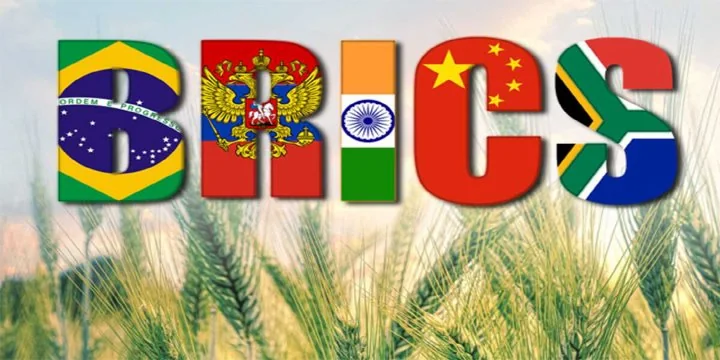
Context: On September 25, 2025, PM Narendra Modi met Russian Deputy PM Dmitry Patrushev in New Delhi. Discussion held on creating a BRICS Grain Exchange to enhance agricultural trade cooperation among BRICS nations. Aim: Boost mutual agricultural trade among BRICS members.
Context:
- On September 25, 2025, PM Narendra Modi met Russian Deputy PM Dmitry Patrushev in New Delhi.
- Discussion held on creating a BRICS Grain Exchange to enhance agricultural trade cooperation among BRICS nations.
- Aim: Boost mutual agricultural trade among BRICS members.
- Venue: World Food India 2025.
BRICS GRAIN EXCHANGE PROPOSAL
What is the BRICS Grain Exchange?
- A proposed common agricultural platform to:
- Facilitate grain and agri-trade among BRICS nations.
- Improve market access and trade integration.
- Reduce dependency on Western-dominated food markets.
Purpose:
- Strengthen mutual food security.
- Improve agricultural trade efficiency.
- Potentially stabilize grain prices across member countries.
INDIA RUSSIA BILATERAL COOPERATION HIGHLIGHTS
Key Sectors:
- Agriculture
- Fertilizers
- Food processing
- Trade & Energy
- Defence (contextual background)
Diplomatic Tone: “Russia highly values its special and privileged strategic partnership with India.” – Dmitry Patrushev
- Trade Turnover (2024): Reached a historic high.
- India considered a key ally of Russia in the global arena.
ADDITIONAL DISCUSSION
- Both sides discussed progress on an FTA between:
- India and the EAEU (comprising Russia, Belarus, Kazakhstan, Armenia, Kyrgyzstan).
- Aim: To enhance bilateral trade, reduce tariffs, and improve market access.
RELEVANCE OF THE BRICS GRAIN EXCHANGE
For India:
- Enhances agricultural exports to BRICS nations.
- Helps Indian farmers by diversifying markets.
- Strategic alternative to Western-controlled grain pricing.
For BRICS:
- Creates a South–South trade platform in agriculture.
- Builds economic autonomy and food security.
- May reduce reliance on the US dollar for food trade.
ABOUT BRICS
Origin and Evolution:
- 2001: Term BRIC coined by economist Jim O’Neill (Brazil, Russia, India, China).
- 2006: First informal BRIC meet (G8 Outreach Summit, Russia).
- 2009: First formal BRIC summit (Russia).
- 2010: South Africa joins ? BRICS
CURRENT MEMBERSHIP
As of
2025, BRICS has
11 members:
- Original 5: Brazil, Russia, India, China, South Africa
- New Members (2024–25):
- Egypt, Ethiopia, Indonesia, Iran, Saudi Arabia, UAE
- Note: Saudi Arabia listed on BRICS website, but has not officially joined, per sources.
BRICS EXPANSION
Concept:
- Introduced at 16th BRICS Summit, Kazan (Russia), Oct 2024.
- Allows non-members to engage with BRICS without voting/veto rights.
- Designed to strengthen ties with emerging economies.
Confirmed Partner Countries (as of Jan 2025):
-
- 9 countries officially accepted invitation:
- Belarus, Bolivia, Cuba, Kazakhstan, Malaysia
- Thailand, Uganda, Uzbekistan, Nigeria
Nigeria became the
9th Partner Country (Jan 2025) – Africa’s largest population and 4th largest economy.
INITIAL 13 INVITEES
| Region |
Countries |
| Latin America |
Cuba, Bolivia |
| Eurasia |
Belarus, Türkiye |
| Africa |
Algeria, Nigeria, Uganda |
| SE Asia |
Indonesia, Malaysia, Thailand, Vietnam |
| Central Asia |
Kazakhstan, Uzbekistan |
OBJECTIVES & GOALS
Core Objectives:
- Promote economic growth and inclusive global governance.
- Intra-BRICS trade and investment cooperation.
- Reform of global institutions (UN, IMF, World Bank).
- Empower Global South: fair trade, climate justice, development support.
- People-to-people exchanges: cultural, educational, and social linkages.
BRICS STRUCTURE & KEY MECHANISMS
| Mechanism |
Purpose |
| New Development Bank (NDB) |
Fund infrastructure & development projects |
| Contingent Reserve Arrangement (CRA) |
$100B safety net for financial crises |
| BRICS Academic Forum |
Promote research & academic collaboration |
BRICS+ STRATEGIC & ECONOMIC SIGNIFICANCE
Economic Strength:
- 45% of global population
- 35% of global GDP (PPP)
Strategic Role:
- Counterbalance to G7 (Western bloc).
- Advocates fair trade, climate justice, and technology access.
- Promotes de-dollarization: e.g., India–UAE trade in rupees & dirhams.
- BRICS Currency: under discussion – could reshape global trade.
- Cooperation in:
- Digital payments
- Cross-border payment systems
- Renewable energy & technology
SIGNIFICANCE OF BRICS IN GRAIN EXCHANGE PROPOSAL
Strategic Importance:
- Enhances food security and agriculture trade integration within BRICS.
- Helps bypass Western-dominated grain markets.
- Can stabilize prices, improve supply chains, and boost farmer income.
Implications for India:
- Improves agriculture export avenues.
- Strengthens strategic partnership with Russia.
- Aligns with India’s food processing & fertilizer goals.
CHALLENGES & SOLUTIONS
|
Challenge |
Solution |
| Overlapping Groupings |
BRICS overlaps with other groupings like IBSA (India, Brazil, South Africa) and BASIC (Brazil, South Africa, India, China), leading to potential inefficiencies. |
Clearly define the roles of each grouping to avoid duplication of efforts and ensure complementarity. |
| Geopolitical Tensions |
Diverging geopolitical interests among member countries, especially regarding China’s Belt and Road Initiative, may cause tensions. |
Promote open dialogue and focus on shared goals like global governance reform to maintain unity. |
| Economic Slowdowns |
Economic slowdowns in some BRICS member countries could impact the group’s collective economic objectives. |
Boost intra-BRICS trade and investments to reduce reliance on external economies and stimulate internal growth. |
| Power Imbalance |
The dominance of China, India, and Russia in BRICS could limit the influence of smaller members like Brazil and South Africa. |
Empower smaller members through initiatives tailored to their priorities, ensuring equal influence within BRICS. |
- Prelims: Key facts, institutions, locations and terminology in the article.
- Mains: Connect the topic with Environment, Economy, International Relations.
- Revision: Use the article headings to prepare concise notes and answer-writing points.
Test your understanding
Questions from this article
Prelims practiceWith reference to INDIA RUSSIA BRICS GRAIN EXCHANGE PROGRAM, consider the following statements:
- On September 25, 2025, PM Narendra Modi met Russian Deputy PM Dmitry Patrushev in New Delhi.
- Discussion held on creating a BRICS Grain Exchange to enhance agricultural trade cooperation among BRICS nations.
- Aim: Boost mutual agricultural trade among BRICS members.
Which of the statements given above are correct?
- 1 and 2 only
- 2 and 3 only
- 1 and 3 only
- 1, 2 and 3
View answer
Answer: (d) 1, 2 and 3. All three statements are drawn from the article.
Mains practiceDiscuss the background, key issues and significance of INDIA RUSSIA BRICS GRAIN EXCHANGE PROGRAM for India.
Answer in 250 words.
View answer approach
- Context:
- BRICS GRAIN EXCHANGE PROPOSAL
- What is the BRICS Grain Exchange?
- Purpose:
- INDIA RUSSIA BILATERAL COOPERATION HIGHLIGHTS
Frequently asked questionsFrequently asked questions
Why is India Russia Brics Grain Exchange Program in the news?
Context: On September 25, 2025, PM Narendra Modi met Russian Deputy PM Dmitry Patrushev in New Delhi. Discussion held on creating a BRICS Grain Exchange to enhance agricultural trade cooperation among BRICS nations.
What are the key facts about India Russia Brics Grain Exchange Program?
Aim: Boost mutual agricultural trade among BRICS members. BRICS GRAIN EXCHANGE PROPOSAL What is the BRICS Grain Exchange? A proposed common agricultural platform to: Facilitate grain and agri-trade among BRICS nations.
Why is India Russia Brics Grain Exchange Program important for UPSC preparation?
The topic connects current developments with Environment, Economy, International Relations and is relevant for both objective revision and analytical answer writing.