UPSC Current Affairs
India Plans $15 bn For Semiconductor Chip Manufacturing
announced an increased funding outlay of $15 billion for the second phase of its semiconductor manufacturing incentive policy. This marks a significant rise from the $10 billion allocated for the first phase. The push aims to enhance India’s presence in the global semiconductor industry.
VRAuthor Desk
2 min read
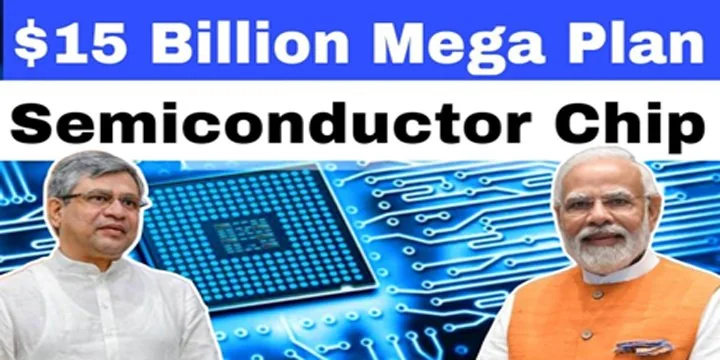
announced an increased funding outlay of $15 billion for the second phase of its semiconductor manufacturing incentive policy. This marks a significant rise from the $10 billion allocated for the first phase. The push aims to enhance India’s presence in the global semiconductor industry.
announced an increased funding outlay of $15 billion for the second phase of its semiconductor manufacturing incentive policy.
- This marks a significant rise from the $10 billion allocated for the first phase.
- The push aims to enhance India’s presence in the global semiconductor industry.
KEY DEVELOPMENTS
- Major Investments and Partnerships:
- Tata Group's Fab Plant: Tata, in partnership with Taiwan's Powerchip Semiconductor Manufacturing Corporation (PSMC), is setting up India’s first commercial semiconductor fabrication plant with an investment exceeding Rs 91,000 crore.
- Assembly and Testing Plants: The government has approved 3 additional assembly and testing plants (ATMPs and OSATs). These plants, less complex than fabrication plants, focus on assembling and testing semiconductor components.
- Micron Technology: The first ATMP, approved in June 2023, is being developed by US-based Micron Technology.
- Tata's Assam Facility: Tata is also building an assembly plant in Assam.
- C G Power and Murugappa Group: The third facility is a joint venture between C G Power and Industrial Solutions (part of the Murugappa Group) and Japan’s Renesas Electronics.
- Financial Commitments:
-
-
- Total Project Cost: The combined cost for these four projects exceeds Rs 1.48 lakh crore.
- Government Subsidies: The central government will contribute nearly Rs 59,000 crore in capital expenditure subsidies.
- State governments are enhancing the appeal of these projects by offering land and electricity at reduced rates.
IMPORTANCE OF CHIP MAKING
- Economic and Strategic Significance:
- Current Landscape: India currently has minimal involvement in semiconductor manufacturing. Major production is concentrated in Taiwan and the United States, with the US investing around $50 billion and the EU also offering substantial incentives.
- Strategic Goals: Building domestic fabrication capabilities is crucial for economic growth and strategic autonomy, given the extensive use of semiconductors in various industries from aerospace to consumer electronics.
- Geopolitical Context:
- Global Tensions: Amid rising geopolitical tensions, particularly between the US and China, India aims to capitalize on opportunities to strengthen its local chip industry with government support.
LIMITATIONS
- Technological Limitations:
- Node Sizes: The Tata-PSMC fabrication plant will not produce cutting-edge semiconductor nodes. This technology requires advanced capabilities not yet available with these partners.
- High Barriers: The semiconductor industry faces high entry barriers. Despite significant investments, like those made by China in Semiconductor Manufacturing International Corporation (SMIC), achieving technological advancements in smaller node sizes remains challenging. Leading companies such as Taiwan Semiconductor Manufacturing Company (TSMC) possess a substantial technological advantage in this area.
- Technological Innovation:
- Innovation Needs: Manufacturing advanced semiconductor nodes involves a high level of technological innovation, which is currently beyond the scope of many new entrants, including the Tata-PSMC venture.
- Prelims: Key facts, institutions, locations and terminology in the article.
- Mains: Connect the topic with Economy, Polity & Governance, Science & Technology.
- Revision: Use the article headings to prepare concise notes and answer-writing points.
Test your understanding
Questions from this article
Prelims practiceWith reference to India Plans $15 bn For Semiconductor Chip Manufacturing, consider the following statements:
- This marks a significant rise from the $10 billion allocated for the first phase.
- The push aims to enhance India’s presence in the global semiconductor industry.
- Major Investments and Partnerships: Tata Group's Fab Plant: Tata, in partnership with Taiwan's Powerchip Semiconductor Manufacturing Corporation (PSMC), is setting up India’s first commercial semiconductor fabrication…
Which of the statements given above are correct?
- 1 and 2 only
- 2 and 3 only
- 1 and 3 only
- 1, 2 and 3
View answer
Answer: (d) 1, 2 and 3. All three statements are drawn from the article.
Mains practiceDiscuss the background, key issues and significance of India Plans $15 bn For Semiconductor Chip Manufacturing for India.
Answer in 250 words.
View answer approach
- KEY DEVELOPMENTS
- IMPORTANCE OF CHIP MAKING
- LIMITATIONS
Frequently asked questionsFrequently asked questions
Why is India Plans $15 Bn For Semiconductor Chip Manufacturing in the news?
announced an increased funding outlay of $15 billion for the second phase of its semiconductor manufacturing incentive policy. This marks a significant rise from the $10 billion allocated for the first phase.
What are the key facts about India Plans $15 Bn For Semiconductor Chip Manufacturing?
The push aims to enhance India’s presence in the global semiconductor industry. KEY DEVELOPMENTS Major Investments and Partnerships: Tata Group's Fab Plant: Tata, in partnership with Taiwan's Powerchip Semiconductor Manufacturing Corporation (PSMC), is setting up India’s first commercial semiconductor fabrication plant with an investment… Assembly and Testing Plants: The government has approved 3 additional assembly and testing plants (ATMPs and OSATs).
Why is India Plans $15 Bn For Semiconductor Chip Manufacturing important for UPSC preparation?
The topic connects current developments with Economy, Polity & Governance, Science & Technology and is relevant for both objective revision and analytical answer writing.