UPSC Current Affairs
INDIA LACKS SO2 EMISSION STANDARDS FOR STEEL PLANTS
A report by the Centre for Research on Energy and Clean Air (CREA) stated that India still lacks national standards for Sulphur Dioxide (SO2) emissions from steel plant stacks. The report highlighted the case of the Bokaro Steel Plant (SAIL) in Jharkhand, which is significantly affecting child health and local air quality. India does not have specific national SO2 emission standards for many steel production units, such as: Sinter Plants Mill Zones Refractory Material Plants These units are recognised sources of SO2 emissions, but regulatory limits are absent.
VRAuthor Desk
3 min read
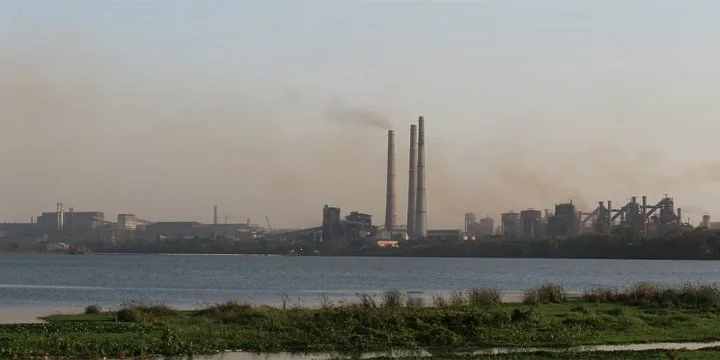
A report by the Centre for Research on Energy and Clean Air (CREA) stated that India still lacks national standards for Sulphur Dioxide (SO2) emissions from steel plant stacks. The report highlighted the case of the Bokaro Steel Plant (SAIL) in Jharkhand, which is significantly affecting child health and local air quality. India does not have specific national SO2 emission standards for many steel production units, such as: Sinter Plants Mill Zones Refractory Material Plants These units are recognised sources of SO2 emissions, but regulatory limits are absent.
Why in News?
- A report by the Centre for Research on Energy and Clean Air (CREA) stated that India still lacks national standards for Sulphur Dioxide (SO2) emissions from steel plant stacks.
- The report highlighted the case of the Bokaro Steel Plant (SAIL) in Jharkhand, which is significantly affecting child health and local air quality.
WHAT IS THE KEY ISSUE?
- India does not have specific national SO2 emission standards for many steel production units, such as:
- Sinter Plants
- Mill Zones
- Refractory Material Plants
- These units are recognised sources of SO2 emissions, but regulatory limits are absent.
- This regulatory gap can increase air pollution exposure for nearby populations.
HEALTH IMPACT OF BOKARO STEEL PLANT
- According to the Health Impact Assessment (HIA) conducted by CREA, the plant’s emissions caused significant health effects.
Impact on Children (Per Year)
- 270 Low Birthweight Births
- 280 Preterm Births
- 25 New Cases of Child Asthma
Impact on Adults
- Around 170 deaths annually linked to exposure to 5 and Nitrogen Dioxide (NO2)
- About 290 asthma-related emergency hospital visits
ECONOMIC IMPACT
- Air pollution from the plant also causes economic losses.
- Around 123,000 workdays lost annually due to pollution-related illnesses
- Estimated economic burden of about US$80 million (₹640 crore) in 2023
- This reflects lost productivity and healthcare costs.
REASONS FOR HIGH IMPACT
- The report highlighted several issues:
- Heavy use of Coal and Coke in steel production
- Incomplete installation of Electrostatic Precipitators (ESPs)
- Continued use of Outdated Cyclone Dust Collectors
- Out of six sinter stack ducts, only two have modern pollution-control equipment.
STEEL SECTOR AS A MAJOR POLLUTER
- The Central Pollution Control Board (CPCB) classifies the steel industry as one of the 17 Highly Polluting Industries in India.
- Key facts:
- Current steel production capacity: ~200 million tonnes per year
- Planned capacity by 2030: 300 million tonnes
- India accounts for 57% of global coal-based steelmaking capacity under development
- This indicates rapid expansion with significant pollution risks.
WEAK MONITORING & TRANSPARENCY
- In 2014, CPCB mandated installation of Continuous Emission Monitoring Systems (CEMS) in highly polluting industries.
- However, problems remain:
- Incomplete implementation of CEMS
- Poor calibration and regulation
- Limited public access to emission data
- Lack of historical pollution records
- This reduces transparency and accountability.
ENVIRONMENTAL CONCERNS
- Experts warn that rapid expansion of steel production may lead to:
- Increased Air Pollutant Emissions
- Higher Greenhouse Gas Emissions
- Greater Environmental Degradation
- Without stricter regulations, India risks following a “Pollute Now, Clean Later” industrial model.
IMPORTANCE OF STRONGER REGULATION
Experts recommend:
- Setting National SO2 Emission Standards for Steel Plants
- Strengthening Pollution Monitoring Systems
- Increasing Data Transparency
- Promoting Cleaner Steel Production Technologies
This is essential to protect
Public Health and Environment.
CONCLUSION
The
CREA report on Bokaro Steel Plant highlights a broader national issue —
weak pollution standards in India’s steel sector. As India expands steel production, it is crucial to introduce
strict emission standards, transparent monitoring, and cleaner technologies to prevent long-term
health, environmental and economic damage.
- Prelims: Key facts, institutions, locations and terminology in the article.
- Mains: Connect the topic with Economy, Polity & Governance, Health.
- Revision: Use the article headings to prepare concise notes and answer-writing points.
Test your understanding
Questions from this article
Prelims practiceWith reference to INDIA LACKS SO2 EMISSION STANDARDS FOR STEEL PLANTS, consider the following statements:
- A report by the Centre for Research on Energy and Clean Air (CREA) stated that India still lacks national standards for Sulphur Dioxide (SO2) emissions from steel plant stacks.
- The report highlighted the case of the Bokaro Steel Plant (SAIL) in Jharkhand, which is significantly affecting child health and local air quality.
- India does not have specific national SO2 emission standards for many steel production units, such as: Sinter Plants Mill Zones Refractory Material Plants
Which of the statements given above are correct?
- 1 and 2 only
- 2 and 3 only
- 1 and 3 only
- 1, 2 and 3
View answer
Answer: (d) 1, 2 and 3. All three statements are drawn from the article.
Mains practiceDiscuss the background, key issues and significance of INDIA LACKS SO2 EMISSION STANDARDS FOR STEEL PLANTS for India.
Answer in 250 words.
View answer approach
- Why in News?
- WHAT IS THE KEY ISSUE?
- HEALTH IMPACT OF BOKARO STEEL PLANT
- ECONOMIC IMPACT
- REASONS FOR HIGH IMPACT
Frequently asked questionsFrequently asked questions
Why is India Lacks So2 Emission Standards For Steel Plants in the news?
A report by the Centre for Research on Energy and Clean Air (CREA) stated that India still lacks national standards for Sulphur Dioxide (SO2) emissions from steel plant stacks. The report highlighted the case of the Bokaro Steel Plant (SAIL) in Jharkhand, which is significantly affecting child health and local air quality.
What are the key facts about India Lacks So2 Emission Standards For Steel Plants?
India does not have specific national SO2 emission standards for many steel production units, such as: Sinter Plants Mill Zones Refractory Material Plants These units are recognised sources of SO2 emissions, but regulatory limits are absent. This regulatory gap can increase air pollution exposure for nearby populations. HEALTH IMPACT OF BOKARO STEEL PLANT According to the Health Impact Assessment (HIA) conducted by CREA, the plant’s emissions caused significant health effects.
Why is India Lacks So2 Emission Standards For Steel Plants important for UPSC preparation?
The topic connects current developments with Economy, Polity & Governance, Health and is relevant for both objective revision and analytical answer writing.