UPSC Current Affairs
Humsafar Policy
Recently, Union Minister for Road Transport and Highways Nitin Gadkari launched the Humsafar Policy, aimed at improving wayside amenities along national highways in India. KEY FEATURES Amenities Provided: The policy will introduce essential facilities at fuel stations along highways, including: Clean toilets Baby care rooms Wheelchair access Electric vehicle (EV) charging stations Parking spaces Dormitory services User… This initiative also aims to empower local entrepreneurs, generate jobs, and improve livelihoods for service providers.
VRAuthor Desk
2 min read
Recently, Union Minister for Road Transport and Highways Nitin Gadkari launched the Humsafar Policy, aimed at improving wayside amenities along national highways in India. KEY FEATURES Amenities Provided: The policy will introduce essential facilities at fuel stations along highways, including: Clean toilets Baby care rooms Wheelchair access Electric vehicle (EV) charging stations Parking spaces Dormitory services User… This initiative also aims to empower local entrepreneurs, generate jobs, and improve livelihoods for service providers.
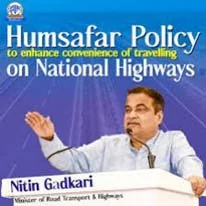
Recently, Union Minister for Road Transport and Highways Nitin Gadkari launched the
Humsafar Policy, aimed at
improving wayside amenities along national highways in India.
KEY FEATURES
- Amenities Provided: The policy will introduce essential facilities at fuel stations along highways, including:
- Clean toilets
- Baby care rooms
- Wheelchair access
- Electric vehicle (EV) charging stations
- Parking spaces
- Dormitory services
- User Experience: The goal is to create a convenient, safe, and enjoyable experience for highway users. This initiative also aims to empower local entrepreneurs, generate jobs, and improve livelihoods for service providers.
NEED FOR STANDARDISATION
- Current Situation: While there are existing facilities like dhabas (roadside restaurants), food courts, and petrol pumps, they lack standardization and quality monitoring.
- Impact of Humsafar Policy: The policy will require all service providers to improve their offerings by standardizing facilities, ensuring better services for commuters.
Minister's Remarks
- Benefitting Local Communities: During the launch, Gadkari emphasized that the initiative would benefit local marginalized groups in society.
- Enhancing Travel Experience: The scheme aims to facilitate smoother, safer, and more pleasant journeys for travelers.
IMPLEMENTATION DETAILS
- Facility Planning: The government plans to set up at least 950 wayside amenities, primarily on high-speed corridors and highways with four or more lanes. Facilities will be spaced approximately every 40-60 kilometers along the highways.
- Visibility and Promotion: Service providers will be allowed to put up signage for their establishments on national highways, increasing their visibility to travelers. Additionally, their presence on the NHAI's Rajmarg mobile application will boost online visibility.
Additional Information
- Longest National Highway: NH44, also known as Old NH 7, is India's longest national highway, stretching 3,745 kilometers (2,327 miles) from Srinagar in Jammu and Kashmir to Kanyakumari in Tamil Nadu.
- Prelims: Key facts, institutions, locations and terminology in the article.
- Mains: Connect the topic with Polity & Governance.
- Revision: Use the article headings to prepare concise notes and answer-writing points.
Test your understanding
Questions from this article
Prelims practiceWith reference to Humsafar Policy, consider the following statements:
- Amenities Provided: The policy will introduce essential facilities at fuel stations along highways, including: Clean toilets Baby care rooms Wheelchair access Electric vehicle (EV) charging stations Parking spaces…
- Electric vehicle (EV) charging stations
- User Experience: The goal is to create a convenient, safe, and enjoyable experience for highway users. This initiative also aims to empower local entrepreneurs, generate jobs, and improve livelihoods for service…
Which of the statements given above are correct?
- 1 and 2 only
- 2 and 3 only
- 1 and 3 only
- 1, 2 and 3
View answer
Answer: (d) 1, 2 and 3. All three statements are drawn from the article.
Mains practiceDiscuss the background, key issues and significance of Humsafar Policy for India.
Answer in 250 words.
View answer approach
- KEY FEATURES
- NEED FOR STANDARDISATION
- IMPLEMENTATION DETAILS
Frequently asked questionsFrequently asked questions
Why is Humsafar Policy in the news?
Recently, Union Minister for Road Transport and Highways Nitin Gadkari launched the Humsafar Policy, aimed at improving wayside amenities along national highways in India. KEY FEATURES Amenities Provided: The policy will introduce essential facilities at fuel stations along highways, including: Clean toilets Baby care rooms Wheelchair access Electric vehicle (EV) charging stations Parking spaces Dormitory services User…
What are the key facts about Humsafar Policy?
This initiative also aims to empower local entrepreneurs, generate jobs, and improve livelihoods for service providers. NEED FOR STANDARDISATION Current Situation: While there are existing facilities like dhabas (roadside restaurants), food courts, and petrol pumps, they lack standardization and quality monitoring. Impact of Humsafar Policy: The policy will require all service providers to improve their offerings by standardizing facilities, ensuring better services for commuters.
Why is Humsafar Policy important for UPSC preparation?
The topic connects current developments with Polity & Governance and is relevant for both objective revision and analytical answer writing.