UPSC Current Affairs
H1B VISAS, INDIAN WORKERS & CHANGING IMMIGRATION DISCOURSE
Context: The Trump administration has imposed a $100,000 annual fee on each H-1B visa. This move significantly affects Indian tech workers, who constitute over 70% of H-1B visa holders, and has reignited the debate on immigration, protectionism, and skilled foreign labour in the United States. From September 21, 2025, companies hiring foreign talent under the H-1B visa program in the US must pay $100,000 annually per visa.
VRAuthor Desk
4 min read
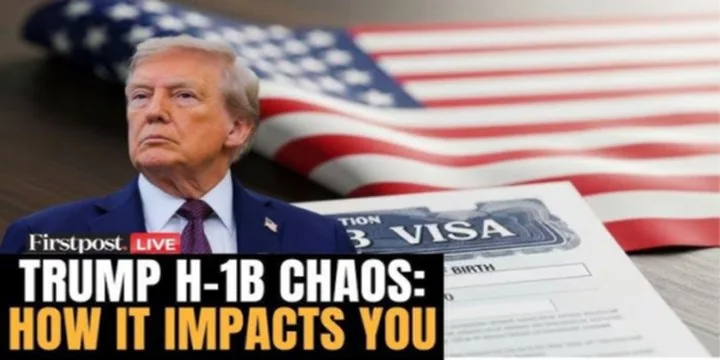
Context: The Trump administration has imposed a $100,000 annual fee on each H-1B visa. This move significantly affects Indian tech workers, who constitute over 70% of H-1B visa holders, and has reignited the debate on immigration, protectionism, and skilled foreign labour in the United States. From September 21, 2025, companies hiring foreign talent under the H-1B visa program in the US must pay $100,000 annually per visa.
Context: The Trump administration has imposed a
$100,000 annual fee on each H-1B visa. This move significantly affects
Indian tech workers, who constitute over
70% of H-1B visa holders, and has reignited the debate on immigration, protectionism, and skilled foreign labour in the United States.
WHY IN NEWS?
- From September 21, 2025, companies hiring foreign talent under the H-1B visa program in the US must pay $100,000 annually per visa.
- This change is expected to heavily impact Indian professionals, who form the majority of H-1B visa holders.
- It aligns with the Trump administration’s broader agenda of restrictive immigration policies, justified on the grounds of protecting American jobs.
- The move is part of a larger ideological battle within the US around skilled immigration, wage depression, and the future of global talent mobility.
WHAT IS H1B VISA PROGRAM?
- H-1B is a non-immigrant visa that allows US employers to temporarily hire foreign workers in specialty occupations, especially in STEM (Science, Technology, Engineering, and Math) fields.
- The program is capped at 85,000 new visas annually:
- 65,000 regular H-1B cap
- 20,000 for advanced degree holders from US institutions
- The visa is usually valid for 3 years, extendable to 6 years.
DETAILS OF THE NEW POLICY
- The Trump administration has imposed:
- A $100,000 annual fee for every H-1B worker employed.
- Previously, filing costs ranged from $1,500 to $6,000 per visa, depending on company size and legal compliance.
Why It’s a Game Changer
- It disincentivizes companies—especially tech firms—from hiring foreign workers.
- Smaller companies and Indian IT firms like Infosys and TCS may reduce or halt H-1B recruitment.
- Major shift from policy reform to prohibitive economic barriers.
INDIA’S DOMINANCE IN H1B VISA PROGRAM
| Country of Birth |
Share of H-1B Approvals |
| India |
70–74% (since 2015) |
| China |
12–13% |
| Others |
<15% combined |
Indian tech workers have been
, working in roles from software development to AI research.
TRUMP ADMINISTRATION’S JUSTIFICATION
- Commerce Secretary Howard Lutnick called the H-1B program a “scam” in an August 2025 Fox News interview.
- Claimed it undercuts American workers’ wages:
- “Why are we doing that? It’s like picking the bottom core.”
- Echoes long-held nativist Republican positions that:
- Foreign workers are taking jobs from Americans.
- Immigration leads to wage depression and higher unemployment for US citizens.
WAGE DATA (FY 23)
| Salary Bracket (USD) |
Share of Indian H-1B Approvals |
| Below $100,000 |
~70% |
| $100,000–$150,000 |
~25% |
| Above $150,000 |
~5% |
- Median salary for US IT professionals: $104,420 (May 2023, US Bureau of Labor Statistics)
- Critics argue Indian H-1B hires are underpaid relative to market standards.
- Supporters say wages are market-driven, and the skills gap necessitates foreign hiring.
US IMMIGRATION DISCOURSE
- Immigration is now one of the top political issues in the US.
- 14.6% of voters considered it the most important issue in 2024 (YouGov poll).
- Up from just 2.1% in 2012.
- Trump's narrative:
- Framed low-skilled and now skilled immigration as threats to American livelihoods.
- Echoes his earlier “Mexicans stealing jobs” rhetoric—now targeted at Indian tech workers.
SKILLED WORKFORCE REALITIES
- India and China dominate global STEM talent.
- STEM graduates (2020, CSET data):
- China: 3.57 million
- India: 2.55 million
- US: 820,000
- Industry insiders argue:
- H-1B is essential to bridge US skill shortages, especially in emerging fields like AI, robotics, and semiconductors.
- Restrictions may lead to outsourcing or talent shifting to Canada, Europe, or Australia.
ABANDONING REFORM: TRUMP’S H1B STRATEGY
Earlier Reform Proposals (2017–2020):
- Restrict intake to higher-paying positions.
- Change lottery to favor salary-based selection.
- Proposals shelved under the Biden administration.
Current Strategy (2025):
- No structural reform ? Instead, impose a massive fee to deter hiring.
- $100,000/year fee = De facto cap without changing laws.
- Applies across the board ? affects students, early-career professionals, and mid-level workers.
IMPACTS ON INDIA
Economic Impact:
- Indian IT companies may:
- Cut back on H-1B hiring
- Increase offshoring
- Shift operations to Canada, Europe
- Sectors affected:
- Technology
- Consulting
- Startups
- Higher education (student-to-worker pipeline)
Strategic Concerns:
- India's people-to-people ties with the US weaken.
- Visa restrictions + trade tariffs (like those from August 2025) signal a hostile US policy environment.
IMPACT OF THE FEE HIKE
- HIRING PATTERNS MAY ALTER.
- American Cos. may opt for more offshoring to India. This can increase economic activities in India. (particularly tech startups)
- Nearshoring can also take place and business operations can be shifted to nearby countries like Mexico & Canada.
- LOCAL HIRING CAN GO UP.
- STOCK MARKET VOLATILITY.
- BRAIN DRAIN FROM INDIA WILL BE REDUCED.
- Prelims: Key facts, institutions, locations and terminology in the article.
- Mains: Connect the topic with Economy, International Relations, Polity & Governance.
- Revision: Use the article headings to prepare concise notes and answer-writing points.
Test your understanding
Questions from this article
Prelims practiceWith reference to H1B VISAS, INDIAN WORKERS & CHANGING IMMIGRATION DISCOURSE, consider the following statements:
- From September 21, 2025, companies hiring foreign talent under the H-1B visa program in the US must pay $100,000 annually per visa.
- This change is expected to heavily impact Indian professionals, who form the majority of H-1B visa holders.
- It aligns with the Trump administration’s broader agenda of restrictive immigration policies, justified on the grounds of protecting American jobs.
Which of the statements given above are correct?
- 1 and 2 only
- 2 and 3 only
- 1 and 3 only
- 1, 2 and 3
View answer
Answer: (d) 1, 2 and 3. All three statements are drawn from the article.
Mains practiceDiscuss the background, key issues and significance of H1B VISAS, INDIAN WORKERS & CHANGING IMMIGRATION DISCOURSE for India.
Answer in 250 words.
View answer approach
- WHY IN NEWS?
- WHAT IS H1B VISA PROGRAM?
- DETAILS OF THE NEW POLICY
- INDIA’S DOMINANCE IN H1B VISA PROGRAM
- TRUMP ADMINISTRATION’S JUSTIFICATION
Frequently asked questionsFrequently asked questions
Why is H1B Visas, Indian Workers & Changing Immigration Discourse in the news?
Context: The Trump administration has imposed a $100,000 annual fee on each H-1B visa. This move significantly affects Indian tech workers, who constitute over 70% of H-1B visa holders, and has reignited the debate on immigration, protectionism, and skilled foreign labour in the United States.
What are the key facts about H1B Visas, Indian Workers & Changing Immigration Discourse?
From September 21, 2025, companies hiring foreign talent under the H-1B visa program in the US must pay $100,000 annually per visa. This change is expected to heavily impact Indian professionals, who form the majority of H-1B visa holders. It aligns with the Trump administration’s broader agenda of restrictive immigration policies, justified on the grounds of protecting American jobs.
Why is H1B Visas, Indian Workers & Changing Immigration Discourse important for UPSC preparation?
The topic connects current developments with Economy, International Relations, Polity & Governance and is relevant for both objective revision and analytical answer writing.