UPSC Current Affairs
Gujarat bans Conocarpus plants: Which other states stopped cultivating some trees
In a circular issued on Tuesday (September 26), the principal chief conservator of forests and head of forest force, S K Chaturvedi, emphasised the need to control the growth of “exotic species Conocarpus”. Research reports have highlighted adverse impacts/ disadvantages of this species on environment and human health. Trees of this species flower in winter and spread pollen in nearby areas.
VRAuthor Desk
3 min read
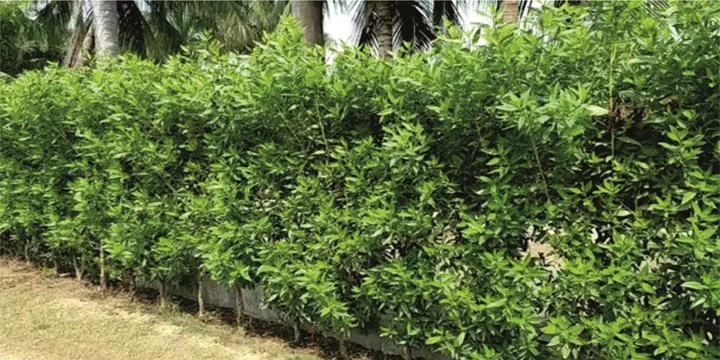
In a circular issued on Tuesday (September 26), the principal chief conservator of forests and head of forest force, S K Chaturvedi, emphasised the need to control the growth of “exotic species Conocarpus”. Research reports have highlighted adverse impacts/ disadvantages of this species on environment and human health. Trees of this species flower in winter and spread pollen in nearby areas.
What happened in Gujarat?
- In a circular issued on Tuesday (September 26), the principal chief conservator of forests and head of forest force, S K Chaturvedi, emphasised the need to control the growth of “exotic species Conocarpus”.
- Research reports have highlighted adverse impacts/ disadvantages of this species on environment and human health. Trees of this species flower in winter and spread pollen in nearby areas.
- It is learnt that this is causing diseases like cold, cough, asthma, allergy etc. Roots of this species go deep inside the soil and develop extensively, damaging telecommunication lines, drainage lines and freshwater systems.
- Also, the leaves of Conocarpus are unpalatable to plant-eating animals.
What happened in Delhi with Vilayati Kikar?
- In 2018, the Delhi government agreed to clear the capital’s green lungs, the Central Ridge, of the Vilayati Kikar after years of appeals and court cases by activists.
- The Vilayati Kikar ( Prosopis juliflora) is not native to Delhi, and was brought to the city in the 1930s by the British. As the tree grows fast even in arid conditions, it can quickly increase the green cover of an area, and be used as firewood.
- However, it also kills off competition. Thus, within a decade, it had taken over the Ridge, killing the native trees like acacia, dhak, kadamb, amaltas, flame-of-the-forest, etc. Along with the trees disappeared the fauna — birds, butterflies, leopards, porcupines and jackals.
- The tree also depletes the water table of the area it is planted in.
- In 2016, the Madras High Court too passed an interim order for the removal of these trees as they were depleting the water table in areas already struggling for water.
- In Delhi, the canopy of the trees is being shortened, so it uses less water and allows sunlight to reach the ground. More native trees are being planted, so they can suppress the growth of the Kikar.
What was Kerala’s experience with Eucalyptus?
- In Kerala’s case too, it was the British who introduced the Eucalyptus tree to Munnar, so its wood could be used as fuel in tea plantation boilers. The state forest department stopped the cultivation of acacia and eucalyptus in forest tracts in 2018.
- A study by The Wildlife Institute of India-Dehradun and Periyar Tiger Conservation Foundation in Kerala on man-animal conflict had found that foreign invasive plants had reduced the availability of fodder in forests, forcing animals to foray into settlements and farmlands.
- The quality of forest habitats had been lost due to the cultivation of alien plants such as acacia, mangium and eucalyptus in forest tracts for commercial purposes.
Syllabus- Prelims; Current Affairs
Source- Indian Express
- Prelims: Key facts, institutions, locations and terminology in the article.
- Mains: Connect the topic with Environment, International Relations, Polity & Governance.
- Revision: Use the article headings to prepare concise notes and answer-writing points.
Test your understanding
Questions from this article
Prelims practiceWith reference to Gujarat bans Conocarpus plants: Which other states stopped cultivating some trees, consider the following statements:
- In a circular issued on Tuesday (September 26), the principal chief conservator of forests and head of forest force, S K Chaturvedi, emphasised the need to control the growth of “exotic species Conocarpus”.
- Research reports have highlighted adverse impacts/ disadvantages of this species on environment and human health. Trees of this species flower in winter and spread pollen in nearby areas.
- It is learnt that this is causing diseases like cold, cough, asthma, allergy etc. Roots of this species go deep inside the soil and develop extensively, damaging telecommunication lines, drainage lines and freshwater…
Which of the statements given above are correct?
- 1 and 2 only
- 2 and 3 only
- 1 and 3 only
- 1, 2 and 3
View answer
Answer: (d) 1, 2 and 3. All three statements are drawn from the article.
Mains practiceDiscuss the background, key issues and significance of Gujarat bans Conocarpus plants: Which other states stopped cultivating some trees for India.
Answer in 250 words.
View answer approach
- What happened in Gujarat?
- What happened in Delhi with Vilayati Kikar?
- What was Kerala’s experience with Eucalyptus?
Frequently asked questionsFrequently asked questions
Why is Gujarat Bans Conocarpus Plants: Which Other States Stopped Cultivating Some Trees in the news?
In a circular issued on Tuesday (September 26), the principal chief conservator of forests and head of forest force, S K Chaturvedi, emphasised the need to control the growth of “exotic species Conocarpus”. Research reports have highlighted adverse impacts/ disadvantages of this species on environment and human health.
What are the key facts about Gujarat Bans Conocarpus Plants: Which Other States Stopped Cultivating Some Trees?
Trees of this species flower in winter and spread pollen in nearby areas. It is learnt that this is causing diseases like cold, cough, asthma, allergy etc. Roots of this species go deep inside the soil and develop extensively, damaging telecommunication lines, drainage lines and freshwater systems.
Why is Gujarat Bans Conocarpus Plants: Which Other States Stopped Cultivating Some Trees important for UPSC preparation?
The topic connects current developments with Environment, International Relations, Polity & Governance and is relevant for both objective revision and analytical answer writing.