UPSC Current Affairs
FERMENTED FOOD & PERSONALISED NUTRITION IN INDIA
A recent study by the Institute of Advanced Study in Science and Technology (IASST), Guwahati, under the Department of Science & Technology (DST), has highlighted that bioactive peptides in traditional fermented foods have population-specific health effects. And it could be used to develop personalized nutrition strategies tailored to India’s genetically and culturally diverse population. Short chains of amino acids (2–20 amino acids) produced during the fermentation process in foods.
VRAuthor Desk
2 min read
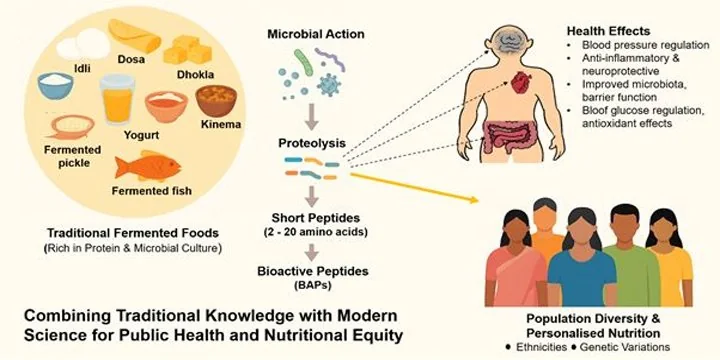
A recent study by the Institute of Advanced Study in Science and Technology (IASST), Guwahati, under the Department of Science & Technology (DST), has highlighted that bioactive peptides in traditional fermented foods have population-specific health effects. And it could be used to develop personalized nutrition strategies tailored to India’s genetically and culturally diverse population. Short chains of amino acids (2–20 amino acids) produced during the fermentation process in foods.
Why in News?
- A recent study by the Institute of Advanced Study in Science and Technology (IASST), Guwahati, under the Department of Science & Technology (DST), has highlighted that bioactive peptides in traditional fermented foods have population-specific health effects.
- And it could be used to develop personalized nutrition strategies tailored to India’s genetically and culturally diverse population.
WHAT ARE BIO ACTIVE PEPTIDES?
- Short chains of amino acids (2–20 amino acids) produced during the fermentation process in foods.
- Found in fermented foods like yogurt, idli, kimchi, miso, natto, and fermented fish.
- They interact with human cells through:
- Electrostatic forces
- Hydrogen bonding
- Hydrophobic interactions
HEALTH BENEFITS OF BAPs
- Antimicrobial: Helps fight harmful bacteria
- Antihypertensive: Regulates blood pressure
- Antioxidant: Reduces oxidative stress
- Immunomodulatory: Balances immune responses
- Anti-inflammatory: Helps reduce chronic inflammation
- May support cardiac health, metabolic balance, and gut microbiome diversity
PERSONALISED NUTRITION FOR INDIA’S DIVERSITY
- Effects of BAPs vary across individuals due to:
- Genetic polymorphisms (e.g. ACE, IL-6 genes)
- Gut microbiota composition
- Cultural dietary patterns
- Pre-existing health conditions
This opens the door for
precision nutrition — dietary interventions tailored to
individual biology and ethnicity.
SCIENTIFIC & POLICY IMPLICATIONS
1. R&D and Innovation
- Emphasizes omics-based research (genomics, proteomics, metabolomics).
- Highlights the need to improve fermentation techniques, peptide stability, and interaction mapping with gut microbiota.
2. Public Health Integration
- Suggests incorporating fermented foods into national nutrition programs, especially in rural and tribal areas.
- Supports low-cost, culturally acceptable nutrition interventions.
3. Global Leadership Potential
- India’s traditional food diversity positions it as a potential leader in global personalized nutrition
- Prelims: Key facts, institutions, locations and terminology in the article.
- Mains: Connect the topic with Polity & Governance, Health, Science & Technology.
- Revision: Use the article headings to prepare concise notes and answer-writing points.
Test your understanding
Questions from this article
Prelims practiceWith reference to FERMENTED FOOD & PERSONALISED NUTRITION IN INDIA, consider the following statements:
- A recent study by the Institute of Advanced Study in Science and Technology (IASST), Guwahati, under the Department of Science & Technology (DST), has highlighted that bioactive peptides in traditional fermented foods…
- And it could be used to develop personalized nutrition strategies tailored to India’s genetically and culturally diverse population.
- Short chains of amino acids (2–20 amino acids) produced during the fermentation process in foods.
Which of the statements given above are correct?
- 1 and 2 only
- 2 and 3 only
- 1 and 3 only
- 1, 2 and 3
View answer
Answer: (d) 1, 2 and 3. All three statements are drawn from the article.
Mains practiceDiscuss the background, key issues and significance of FERMENTED FOOD & PERSONALISED NUTRITION IN INDIA for India.
Answer in 250 words.
View answer approach
- Why in News?
- WHAT ARE BIO ACTIVE PEPTIDES?
- PERSONALISED NUTRITION FOR INDIA’S DIVERSITY
- SCIENTIFIC & POLICY IMPLICATIONS
Frequently asked questionsFrequently asked questions
Why is Fermented Food & Personalised Nutrition In India in the news?
A recent study by the Institute of Advanced Study in Science and Technology (IASST), Guwahati, under the Department of Science & Technology (DST), has highlighted that bioactive peptides in traditional fermented foods have population-specific health effects. And it could be used to develop personalized nutrition strategies tailored to India’s genetically and culturally diverse population.
What are the key facts about Fermented Food & Personalised Nutrition In India?
Short chains of amino acids (2–20 amino acids) produced during the fermentation process in foods. Found in fermented foods like yogurt, idli, kimchi, miso, natto, and fermented fish. They interact with human cells through: Electrostatic forces Hydrogen bonding Hydrophobic interactions HEALTH BENEFITS OF BAPs Antimicrobial: Helps fight harmful bacteria Antihypertensive: Regulates blood pressure Antioxidant: Reduces oxidative stress…
Why is Fermented Food & Personalised Nutrition In India important for UPSC preparation?
The topic connects current developments with Polity & Governance, Health, Science & Technology and is relevant for both objective revision and analytical answer writing.