UPSC Current Affairs
Attacks In Balochistan
On August 26, 2024, Baloch militants in Balochistan's Musakhail district targeted buses and trucks traveling to and from Punjab. They stopped vehicles, checked passengers' identities, and killed 23 people identified as Punjabis. The militants also set fire to 10 vehicles.
VRAuthor Desk
3 min read
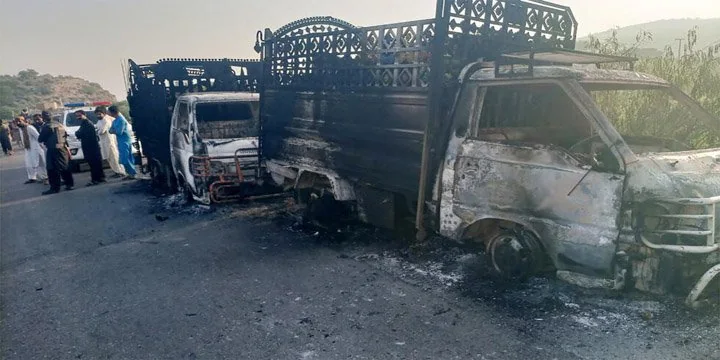
On August 26, 2024, Baloch militants in Balochistan's Musakhail district targeted buses and trucks traveling to and from Punjab. They stopped vehicles, checked passengers' identities, and killed 23 people identified as Punjabis. The militants also set fire to 10 vehicles.
On August 26, 2024, Baloch militants in Balochistan's Musakhail district targeted buses and trucks traveling to and from Punjab. They stopped vehicles, checked passengers' identities,
and killed 23 people identified as Punjabis. The militants also set fire to 10 vehicles.
Historical Context: This attack is part of a larger pattern of violence in Balochistan, where similar incidents targeting Punjabis have occurred:
- In April 2024, militants killed nine Punjabis near Noshki.
- In October 2023, six Punjabi laborers were killed in Kech district.
- In 2015, 20 workers from Sindh and Punjab were killed near Turbat.
BACKGROUND
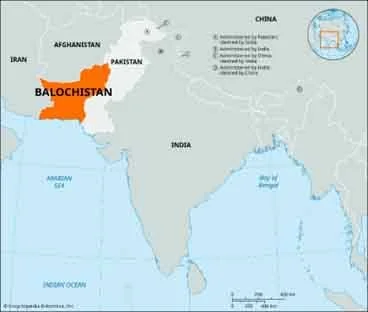
- Balochistan has been a hotspot of conflict since Pakistan's creation in 1947.
- The first insurgency began in 1948 after Balochistan’s accession to Pakistan was forced.
- Multiple insurgencies followed, including significant ones from 1958-1959, 1962-1963, and 1973-1977. The current phase of insurgency started in 2003.
BALOCH LIBERATION ARMY
- Goals: The BLA seeks independence for Balochistan, a resource-rich province in southwestern Pakistan. They argue that the central government exploits Balochistan’s resources unfairly.
- Targets: The BLA targets key infrastructure, security posts, and Chinese interests in the region. Their attacks have included strikes on the Gwadar port, Pakistani stock exchange, and the Chinese consulate in Karachi.
- Tactics: The group has expanded its tactics from guerrilla warfare to include suicide bombings and direct assaults on military and naval bases.
The BLA's actions have
strained relations between Pakistan and Iran, with both countries accusing each other of harboring militants.
REASONS FOR INSURGENCY
- Ethnic Tensions: Balochistan's ethnic and cultural identity is distinct from that of Punjabis. The Baloch people have historically felt marginalized within the Pakistani state, which is dominated by Punjabis. The perception of Punjabi dominance extends to politics, bureaucracy, and even sports.
- Economic Discontent: Despite Balochistan's rich natural resources, including oil, gold and copper and its strategic location, the province remains underdeveloped and impoverished. The local population feels that they do not benefit from the province’s resources, which are often exploited by the central government and external entities like China. For instance, the Gwadar port, a major development project, has been criticized for benefiting outsiders rather than local Baloch.
- Strategic Importance: The province’s location and resources are vital for Pakistan and China. Balochistan's coastline is near critical shipping lanes, and it plays a significant role in the China-Pakistan Economic Corridor (CPEC).
- Human Rights Issues: Balochistan has seen protests over alleged abuses by security forces, including enforced disappearances and extrajudicial killings.
CURRENT STATUS
The Baloch Liberation Army (BLA), a key insurgent group, has claimed responsibility for the recent attack.
They have warned of more such actions. The violence is driven by long-standing grievances against the Punjabi-dominated Pakistani state, which many Baloch people feel oppressed their cultural and economic rights.
Conclusion:
The recent attack on Punjabi travelers reflects deep-seated ethnic and economic tensions between Balochistan and the central Pakistani state. The ongoing insurgency is fueled by a complex mix of historical grievances, economic disparity, and ethnic discord.
- Prelims: Key facts, institutions, locations and terminology in the article.
- Mains: Connect the topic with Economy, International Relations, Defence.
- Revision: Use the article headings to prepare concise notes and answer-writing points.
Test your understanding
Questions from this article
Prelims practiceWith reference to Attacks In Balochistan, consider the following statements:
- In April 2024, militants killed nine Punjabis near Noshki.
- In October 2023, six Punjabi laborers were killed in Kech district.
- In 2015, 20 workers from Sindh and Punjab were killed near Turbat.
Which of the statements given above are correct?
- 1 and 2 only
- 2 and 3 only
- 1 and 3 only
- 1, 2 and 3
View answer
Answer: (d) 1, 2 and 3. All three statements are drawn from the article.
Mains practiceDiscuss the background, key issues and significance of Attacks In Balochistan for India.
Answer in 250 words.
View answer approach
- BACKGROUND
- BALOCH LIBERATION ARMY
- REASONS FOR INSURGENCY
Frequently asked questionsFrequently asked questions
Why is Attacks In Balochistan in the news?
On August 26, 2024, Baloch militants in Balochistan's Musakhail district targeted buses and trucks traveling to and from Punjab. They stopped vehicles, checked passengers' identities, and killed 23 people identified as Punjabis.
What are the key facts about Attacks In Balochistan?
The militants also set fire to 10 vehicles. Historical Context: This attack is part of a larger pattern of violence in Balochistan, where similar incidents targeting Punjabis have occurred: In April 2024, militants killed nine Punjabis near Noshki. In October 2023, six Punjabi laborers were killed in Kech district.
Why is Attacks In Balochistan important for UPSC preparation?
The topic connects current developments with Economy, International Relations, Defence and is relevant for both objective revision and analytical answer writing.