UPSC Current Affairs
ARIZONA REPORTS FIRST PLAGUE DEATH (SINCE 2007)
A resident of Coconino County, Arizona, died from pneumonic plague in July 2025. This is the 1st death from plague in Arizona since 2007, where the previous case was linked to contact with an infected animal. The patient died within the same day of being admitted to Flagstaff Medical Center, despite emergency care.
VRAuthor Desk
2 min read

A resident of Coconino County, Arizona, died from pneumonic plague in July 2025. This is the 1st death from plague in Arizona since 2007, where the previous case was linked to contact with an infected animal. The patient died within the same day of being admitted to Flagstaff Medical Center, despite emergency care.
What is the News?
- A resident of Coconino County, Arizona, died from pneumonic plague in July 2025.
- This is the 1st death from plague in Arizona since 2007, where the previous case was linked to contact with an infected animal.
- The patient died within the same day of being admitted to Flagstaff Medical Center, despite emergency care.
- Tests confirmed infection with Yersinia pestis, the same bacterium that caused the Black Death in medieval Europe.
WHAT IS PLAGUE?
- Plague is an infectious zoonotic disease caused by the bacterium Yersinia pestis.
- It mainly affects rodents, small mammals, and their fleas, but can be transmitted to humans.
- Historically called the “Black Death”, it was responsible for the death of over 50 million people in 14th-century Europe — nearly one-third to half of the continent's population.
- In modern times, plague is rare, treatable, and monitored by public health systems.
FORMS OF PLAGUE

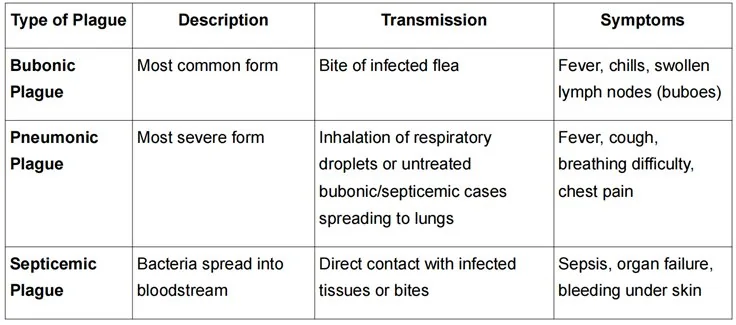
WHAT IS PNEUMONIC PLAGUE?
- Pneumonic plague is a severe lung infection caused by Yersinia pestis.
- It can:
- Develop when bubonic/septicemic plague goes untreated.
- Be directly inhaled via respiratory droplets from an infected person/animal.
- Highly contagious and often fatal if not treated within 24 hours.
- Requires urgent antibiotic therapy and isolation of the patient to prevent spread.
According to the
CDC (U.S.) and
WHO:
- The disease is rare in modern times but considered a potential public health emergency.
- Countries like the UK, as of 2025, report very low to negligible risk of outbreaks due to improved hygiene, medical infrastructure, and surveillance.
PUBLIC HEALTH RESPONSE & PREVENTION
Prevention Strategies:
- Avoid contact with dead or wild animals.
- Use DEET-based insect repellents to prevent flea bites.
- Wear gloves when handling potentially infected animals/tissues.
- Avoid contact with symptomatic individuals in outbreak areas.
- Surveillance and prompt reporting of symptoms in plague-prone zones.
Arizona Public Health Measures:
- Contact tracing and health checks for those exposed.
- Increased flea and rodent surveillance.
- Public advisories on avoiding wildlife and dead animals.
IS PLAGUE STILL A GLOBAL THREAT?
- While largely eradicated in developed countries, sporadic outbreaks still occur globally:
- Madagascar (2017): over 2,000 cases, including pneumonic plague.
- Congo, Peru, Mongolia, and parts of the U.S. (Southwest) report occasional zoonotic outbreaks
- Climate change and human encroachment into wildlife habitats may increase the risk of zoonotic spillovers.
- WHO lists plague under "re-emerging infectious diseases" that need constant surveillance.
- Prelims: Key facts, institutions, locations and terminology in the article.
- Mains: Connect the topic with Environment, Polity & Governance, Health.
- Revision: Use the article headings to prepare concise notes and answer-writing points.
Test your understanding
Questions from this article
Prelims practiceWith reference to ARIZONA REPORTS FIRST PLAGUE DEATH (SINCE 2007), consider the following statements:
- A resident of Coconino County, Arizona, died from pneumonic plague in July 2025.
- This is the 1st death from plague in Arizona since 2007, where the previous case was linked to contact with an infected animal.
- The patient died within the same day of being admitted to Flagstaff Medical Center, despite emergency care.
Which of the statements given above are correct?
- 1 and 2 only
- 2 and 3 only
- 1 and 3 only
- 1, 2 and 3
View answer
Answer: (d) 1, 2 and 3. All three statements are drawn from the article.
Mains practiceDiscuss the background, key issues and significance of ARIZONA REPORTS FIRST PLAGUE DEATH (SINCE 2007) for India.
Answer in 250 words.
View answer approach
- What is the News?
- WHAT IS PLAGUE?
- FORMS OF PLAGUE
- WHAT IS PNEUMONIC PLAGUE?
- PUBLIC HEALTH RESPONSE & PREVENTION
Frequently asked questionsFrequently asked questions
Why is Arizona Reports First Plague Death (Since 2007) in the news?
A resident of Coconino County, Arizona, died from pneumonic plague in July 2025. This is the 1st death from plague in Arizona since 2007, where the previous case was linked to contact with an infected animal.
What are the key facts about Arizona Reports First Plague Death (Since 2007)?
The patient died within the same day of being admitted to Flagstaff Medical Center, despite emergency care. Tests confirmed infection with Yersinia pestis, the same bacterium that caused the Black Death in medieval Europe. Plague is an infectious zoonotic disease caused by the bacterium Yersinia pestis.
Why is Arizona Reports First Plague Death (Since 2007) important for UPSC preparation?
The topic connects current developments with Environment, Polity & Governance, Health and is relevant for both objective revision and analytical answer writing.