UPSC Current Affairs
Antimicrobial Resistance
Ahead of the September 26 UN General Assembly High-Level Meeting on antimicrobial resistance (AMR), the World Health Organization (WHO) has released new guidelines on antibiotic pollution from manufacturing. WHO’s TAKE The WHO warns that AMR, driven by antibiotic pollution, could threaten the effectiveness of antibiotics worldwide. AMR is a serious issue affecting healthcare globally.
VRAuthor Desk
3 min read
Ahead of the September 26 UN General Assembly High-Level Meeting on antimicrobial resistance (AMR), the World Health Organization (WHO) has released new guidelines on antibiotic pollution from manufacturing. WHO’s TAKE The WHO warns that AMR, driven by antibiotic pollution, could threaten the effectiveness of antibiotics worldwide. AMR is a serious issue affecting healthcare globally.
Why in News?
Ahead of the September 26 UN General Assembly High-Level Meeting on antimicrobial resistance
(AMR), the World Health Organization
(WHO) has
released new guidelines on antibiotic pollution from manufacturing.
 WHO’s TAKE
- The WHO warns that AMR, driven by antibiotic pollution, could threaten the effectiveness of antibiotics worldwide.
- AMR is a serious issue affecting healthcare globally.
- It leads to the creation of “superbugs”—bacteria that are resistant to common antibiotics.
- This situation is particularly challenging for patients with multiple health issues.
- In India, a recent survey by the Indian Council of Medical Research (ICMR) shows that AMR is increasing despite consistent monitoring efforts.
WHAT IS AMR?
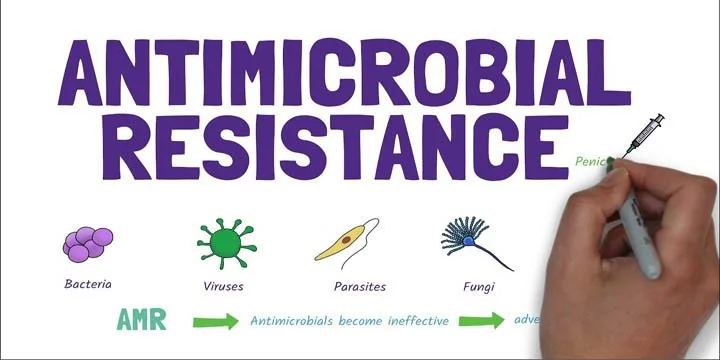
- AMR occurs when bacteria and other microbes evolve to survive even when treated with antimicrobial drugs like antibiotics.
- This usually happens due to misuse or overuse of these drugs.
- When antibiotics are overused, it can lead to the development of superbugs.
- These are bacteria that do not respond to common treatments and can spread through hospitals, water, or sewage.
- This makes treating simple infections difficult, often requiring hospital admission and leading to more complex and costly treatments.
WHY IS AMR INCREASING?
- Individual Practices:
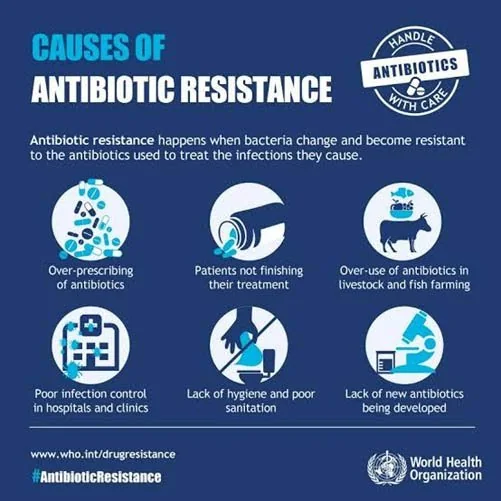
- Misuse of Antibiotics: Many people take antibiotics for viral infections like the flu, where they are ineffective. This misuse promotes resistance.
- Self-Medication: People often use antibiotics without a prescription or advice, increasing resistance risks.
- Healthcare Practices:
- Overuse in Hospitals: High rates of antibiotic prescriptions, including for non-infectious conditions, contribute to Broad-spectrum antibiotics, which target a wide range of bacteria, are often overused.
- Lack of Diagnostics:
- Empirical Prescribing: Doctors sometimes prescribe antibiotics based on symptoms rather than diagnostic tests, leading to inappropriate use of broad-spectrum drugs.
- Pharmaceutical Pollution:
- Manufacturing Waste: The WHO's recent guidance highlights the role of antibiotic pollution from manufacturing. Pharmaceutical waste can contribute to AMR by promoting the development of resistant bacteria.
WHAT NEEDS TO BE DONE?
- Prevention:
- Hygiene and Sanitation: Implementing rigorous hygiene practices and improving sanitation can reduce infection rates.
- Vaccination: Encouraging vaccination can prevent infections and reduce the need for antibiotics.
- For example, pneumococcal and influenza vaccines can prevent diseases that may otherwise lead to antibiotic use.
- Education:
- Healthcare Professionals: Training doctors to use antibiotics appropriately, reserving strong antibiotics for severe infections, and relying on diagnostic tests can help reduce resistance.
- Public Awareness: Educating the public about the dangers of antibiotic misuse and the importance of completing prescribed courses.
- Regulation and Monitoring:
- Pharmaceutical Regulations: Strengthening regulations on pharmaceutical waste management to control antibiotic pollution and prevent the spread of resistant bacteria.
- Surveillance: Ongoing monitoring and research to track resistance patterns and adapt strategies accordingly.
- Research:
- Pathways of Resistance: Investigating how resistance develops from manufacturing processes and implementing regulations to address these issues.
- Prelims: Key facts, institutions, locations and terminology in the article.
- Mains: Connect the topic with Economy, Polity & Governance, Health.
- Revision: Use the article headings to prepare concise notes and answer-writing points.
Test your understanding
Questions from this article
Prelims practiceWith reference to Antimicrobial Resistance, consider the following statements:
- The WHO warns that AMR, driven by antibiotic pollution, could threaten the effectiveness of antibiotics worldwide.
- AMR is a serious issue affecting healthcare globally.
- It leads to the creation of “superbugs”—bacteria that are resistant to common antibiotics.
Which of the statements given above are correct?
- 1 and 2 only
- 2 and 3 only
- 1 and 3 only
- 1, 2 and 3
View answer
Answer: (d) 1, 2 and 3. All three statements are drawn from the article.
Mains practiceDiscuss the background, key issues and significance of Antimicrobial Resistance for India.
Answer in 250 words.
View answer approach
- Why in News?
- WHAT IS AMR?
- WHY IS AMR INCREASING?
- WHAT NEEDS TO BE DONE?
Frequently asked questionsFrequently asked questions
Why is Antimicrobial Resistance in the news?
Ahead of the September 26 UN General Assembly High-Level Meeting on antimicrobial resistance (AMR), the World Health Organization (WHO) has released new guidelines on antibiotic pollution from manufacturing. WHO’s TAKE The WHO warns that AMR, driven by antibiotic pollution, could threaten the effectiveness of antibiotics worldwide.
What are the key facts about Antimicrobial Resistance?
AMR is a serious issue affecting healthcare globally. It leads to the creation of “superbugs”—bacteria that are resistant to common antibiotics. This situation is particularly challenging for patients with multiple health issues.
Why is Antimicrobial Resistance important for UPSC preparation?
The topic connects current developments with Economy, Polity & Governance, Health and is relevant for both objective revision and analytical answer writing.