UPSC Current Affairs
AI & ITS Impact On The Environment
annual environment report released earlier this month, Google reported a 13% increase in its emissions footprint in 2023 compared with the previous year. The rise was attributed mainly to the increased electricity consumption in its data centres and supply chains. Google said its data centres consumed 17% more electricity in 2023, and added that this trend was expected to continue in the coming years because of greater deployment and usage of its artificial intelligence (AI) tools.
VRAuthor Desk
3 min read
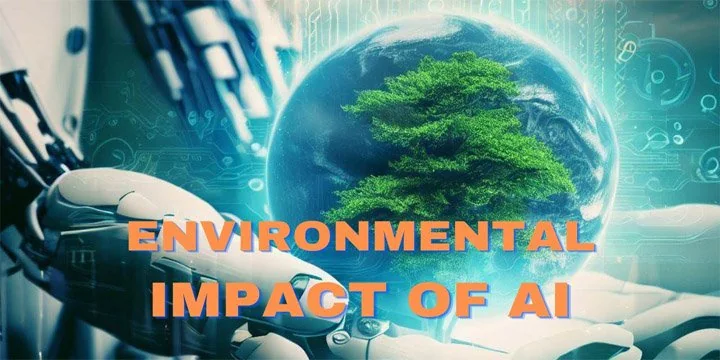
annual environment report released earlier this month, Google reported a 13% increase in its emissions footprint in 2023 compared with the previous year. The rise was attributed mainly to the increased electricity consumption in its data centres and supply chains. Google said its data centres consumed 17% more electricity in 2023, and added that this trend was expected to continue in the coming years because of greater deployment and usage of its artificial intelligence (AI) tools.
annual environment report released earlier this month,
Google reported a 13% increase in its emissions footprint in 2023 compared with the previous year.
The
rise was attributed mainly to the increased electricity consumption in its data centres and supply chains.
Google said
its data centres consumed 17% more electricity in 2023, and added that this trend was expected to continue in the coming years because of
greater deployment and usage of its artificial intelligence (AI) tools.
SOME HARD FACTS
AI, which is expected to
enable transformative changes across several domains,
including attempts to find solutions to climate change, has a very heavy emissions footprint, the scale of which is becoming evident only now.
Studies have shown that
a simple AI query, like the ones posted to Open AI’s chatbot Chat GPT,
could be using between 10 and 33 times more energy than a regular Google search.
Image-based AI searches could be using
even more energy.
WHY EMISSIONS ARE HIGHER?
AI models typically
work much more than a simple Google search even when the samequestion is addressed to both.
- They sift through much more data while processing and formulating appropriate responses.
- More work means a greater number of electrical signals are required when the computer is processing, storing, or retrieving data.
- More work also generates and releases more heat, which then requires more powerful air-conditioning or other forms of cooling in the data centres.
DO WE NEED TO WORRY?
- As AI tools are deployed more widely, their impact on energy consumption worldwide is expected to rise
- Already, data centres account for between 1% and 1.3% of the global electricity demand.
- This could double (become between 1.5% and 3%) by 2026, according to recent projections of the International Energy Agency (IEA).
- By contrast, despite the large number of electric vehicles on the road, their share of global electricity consumption was just about 0.5%, the IEA said.
- At the level of countries, the electricity consumption of data centres as a share of the national demand has already crossed double digits in several regions. For Example-Ireland-18% (Govt. giving tax benefits) ; For USA (having the largest no. of data centres)- 1.3-4.5%. Data for India is unknown.
ALTERNATE VIEWPOINT
Other estimates suggest that the
large scale deployment of AI could help in significant reductions of emissions globally.
A recent study by the
Boston Consulting Group found that
application of AI to corporate and industrial practices could result in a
5-10% reduction in global emissions by 2030, while generating a value worth
$1.3 trillion to $2.6 trillion through additional revenues or cost savings.
Emissions reductions can happen
if AI is deployed to monitor and predict emissions in existing processes, and optimise these to
eliminate wastage or inefficiencies.
- Prelims: Key facts, institutions, locations and terminology in the article.
- Mains: Connect the topic with Environment, Polity & Governance.
- Revision: Use the article headings to prepare concise notes and answer-writing points.
Test your understanding
Questions from this article
Prelims practiceWith reference to AI & ITS Impact On The Environment, consider the following statements:
- They sift through much more data while processing and formulating appropriate responses.
- More work means a greater number of electrical signals are required when the computer is processing, storing, or retrieving data.
- More work also generates and releases more heat, which then requires more powerful air-conditioning or other forms of cooling in the data centres.
Which of the statements given above are correct?
- 1 and 2 only
- 2 and 3 only
- 1 and 3 only
- 1, 2 and 3
View answer
Answer: (d) 1, 2 and 3. All three statements are drawn from the article.
Mains practiceDiscuss the background, key issues and significance of AI & ITS Impact On The Environment for India.
Answer in 250 words.
View answer approach
- DO WE NEED TO WORRY?
- ALTERNATE VIEWPOINT
- Background and context
- Key facts and institutional framework
- Significance and way forward
Frequently asked questionsFrequently asked questions
Why is Ai & Its Impact On The Environment in the news?
annual environment report released earlier this month, Google reported a 13% increase in its emissions footprint in 2023 compared with the previous year. The rise was attributed mainly to the increased electricity consumption in its data centres and supply chains.
What are the key facts about Ai & Its Impact On The Environment?
Google said its data centres consumed 17% more electricity in 2023, and added that this trend was expected to continue in the coming years because of greater deployment and usage of its artificial intelligence (AI) tools. SOME HARD FACTS AI, which is expected to enable transformative changes across several domains, including attempts to find solutions to climate change, has a very heavy emissions footprint, the scale of which is becoming evident only now. Studies have shown that a simple AI query, like the ones posted to Open AI’s chatbot Chat GPT, could be using between 10 and 33 times more energy than a regular Google search.
Why is Ai & Its Impact On The Environment important for UPSC preparation?
The topic connects current developments with Environment, Polity & Governance and is relevant for both objective revision and analytical answer writing.