UPSC Current Affairs
TEMPLE TOURISM & ENVIRONMENTAL STRESS IN WESTERN GHATS
Why in News Sewage from temple-based tourism activities in Kollur (Udupi district, Karnataka) is polluting the Souparnika River, which flows through Mookambika Wildlife Sanctuary. The issue has intensified due to rapid tourism growth, unregulated commercialisation, and failure of sewage treatment systems. The pollution is now threatening the core biodiversity zone of the Western Ghats ecosystem.
VRAuthor Desk
3 min read
Why in News Sewage from temple-based tourism activities in Kollur (Udupi district, Karnataka) is polluting the Souparnika River, which flows through Mookambika Wildlife Sanctuary. The issue has intensified due to rapid tourism growth, unregulated commercialisation, and failure of sewage treatment systems. The pollution is now threatening the core biodiversity zone of the Western Ghats ecosystem.
Why in News
- Sewage from temple-based tourism activities in Kollur (Udupi district, Karnataka) is polluting the Souparnika River, which flows through Mookambika Wildlife Sanctuary.
- The issue has intensified due to rapid tourism growth, unregulated commercialisation, and failure of sewage treatment systems.
- The pollution is now threatening the core biodiversity zone of the Western Ghats ecosystem.
ABOUT THE ISSUE
- The Souparnika River is carrying untreated sewage and sludge from Kollur town into the sanctuary.
- Rapid expansion of hotels, homestays, and tourism services has increased waste discharge.
- Local authorities have permitted around 50 commercial establishments, with additional unregulated units operating.
ENVIRONMENTAL IMPACT
- Pollution is affecting the river ecosystem and forest habitat.
- Threats include:
- Contamination of drinking and bathing water sources
- Spread of water-borne diseases
- Degradation of aquatic and riparian ecosystems
- Stress on wildlife dependent on river systems
BIODIVERSITY SIGNIFICANCE OF MOOKAMBIKA SANCTUARY
- Located in the Western Ghats, a global biodiversity hotspot.
- Notified in 1978, covering around 247 sq km (part of larger ecological landscape).
- Important species include:
- Tiger, leopard, wild dog, sloth bear
- Lion-tailed macaque (endangered)
- Malabar civet, giant squirrel, king cobra
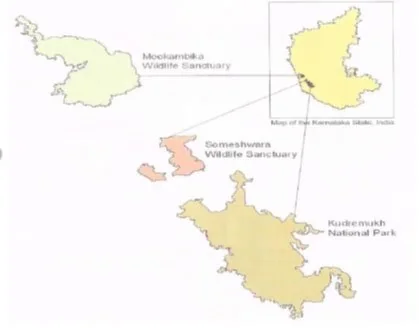
- Part of ecological corridor with:
- Someshwara Wildlife Sanctuary
- Kudremukh National Park
RIVER SYSTEM & ECOLOGY
- Important rivers:
- Souparnika River (currently polluted)
- Chakra River
- Supports dense evergreen and semi-evergreen forests
- Critical habitat connectivity for Western Ghats fauna movement
LEGAL & INSTITUTIONAL ISSUES
Wildlife Protection Act Violation
- Under Section 29 of Wildlife Protection Act, 1972:
- Destruction or alteration of wildlife habitat is a punishable offence
- Punishment: up to 3 years imprisonment + fine
- Strict provisions for Schedule I species protection
Institutional Response
- Karnataka State Pollution Control Board (KSPCB) has issued notices and restraining orders
- Sewage Treatment Plant (STP) of 5 MLD capacity has become non-functional
- Case reportedly under consideration of the National Green Tribunal (NGT)
- Forest Department has repeatedly flagged the issue to pollution authorities
CAUSE OF THE PROBLEM
- Unplanned tourism expansion
- Failure of wastewater management systems
- Weak enforcement of environmental regulations
- Lack of coordination between tourism, urban, and forest departments
BROADER ENVIRONMENTAL CONTEXT
- Western Ghats is a UNESCO-recognised biodiversity hotspot region
- Acts as a critical ecological corridor in peninsular India
- Increasing pressure from:
- Religious tourism
- Infrastructure expansion
- Urbanisation in eco-sensitive zones
SIGNIFICANCE
- Highlights conflict between religious tourism and ecological sustainability
- Shows failure of wastewater governance in eco-sensitive zones
- Threatens endangered and endemic species of Western Ghats
- Undermines India’s commitments to biodiversity conservation
CHALLENGES
- Weak enforcement of environmental clearance norms
- Poor maintenance of sewage treatment infrastructure
- High dependence on tourism economy in local areas
- Fragmented governance between forest, urban, and pollution control bodies
WAY FORWARD
- Strict enforcement of Eco-Sensitive Zone (ESZ) regulations
- Upgrade and ensure functioning of STPs with real-time monitoring
- Introduce carrying capacity-based tourism limits
- Promote eco-tourism instead of mass religious tourism
- Strengthen inter-departmental coordination (Forest–Urban–Tourism)
- Use NGT and CPCB monitoring for compliance enforcement
- Prelims: Key facts, institutions, locations and terminology in the article.
- Mains: Connect the topic with Environment, Economy, Polity & Governance.
- Revision: Use the article headings to prepare concise notes and answer-writing points.
Test your understanding
Questions from this article
Prelims practiceWith reference to TEMPLE TOURISM & ENVIRONMENTAL STRESS IN WESTERN GHATS, consider the following statements:
- Sewage from temple-based tourism activities in Kollur (Udupi district, Karnataka) is polluting the Souparnika River, which flows through Mookambika Wildlife Sanctuary.
- The issue has intensified due to rapid tourism growth, unregulated commercialisation, and failure of sewage treatment systems.
- The pollution is now threatening the core biodiversity zone of the Western Ghats ecosystem.
Which of the statements given above are correct?
- 1 and 2 only
- 2 and 3 only
- 1 and 3 only
- 1, 2 and 3
View answer
Answer: (d) 1, 2 and 3. All three statements are drawn from the article.
Mains practiceDiscuss the background, key issues and significance of TEMPLE TOURISM & ENVIRONMENTAL STRESS IN WESTERN GHATS for India.
Answer in 250 words.
View answer approach
- ABOUT THE ISSUE
- ENVIRONMENTAL IMPACT
- BIODIVERSITY SIGNIFICANCE OF MOOKAMBIKA SANCTUARY
- RIVER SYSTEM & ECOLOGY
- LEGAL & INSTITUTIONAL ISSUES
Frequently asked questionsFrequently asked questions
Why is Temple Tourism & Environmental Stress In Western Ghats in the news?
Why in News Sewage from temple-based tourism activities in Kollur (Udupi district, Karnataka) is polluting the Souparnika River, which flows through Mookambika Wildlife Sanctuary. The issue has intensified due to rapid tourism growth, unregulated commercialisation, and failure of sewage treatment systems.
What are the key facts about Temple Tourism & Environmental Stress In Western Ghats?
The pollution is now threatening the core biodiversity zone of the Western Ghats ecosystem. ABOUT THE ISSUE The Souparnika River is carrying untreated sewage and sludge from Kollur town into the sanctuary. Rapid expansion of hotels, homestays, and tourism services has increased waste discharge.
Why is Temple Tourism & Environmental Stress In Western Ghats important for UPSC preparation?
The topic connects current developments with Environment, Economy, Polity & Governance and is relevant for both objective revision and analytical answer writing.