UPSC Current Affairs
STRAIT OF HORMUZ TRANSITS RESTRICTED
Vessel movements through the Strait of Hormuz have fallen sharply following renewed hostilities between the United States and Iran. Ship transits dropped to 14 vessels (12 July 2026)—the lowest level since 14 June, before the US–Iran Memorandum of Understanding (MoU) signed on 17 June 2026. Iran has announced restrictions on commercial navigation, while attacks on merchant vessels have reignited fears of disruption in global energy supplies.
VRAuthor Desk
4 min read
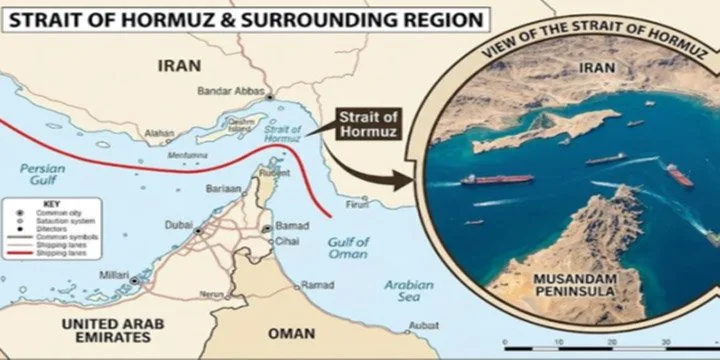
Vessel movements through the Strait of Hormuz have fallen sharply following renewed hostilities between the United States and Iran. Ship transits dropped to 14 vessels (12 July 2026)—the lowest level since 14 June, before the US–Iran Memorandum of Understanding (MoU) signed on 17 June 2026. Iran has announced restrictions on commercial navigation, while attacks on merchant vessels have reignited fears of disruption in global energy supplies.
Why in News?
- Vessel movements through the Strait of Hormuz have fallen sharply following renewed hostilities between the United States and Iran.
- Ship transits dropped to 14 vessels (12 July 2026)—the lowest level since 14 June, before the US–Iran Memorandum of Understanding (MoU) signed on 17 June 2026.
- Iran has announced restrictions on commercial navigation, while attacks on merchant vessels have reignited fears of disruption in global energy supplies.
- Consequently, Brent crude oil prices crossed $80 per barrel, raising concerns for energy-importing nations, including India.
KEY HIGHLIGHTS
Decline in Maritime Traffic
- Ship transits through the Strait declined sharply:
- 10 July: 19 vessels
- 11 July: 24 vessels
- 12 July: 14 vessels
- Before the West Asia conflict:
- Around 140 vessels transited daily.
- After the June MoU:
- Traffic recovered to 40–50 vessels per day.
- Peaked at 90+ vessels on 24 June.
- Renewed tensions have reversed this recovery.
Oil Prices Rise
- Brent crude increased by around 4%, crossing $80 per barrel.
- Markets fear:
- Constrained oil supplies.
- LNG shortages.
- Higher shipping and insurance costs.
STRATEGIC IMPORTANCE OF STRAIT OF HORMUZ
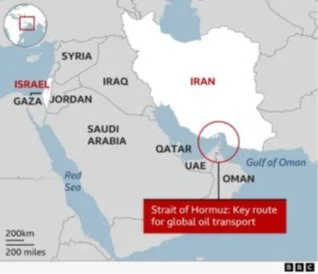
- Iran has threatened to block the Strait of Hormuz, a critical global shipping route.
- Important facts:
- The Strait of Hormuz is the main route for oil exports from the Persian Gulf
- Countries using this route include:
- Saudi Arabia
- Iraq
- Kuwait
- Qatar
- UAE
- Oman
- Together, these countries produce over 20% of the world’s fossil fuels.
- Any disruption here can severely affect global energy supply.
 US IRAN PEACE MOU (17 JUNE 2026)
The agreement sought to:
- Reduce military hostilities.
- Restore commercial shipping.
- Ensure safe navigation.
- Reopen maritime trade routes.
However,
- Different interpretations of the agreement.
- Continued military retaliation.
- Maritime disputes.
have effectively collapsed the ceasefire.
WHY HAVE SHIP TRANSITS DECLINED AGAIN?
1. Iranian Attacks on Merchant Ships
- Iranian forces attacked vessels sailing outside:
- Tehran-designated shipping lanes.
- Consequences:
- Increased security risks.
- Higher insurance premiums.
- Reduced commercial confidence.
2. US Military Response
- US retaliated by striking Iranian military targets.
- Iran responded by targeting:
- US military assets.
- Facilities across West Asia. Result:
- Regional conflict widened.
3. Iran's Maritime Restrictions
Iran insists that:
- Ships obtain prior permission before transit.
- Vessels follow only Iranian-designated routes.
- Transit fees may be imposed in future.
4. Security Concerns
Shipping companies fear:
- Missile attacks.
- Drone strikes.
- Naval mines.
- Detention of ships.
- Escalation into a wider conflict. Hence,
- Many vessels have postponed voyages.
- Rise of "Dark Shipping"
Many vessels have:
- Switched off their Automatic Identification System (AIS).
This practice is known as:
Dark Shipping
Purpose
- Avoid detection during conflict.
Risks
- Navigation accidents.
- Reduced maritime surveillance.
- Increased security concerns.
IMPACT ON GLOBAL ECONOMY
Energy Markets
Reduced shipping has led to:
- Higher crude prices.
- Increased LNG prices.
- Rising freight charges.
- Expensive marine insurance.
Global Supply Chains
Higher transportation costs affect:
- Petrochemicals.
- Fertilizers
- Aviation fuel.
- Manufacturing.
- Consumer goods.
Result:
- Global inflationary pressures.
India's Concerns: India is among the countries
most vulnerable to disruptions in the Strait of Hormuz.
INDIA’S ENERGY DEPENDENCE ON STRAIT OF HORMUZ
| Commodity |
Share Passing Through Strait |
| Crude Oil |
~40% |
| LNG |
~60% |
| LPG |
~90% |
OVERALL DEPENDENCE
| Energy Source |
Import Dependence |
| Crude Oil |
88% |
| LPG |
60% |
| Natural Gas |
50% |
ECONOMIC IMPLICATIONS FOR INDIA
1. Rising Oil Import Bill
- India imports around:
- 1.8–2 billion barrels of crude annually.
- Every $1 increase per barrel raises India's import bill by nearly:
2. Widening Current Account Deficit (CAD)
Higher crude prices increase:
- Trade deficit.
- Current account deficit.
- Pressure on foreign exchange reserves.
Nomura Estimate
- A 10% increase in crude oil prices widens India's CAD by approximately:
3. Inflationary Pressures
Higher crude prices lead to:
- Costlier petrol and diesel.
- Higher transportation costs.
- Rising food inflation.
- Increased fertilizer costs.
- Expensive electricity generation.
4. Fiscal Burden
Government may need to:
- Increase subsidies.
- Reduce fuel taxes.
- Support oil marketing companies.
This may widen:
5. Industrial Impact
Gas-intensive sectors affected include:
- Fertilizers
- Steel.
- Petrochemicals.
- Ceramics.
- City Gas Distribution (CGD).
INDIA’S RESPONSE
Diversification of Energy Sources
India has increased crude imports from:
- Russia
- USA
- Brazil
- Guyana
- West Africa
Objective: Reduce dependence on West Asia.
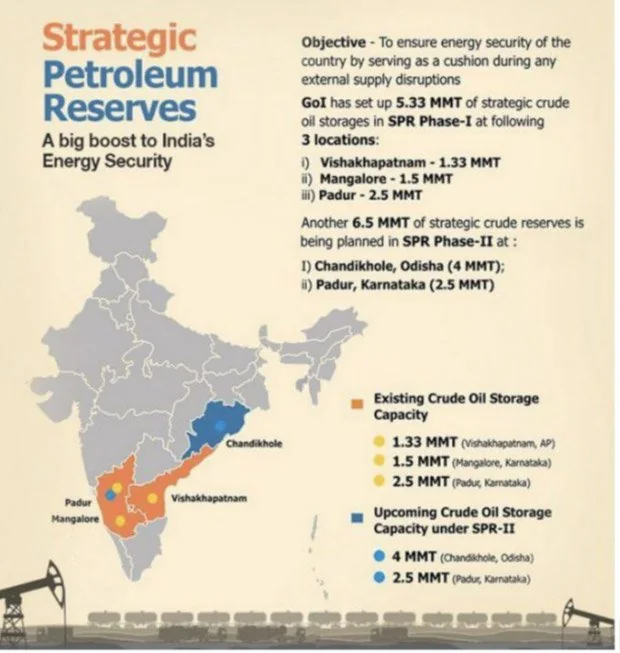
Strategic Petroleum Reserves (SPR)
India maintains emergency crude reserves at:
- Visakhapatnam
- Mangaluru
- Padur
Additional storage facilities are under development.
 Fuel Supply Management
Government measures include:
- Prioritising LPG supplies for households.
- Rationing industrial gas during shortages.
- Monitoring fuel inventories.
- Preventing panic buying.
Diplomatic Efforts
India continues to advocate:
- Peaceful resolution.
- Freedom of navigation.
- Stability in West Asia.
- Respect for international maritime law.
- Prelims: Key facts, institutions, locations and terminology in the article.
- Mains: Connect the topic with Economy, International Relations, Defence.
- Revision: Use the article headings to prepare concise notes and answer-writing points.
Test your understanding
Questions from this article
Prelims practiceWith reference to STRAIT OF HORMUZ TRANSITS RESTRICTED, consider the following statements:
- Vessel movements through the Strait of Hormuz have fallen sharply following renewed hostilities between the United States and Iran.
- Ship transits dropped to 14 vessels (12 July 2026)—the lowest level since 14 June, before the US–Iran Memorandum of Understanding (MoU) signed on 17 June 2026.
- Iran has announced restrictions on commercial navigation, while attacks on merchant vessels have reignited fears of disruption in global energy supplies.
Which of the statements given above are correct?
- 1 and 2 only
- 2 and 3 only
- 1 and 3 only
- 1, 2 and 3
View answer
Answer: (d) 1, 2 and 3. All three statements are drawn from the article.
Mains practiceDiscuss the background, key issues and significance of STRAIT OF HORMUZ TRANSITS RESTRICTED for India.
Answer in 250 words.
View answer approach
- Why in News?
- KEY HIGHLIGHTS
- STRATEGIC IMPORTANCE OF STRAIT OF HORMUZ
- WHY HAVE SHIP TRANSITS DECLINED AGAIN?
- IMPACT ON GLOBAL ECONOMY
Frequently asked questionsFrequently asked questions
Why is Strait Of Hormuz Transits Restricted in the news?
Vessel movements through the Strait of Hormuz have fallen sharply following renewed hostilities between the United States and Iran. Ship transits dropped to 14 vessels (12 July 2026)—the lowest level since 14 June, before the US–Iran Memorandum of Understanding (MoU) signed on 17 June 2026.
What are the key facts about Strait Of Hormuz Transits Restricted?
Iran has announced restrictions on commercial navigation, while attacks on merchant vessels have reignited fears of disruption in global energy supplies. Consequently, Brent crude oil prices crossed $80 per barrel, raising concerns for energy-importing nations, including India. KEY HIGHLIGHTS Decline in Maritime Traffic Ship transits through the Strait declined sharply: 10 July: 19 vessels 11 July: 24 vessels 12 July: 14 vessels Before the West Asia conflict: Around 140 vessels transited daily.
Why is Strait Of Hormuz Transits Restricted important for UPSC preparation?
The topic connects current developments with Economy, International Relations, Defence and is relevant for both objective revision and analytical answer writing.