UPSC Current Affairs
SHABDALOK
Context Union Home Minister Amit Shah inaugurated India’s first immersive language museum, known as the Museum of Word (Shabdalok), at the National Library campus in Kolkata on 19 July 2026. The museum has been developed by the National Library under the aegis of the Ministry of Culture. The initiative aims to preserve and promote India’s rich linguistic heritage through interactive, technology-driven exhibits.
VRAuthor Desk
4 min read
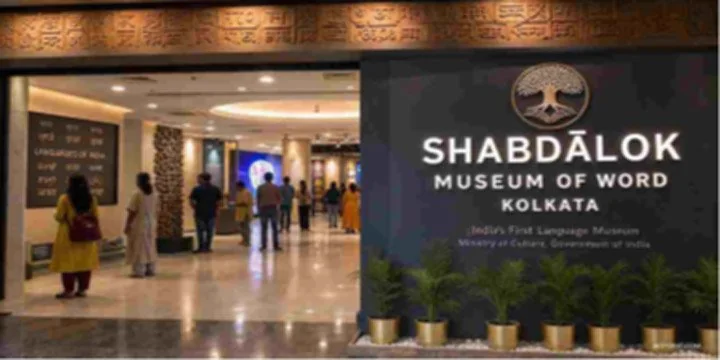
Context Union Home Minister Amit Shah inaugurated India’s first immersive language museum, known as the Museum of Word (Shabdalok), at the National Library campus in Kolkata on 19 July 2026. The museum has been developed by the National Library under the aegis of the Ministry of Culture. The initiative aims to preserve and promote India’s rich linguistic heritage through interactive, technology-driven exhibits.
Context
- Union Home Minister Amit Shah inaugurated India’s first immersive language museum, known as the Museum of Word (Shabdalok), at the National Library campus in Kolkata on 19 July 2026.
- The museum has been developed by the National Library under the aegis of the Ministry of Culture.
- The initiative aims to preserve and promote India’s rich linguistic heritage through interactive, technology-driven exhibits.
ABOUT THE MUSEUM OF WORD (SHABDALOK)
- Shabdalok is India's first immersive language museum, dedicated to showcasing the evolution of India's diverse languages, scripts, and literary traditions.
- The museum presents language as a living and evolving entity that has continuously shaped Indian society, culture, and civilization.
- It combines traditional knowledge with modern digital technologies to create an engaging learning experience.
- The initiative aligns with the Government’s vision of preserving India's "Virasat (Heritage) along with Vikas (Development)."
KEY FEATURES
- The museum contains nine thematic galleries exploring different dimensions of India's linguistic history.
- It showcases the evolution of oral traditions, ancient manuscripts, printed literature, and modern digital texts.
- Visitors experience interactive exhibitions using:
- Digital displays.
- Holographic presentations.
- Motion-sensor technology.
- Multimedia installations.
- The museum has been designed as an experiential learning centre rather than a conventional repository of artifacts.
FOCUS AREAS
The museum highlights:
- The diversity of Indian languages and scripts.
- The historical evolution of oral and written traditions.
- Ancient manuscripts and literary heritage.
- The development of printing and publishing in India.
- Modern digital communication and electronic texts.
- The relationship between language, culture, and civilization.
- India's multilingual identity and linguistic diversity.
RECOGNITION OF INDIA’S LINGUISTIC DIVERSITY
- Shabdalok celebrates all 22 languages listed in the Eighth Schedule of the Constitution.
- It traces the journey of these languages from:
- Oral traditions.
- Ancient manuscripts.
- Classical literature.
- Printed books.
- Contemporary digital formats.
- The museum emphasizes India's unique tradition of linguistic pluralism and cultural coexistence.
DIGITISATION OF MANUSCRIPTS
- The Government is undertaking a major initiative to digitise more than one lakh manuscripts preserved by the National Library and other institutions.
- Digitisation aims to:
- Preserve fragile historical documents.
- Improve accessibility for researchers and scholars.
- Protect valuable cultural heritage for future generations.
- Promote academic research on India's intellectual traditions.
SIGNIFICANCE
- The museum strengthens efforts to preserve India's linguistic and cultural heritage.
- It promotes awareness about India's multilingual identity among younger generations.
- The use of immersive technologies enhances public engagement with language and literature.
- The initiative supports the preservation of endangered languages, scripts, and literary traditions.
- It contributes to cultural tourism and educational outreach.
- The museum reflects India's commitment to integrating heritage conservation with technological innovation.
NATIONAL LIBRARY OF INDIA
- The National Library, located in Kolkata, is the largest library in India by volume.
- It functions under the Ministry of Culture.
- The library serves as the country's principal repository of books, manuscripts, government publications, and archival materials.
- It plays an important role in preserving India's literary and documentary heritage.
CONSTITUTIONAL & POLICY RELEVANCE
Constitutional Provisions
- Article 29: Protection of the cultural and educational rights of citizens.
- Article 51A(f): Fundamental Duty to value and preserve India's rich heritage and composite culture.
- Eighth Schedule: Recognises 22 scheduled languages of India.
Related Policies
- National Education Policy (NEP) 2020 encourages the promotion of multilingualism and mother-tongue education.
- The initiative also complements national efforts for digital preservation of cultural heritage.
CHALLENGES
- Preserving endangered and lesser-known languages requires continuous institutional support.
- Digitisation of manuscripts is a resource-intensive process involving conservation and technological expertise.
- Increasing public awareness about linguistic heritage remains a challenge.
- Balancing technological innovation with the preservation of original historical materials requires careful planning.
WAY FORWARD
- Digitisation of manuscripts and rare books should be accelerated across libraries and archives.
- Similar immersive museums should be established in other regions to promote India's diverse linguistic traditions.
- Greater research on endangered languages and indigenous scripts should be encouraged.
- Educational institutions should integrate linguistic heritage into academic curricula.
- Public participation in preserving local languages and oral traditions should be strengthened through community initiatives.
- Prelims: Key facts, institutions, locations and terminology in the article.
- Mains: Connect the topic with Economy, Polity & Governance, Science & Technology.
- Revision: Use the article headings to prepare concise notes and answer-writing points.
Test your understanding
Questions from this article
Prelims practiceWith reference to SHABDALOK, consider the following statements:
- Union Home Minister Amit Shah inaugurated India’s first immersive language museum, known as the Museum of Word (Shabdalok), at the National Library campus in Kolkata on 19 July 2026.
- The museum has been developed by the National Library under the aegis of the Ministry of Culture.
- The initiative aims to preserve and promote India’s rich linguistic heritage through interactive, technology-driven exhibits.
Which of the statements given above are correct?
- 1 and 2 only
- 2 and 3 only
- 1 and 3 only
- 1, 2 and 3
View answer
Answer: (d) 1, 2 and 3. All three statements are drawn from the article.
Mains practiceDiscuss the background, key issues and significance of SHABDALOK for India.
Answer in 250 words.
View answer approach
- ABOUT THE MUSEUM OF WORD (SHABDALOK)
- KEY FEATURES
- RECOGNITION OF INDIA’S LINGUISTIC DIVERSITY
- DIGITISATION OF MANUSCRIPTS
- SIGNIFICANCE
Frequently asked questionsFrequently asked questions
Why is Shabdalok in the news?
Context Union Home Minister Amit Shah inaugurated India’s first immersive language museum, known as the Museum of Word (Shabdalok), at the National Library campus in Kolkata on 19 July 2026. The museum has been developed by the National Library under the aegis of the Ministry of Culture.
What are the key facts about Shabdalok?
The initiative aims to preserve and promote India’s rich linguistic heritage through interactive, technology-driven exhibits. ABOUT THE MUSEUM OF WORD (SHABDALOK) Shabdalok is India's first immersive language museum, dedicated to showcasing the evolution of India's diverse languages, scripts, and literary traditions. The museum presents language as a living and evolving entity that has continuously shaped Indian society, culture, and civilization.
Why is Shabdalok important for UPSC preparation?
The topic connects current developments with Economy, Polity & Governance, Science & Technology and is relevant for both objective revision and analytical answer writing.