UPSC Current Affairs
PROTOTYPE FAST BREEDER REACTOR
On 6 April 2026, India achieved a major milestone when the Prototype Fast Breeder Reactor (PFBR) attained first criticality. The reactor is located at Kalpakkam, Tamil Nadu and has a capacity of 500 MWe (Megawatt electrical). It has been built by Bharatiya Nabhikiya Vidyut Nigam Limited.
VRAuthor Desk
4 min read
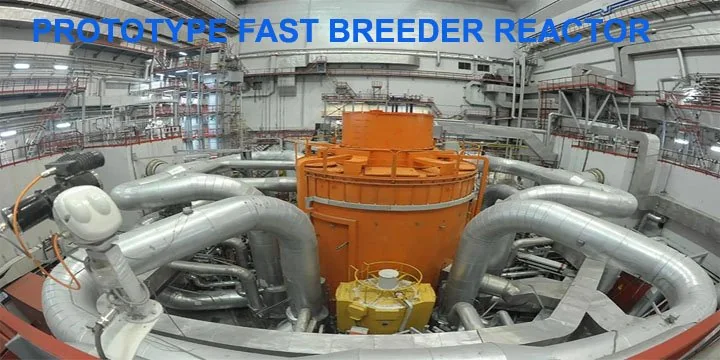
On 6 April 2026, India achieved a major milestone when the Prototype Fast Breeder Reactor (PFBR) attained first criticality. The reactor is located at Kalpakkam, Tamil Nadu and has a capacity of 500 MWe (Megawatt electrical). It has been built by Bharatiya Nabhikiya Vidyut Nigam Limited.
- On 6 April 2026, India achieved a major milestone when the Prototype Fast Breeder Reactor (PFBR) attained first criticality.
- The reactor is located at Kalpakkam, Tamil Nadu and has a capacity of 500 MWe (Megawatt electrical).
- It has been built by Bharatiya Nabhikiya Vidyut Nigam Limited.
- This event marks:
- The beginning of a sustained nuclear chain reaction
- India’s entry into Stage 2 of its nuclear programme
This is a
historic development in India’s nuclear energy programme and clean energy transition
WHAT IS FIRST CRITICALITY?
- Criticality refers to the stage when a self-sustaining nuclear chain reaction begins inside a reactor.
- At this point:
- Neutrons produced = neutrons consumed
- The reactor becomes operational at basic level
It is the
first and most important milestone before full power generation
GLOBAL SIGNIFICANCE
- Once fully operational, India will become:
- The second country in the world after Russia to operate a commercial Fast Breeder Reactor (FBR)
This gives India a
strategic and technological advantage in nuclear energy
THREE STAGES OF INDIA’S NUCLEAR PROG
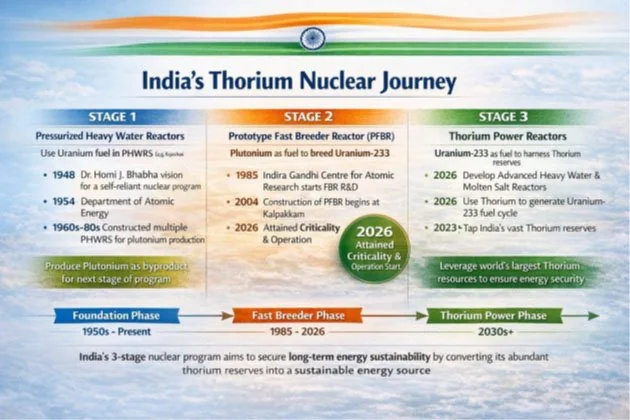
THE THREE STAGES
Stage 1: Pressurised Heavy Water Reactors (PHWRs)
- Fuel used: Natural Uranium
- Output:
- Generates electricity
- Produces Plutonium (Pu-239) as by-product
This plutonium is used in Stage 2
Stage 2: Fast Breeder Reactors (FBRs)
- Fuel used:
- Key Feature:
- These reactors produce more fuel than they consume
- The PFBR at Kalpakkam marks India’s entry into this stage
It also helps in producing
Uranium-233 from Thorium
Stage 3: Thorium-Based Reactors
- Fuel:
- Uranium-233 (derived from Thorium)
- Importance:
- India has large thorium reserves
This stage will ensure
long-term sustainable energy supply
Overall Concept
- The programme follows a closed nuclear fuel cycle
Meaning:
- Waste fuel is reprocessed and reused
VISION BEHIND INDIA’S NUCLEAR PROGRAM
- The three-stage nuclear programme was designed by Homi Jehangir Bhabha
- It is based on:
- Limited uranium reserves in India
- Abundant thorium reserves
The aim is to achieve:
- Energy security
- Self-reliance in nuclear fuel
PFBR: DETAILED OVERVIEW
Development
- Developed by Indira Gandhi Centre for Atomic Research
- Operated by Bharatiya Nabhikiya Vidyut Nigam Limited
Fuel Type
- Uses MOX Fuel (Mixed Oxide Fuel)
- Composition:
- Source:
- Reprocessed fuel from PHWRs
Breeder Concept
- Core is surrounded by Uranium-238 blanket
- Process:
- Fast neutrons convert U-238 → Plutonium-239
This allows the reactor to:
- Generate more fuel than it consumes
BRIDGE TO STAGE 3
- PFBR can use Thorium-232 in future
- Conversion:
This is crucial for
Stage 3 (thorium-based reactors)
Closed Fuel Cycle
- Spent fuel is:
- Reprocessed
- Recycled back into reactor
This ensures:
- Maximum utilization of nuclear resources
- Minimum waste
CURRENT NUCLEAR POWER STATUS IN INDIA
- Installed Capacity:
- Electricity Generation (2024–25):
- Share in Total Electricity:
Nuclear power currently plays a
small but stable role
FUTURE EXPANSION PLANS
- India plans to increase capacity to:
- Development includes:
- 700 MW indigenous reactors
- 1000 MW reactors with international cooperation
International Cooperation
- India has signed agreements with:
- 18 countries for civil nuclear cooperation
This reflects
global trust in India’s nuclear programme
LONG TERM NUCLEAR ENEGY MISSION
- Announced in Union Budget 2025–26
- Target:
- 100 GW nuclear capacity by 2047
- Linked to:
KEY MEASURES
Financial Investment
- Allocation of Rs 20,000 crore
- Focus on:
- Small Modular Reactors (SMRs)
SMR Development
- Target:
- Designs by Bhabha Atomic Research Centre:
- BSMR-200 (200 MWe)
- SMR-55 (55 MWe)
- High-Temperature Gas Reactor (for hydrogen production)
Legal Reform
- Introduction of SHANTI Act, 2025
- Features:
- Modernises nuclear laws
- Allows limited private sector participation
- Ensures regulatory oversight
SIGNIFICANCE OF PFBR ACHIEVEMENT
Energy Security
- Reduces dependence on imported fuels
Clean Energy Transition
Supports
climate goals
Technological Advancement
- Demonstrates indigenous capability
Strategic Importance
- Positions India among advanced nuclear nations
CHALLENGES
- High cost of nuclear infrastructure
- Safety and waste management concerns
- Need for strong regulatory mechanisms
- Public perception and acceptance issues
CONCLUSION
- The achievement of first criticality of PFBR marks a turning point in India’s nuclear journey
- It shows:
- Progress from planning to implementation
- Strength of indigenous scientific capability
- With expansion and policy support, nuclear energy will play a larger role in India’s future energy mix
- Prelims: Key facts, institutions, locations and terminology in the article.
- Mains: Connect the topic with Environment, Economy, International Relations.
- Revision: Use the article headings to prepare concise notes and answer-writing points.
Test your understanding
Questions from this article
Prelims practiceWith reference to PROTOTYPE FAST BREEDER REACTOR, consider the following statements:
- On 6 April 2026, India achieved a major milestone when the Prototype Fast Breeder Reactor (PFBR) attained first criticality.
- The reactor is located at Kalpakkam, Tamil Nadu and has a capacity of 500 MWe (Megawatt electrical).
- It has been built by Bharatiya Nabhikiya Vidyut Nigam Limited.
Which of the statements given above are correct?
- 1 and 2 only
- 2 and 3 only
- 1 and 3 only
- 1, 2 and 3
View answer
Answer: (d) 1, 2 and 3. All three statements are drawn from the article.
Mains practiceDiscuss the background, key issues and significance of PROTOTYPE FAST BREEDER REACTOR for India.
Answer in 250 words.
View answer approach
- WHAT IS FIRST CRITICALITY?
- GLOBAL SIGNIFICANCE
- THREE STAGES OF INDIA’S NUCLEAR PROG
- THE THREE STAGES
- VISION BEHIND INDIA’S NUCLEAR PROGRAM
Frequently asked questionsFrequently asked questions
Why is Prototype Fast Breeder Reactor in the news?
On 6 April 2026, India achieved a major milestone when the Prototype Fast Breeder Reactor (PFBR) attained first criticality. The reactor is located at Kalpakkam, Tamil Nadu and has a capacity of 500 MWe (Megawatt electrical).
What are the key facts about Prototype Fast Breeder Reactor?
It has been built by Bharatiya Nabhikiya Vidyut Nigam Limited. This event marks: The beginning of a sustained nuclear chain reaction India’s entry into Stage 2 of its nuclear programme This is a historic development in India’s nuclear energy programme and clean energy transition WHAT IS FIRST CRITICALITY? Criticality refers to the stage when a self-sustaining nuclear chain reaction begins inside a reactor.
Why is Prototype Fast Breeder Reactor important for UPSC preparation?
The topic connects current developments with Environment, Economy, International Relations and is relevant for both objective revision and analytical answer writing.