UPSC Current Affairs
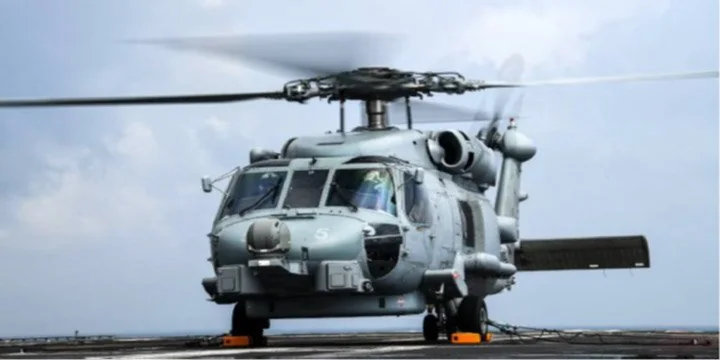
MH 60R SEAHAWK HELICOPTER
Context The Indian Navy has received another MH-60R Seahawk multi-role naval helicopter from the United States, further strengthening its maritime combat capabilities. With this delivery, 21 out of the 24 helicopters ordered by India have been delivered. The induction marks another milestone in the growing India–U.S.
VRAuthor Desk
4 min read
Context The Indian Navy has received another MH-60R Seahawk multi-role naval helicopter from the United States, further strengthening its maritime combat capabilities. With this delivery, 21 out of the 24 helicopters ordered by India have been delivered. The induction marks another milestone in the growing India–U.S.
Context
- The Indian Navy has received another MH-60R Seahawk multi-role naval helicopter from the United States, further strengthening its maritime combat capabilities.
- With this delivery, 21 out of the 24 helicopters ordered by India have been delivered.
- The induction marks another milestone in the growing India–U.S. strategic defence partnership and enhances India's ability to safeguard its maritime interests in the Indian Ocean Region (IOR) and the wider Indo-Pacific.
ABOUT THE MH 60R SEAHAWK HELICOPTER
- The MH-60R Seahawk, popularly known as the "Romeo", is one of the world's most advanced shipborne multi-role naval helicopters.
- It is manufactured by Lockheed Martin under the S. Foreign Military Sales (FMS) Programme.
- The helicopter is primarily designed for Anti-Submarine Warfare (ASW) and Anti-Surface Warfare (ASuW)
- It is capable of operating from aircraft carriers, destroyers, frigates, and other frontline naval warships.
KEY FEATURES
- The helicopter is equipped with an advanced dipping sonar for detecting submarines.
- It carries sonobuoys that help locate and track underwater threats.
- It is fitted with a multi-mode radar for surveillance and target detection.
- Electro-optical and infrared sensors enhance reconnaissance and targeting capabilities.
- The helicopter can deploy Mk-54 lightweight torpedoes against enemy submarines.
- It can also carry AGM-114 Hellfire missiles and machine guns to engage hostile surface targets.
- Its advanced avionics and network-centric warfare capabilities improve real-time situational awareness.
OPERATIONAL ROLES
The MH-60R performs a wide range of missions, including:
- Anti-Submarine Warfare (ASW).
- Anti-Surface Warfare (ASuW).
- Maritime surveillance and reconnaissance.
- Search and Rescue (SAR) operations.
- Medical evacuation (MEDEVAC).
- Logistics and personnel transport.
- Maritime interdiction and special operations support.
- Protection of aircraft carriers and naval task forces.
PROCUREMENT DETAILS
- India signed an agreement with the United States in 2020 to procure 24 MH-60R Seahawk helicopters.
- The acquisition aims to replace the ageing Sea King helicopter fleet of the Indian Navy.
- In December 2025, India signed a sustainment package to support the long-term maintenance and operational readiness of the MH-60R fleet.
- With the latest delivery, 21 helicopters have been inducted, while the remaining three helicopters are expected to be delivered soon.
DEPLOYMENT IN THE INDIAN NAVY
INAS 334 – "Seahawks"
- Commissioned in March 2024.
- Based at INS Garuda, Kochi.
- Operates the first batch of MH-60R helicopters.
INAS 335 – "Ospreys"
- Commissioned in December 2025.
- Based at INS Hansa, Goa.
- Supports deployment on both the eastern and western seaboards.
The helicopters are deployed aboard:
- Aircraft carriers.
- Guided missile destroyers.
- Project 17A stealth frigates.
- Other frontline naval platforms.
SIGNIFICANCE
- The induction significantly enhances the Indian Navy's anti-submarine warfare capabilities, which are increasingly important in the Indian Ocean Region.
- The helicopters improve maritime domain awareness through advanced surveillance and reconnaissance systems.
- They strengthen India's ability to protect critical Sea Lines of Communication (SLOCs) and maritime trade routes.
- The acquisition enhances interoperability between the Indian Navy and friendly navies, particularly the United States and Quad partners.
- The induction reflects the deepening strategic defence partnership between India and the United States.
- The helicopters support India's vision of maintaining a free, open, inclusive, and rules-based Indo-Pacific.
- They increase the combat effectiveness and operational reach of India's frontline naval warships.
INDIA US DEFENCE COOPERATION
- The MH-60R acquisition has been carried out under the S. Foreign Military Sales (FMS) Programme.
- Defence cooperation between India and the United States has expanded through:
- Defence technology transfers.
- Joint military exercises.
- Logistics cooperation agreements.
- Maritime security collaboration.
- Defence procurement and capacity building.
- The United States has described the delivery as a reflection of the growing strategic partnership between the two democracies.
CHALLENGES
- Advanced helicopters require high maintenance standards and specialised technical support.
- Continuous training of pilots and maintenance personnel is essential for effective operations.
- Long-term sustainment costs remain significant.
- Integration of advanced platforms with existing naval systems requires continuous technological upgrades.
WAY FORWARD
- The remaining MH-60R helicopters should be inducted without delay to complete the planned fleet.
- Indigenous maintenance, repair, and overhaul (MRO) capabilities should be strengthened to reduce dependence on external support.
- Greater integration of advanced helicopters with India's network-centric maritime surveillance systems should be promoted.
- Indigenous development of next-generation naval aviation technologies should continue under the Aatmanirbhar Bharat
- India should further strengthen maritime cooperation with friendly nations to ensure security and stability in the Indo-Pacific region.
- Prelims: Key facts, institutions, locations and terminology in the article.
- Mains: Connect the topic with Economy, International Relations, Defence.
- Revision: Use the article headings to prepare concise notes and answer-writing points.
Test your understanding
Questions from this article
Prelims practiceWith reference to MH 60R SEAHAWK HELICOPTER, consider the following statements:
- The Indian Navy has received another MH-60R Seahawk multi-role naval helicopter from the United States, further strengthening its maritime combat capabilities.
- With this delivery, 21 out of the 24 helicopters ordered by India have been delivered.
- The induction marks another milestone in the growing India–U.S. strategic defence partnership and enhances India's ability to safeguard its maritime interests in the Indian Ocean Region (IOR) and the wider Indo-Pacific.
Which of the statements given above are correct?
- 1 and 2 only
- 2 and 3 only
- 1 and 3 only
- 1, 2 and 3
View answer
Answer: (d) 1, 2 and 3. All three statements are drawn from the article.
Mains practiceDiscuss the background, key issues and significance of MH 60R SEAHAWK HELICOPTER for India.
Answer in 250 words.
View answer approach
- ABOUT THE MH 60R SEAHAWK HELICOPTER
- KEY FEATURES
- PROCUREMENT DETAILS
- DEPLOYMENT IN THE INDIAN NAVY
- SIGNIFICANCE
Frequently asked questionsFrequently asked questions
Why is Mh 60R Seahawk Helicopter in the news?
Context The Indian Navy has received another MH-60R Seahawk multi-role naval helicopter from the United States, further strengthening its maritime combat capabilities. With this delivery, 21 out of the 24 helicopters ordered by India have been delivered.
What are the key facts about Mh 60R Seahawk Helicopter?
The induction marks another milestone in the growing India–U.S. strategic defence partnership and enhances India's ability to safeguard its maritime interests in the Indian Ocean Region (IOR) and the wider Indo-Pacific. ABOUT THE MH 60R SEAHAWK HELICOPTER The MH-60R Seahawk, popularly known as the "Romeo", is one of the world's most advanced shipborne multi-role naval helicopters.
Why is Mh 60R Seahawk Helicopter important for UPSC preparation?
The topic connects current developments with Economy, International Relations, Defence and is relevant for both objective revision and analytical answer writing.