UPSC Current Affairs
INDIA STRENGTHENS GLOBAL LEADERSHIP IN FOOD STANDARDS
India achieved significant milestones at the 49th Session of the Codex Alimentarius Commission (CAC49) held in Geneva, Switzerland (6–10 July 2026). The Commission adopted seven Codex standards and guidelines developed under India's chairmanship and co-chairmanship. India also secured approval for the development of a Codex Standard for Cashew Kernels.
VRAuthor Desk
4 min read
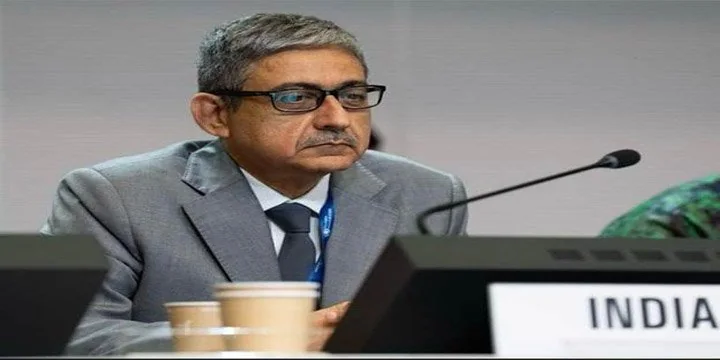
India achieved significant milestones at the 49th Session of the Codex Alimentarius Commission (CAC49) held in Geneva, Switzerland (6–10 July 2026). The Commission adopted seven Codex standards and guidelines developed under India's chairmanship and co-chairmanship. India also secured approval for the development of a Codex Standard for Cashew Kernels.
Why in News?
- India achieved significant milestones at the 49th Session of the Codex Alimentarius Commission (CAC49) held in Geneva, Switzerland (6–10 July 2026).
- The Commission adopted seven Codex standards and guidelines developed under India's chairmanship and co-chairmanship.
- India also secured approval for the development of a Codex Standard for Cashew Kernels.
- Further, India was elected Co-Chair of the Electronic Working Group on New Food Sources and Production Systems (NFPS), highlighting its growing leadership in global food governance.
KEY HIGHLIGHTS
- Seven India-led Codex standards and guidelines adopted.
- Codex Standards adopted for:
- Dried Coriander Seeds
- Fresh Curry Leaves
- Five additional Codex texts adopted under India's co-chairmanship.
- India's proposal to develop a Codex Standard for Cashew Kernels
- India elected Co-Chair of the Electronic Working Group on New Food Sources and Production Systems (NFPS).
- Strengthens India's contribution to science-based international food standards and global food trade.
INDIAN DELEGATION
Led by
- Rajit Punhani
- Chief Executive Officer (CEO), Food Safety and Standards Authority of India (FSSAI) Members
- Officials from:
- Food Safety and Standards Authority of India (FSSAI)
- Spices Board India
WHAT IS CODEX ALIMENTARIUS COMMISSION?
The
Codex Alimentarius Commission (CAC) is the
international food standards-setting body, established jointly by:
- Food and Agriculture Organization (FAO)
- World Health Organization (WHO)
Established
Meaning of Codex Alimentarius
- Latin term meaning:
- "Food Code" or "Food Book"
Headquarters
- Rome, Italy (Hosted by FAO)
OBJECTIVES OF CAC
The Commission seeks to:
- Protect consumer health.
- Ensure fair practices in international food trade.
- Develop science-based food standards.
- Harmonize food regulations across countries.
- Facilitate global food trade.
- Reduce technical barriers to trade.
FUNCTIONS OF CAC
The Commission develops international:
- Food standards.
- Codes of practice.
- Food safety guidelines.
- Food labelling standards.
- Food hygiene standards.
- Maximum Residue Limits (MRLs) for pesticides and veterinary drugs.
- Standards for food additives and contaminants.
IMPORTANCE OF CODEX STANDARDS
International Food Benchmark
Codex standards provide globally accepted benchmarks for:
- Food quality.
- Food safety.
- Consumer protection.
- International trade.
RECOGNITION UNDER WTO
The
World Trade Organization (WTO) recognizes Codex standards under the:
- Agreement on the Application of Sanitary and Phytosanitary (SPS) Measures.
This helps:
- Reduce trade disputes.
- Harmonize food regulations.
- Facilitate exports and imports.
INDIA’S MAJOR ACHIEVEMENTS AT CAC 49
1. Adoption of Seven India-Led Codex Texts
A. Codex Standard for Dried Coriander Seeds
Significance
- Establishes internationally harmonized quality standards.
- Facilitates trade in one of the world's most widely traded spices.
- Improves product quality and market acceptance.
- Benefits Indian spice exporters.
B. Codex Standard for Fresh Curry Leaves
Significance
- Provides an international quality benchmark.
- Enhances export opportunities.
- Promotes global recognition of an important Indian culinary herb.
- Supports consumer confidence.
2. Adoption of Five Codex Texts under India's Co-Chairmanship
(i) Codex Standard for Vanilla
- Harmonizes international quality requirements.
- Facilitates global trade.
(ii) Codex Standard for Large Cardamom
- Establishes common quality standards.
- Benefits spice-producing and exporting countries.
(iii) Annexes to Guidelines for the Safe Use and Reuse of Water in Food Production and Processing
Objective
- Promote sustainable water management.
- Ensure food safety.
- Encourage efficient resource utilization.
(iv) Guidelines for the Control of Campylobacter and Salmonella in Chicken Meat
Purpose
Strengthen measures to reduce food-borne illnesses caused by:
(v) Food Labelling Provisions
The Commission adopted provisions relating to:
- Joint presentation of food products.
- Multipack formats.
- General Standard for the Labelling of Prepackaged Foods.
Benefits
- Uniform labelling practices.
- Better consumer information.
- Greater transparency.
Approval for Codex Standard on Cashew Kernels
India's Proposal Accepted
- The Commission approved India's proposal to initiate work on a:
- Codex Standard for Cashew
Kernels
- under the:
- Codex Committee on Processed Fruits and Vegetables (CCPFV).
Why is this Important?
Cashew is among the world's most traded tree nuts.
A Codex standard will:
- Harmonize international quality requirements.
- Improve food safety.
- Facilitate fair trade.
- Reduce technical barriers to trade.
- Enhance export competitiveness.
- Improve market access for Indian cashew exports.
Benefits for India
India is a major:
- Producer.
- Processor.
- Exporter of cashew kernels.
The proposed standard will:
- Increase export opportunities.
- Strengthen India's position in the global cashew market.
- Improve farmer incomes.
- Promote value-added agricultural exports.
INDIA ELECTED CO CHAIR OF NFPS WORKING GROUP
What is NFPS?
- NFPS = New Food Sources and Production Systems
Role of the Electronic Working Group
The Working Group will:
- Review existing regulatory frameworks.
- Identify gaps in Codex risk analysis principles.
- Examine emerging food production systems.
- Recommend future Codex guidance.
Importance
The Working Group will help develop international guidance on emerging food technologies such as:
- Alternative proteins.
- Cultured meat.
- Precision fermentation.
- Novel food ingredients.
- Future food production systems.
ROLE OF FSSAI
- Food Safety and Standards Authority of India (FSSAI)
Established
Parent Ministry
- Ministry of Health & Family Welfare
Legal Basis
- Food Safety and Standards Act, 2006
Functions
FSSAI is responsible for:
- Regulating food safety.
- Framing food standards.
- Licensing food businesses.
- Monitoring food quality.
- Consumer awareness.
- Representing India in Codex meetings.
CHALLENGES
- Harmonizing domestic standards with Codex requirements.
- Compliance costs for MSMEs.
- Strengthening food testing infrastructure.
- Capacity building for exporters.
- Regulating emerging food technologies.
- Ensuring effective implementation of standards.
WAY FORWARD
- Strengthen Food Safety Infrastructure
- Promote Science-Based Regulation
- Support Exporters
- Deepen International Cooperation
- Leverage India's Leadership
- Prelims: Key facts, institutions, locations and terminology in the article.
- Mains: Connect the topic with Economy, International Relations, Polity & Governance.
- Revision: Use the article headings to prepare concise notes and answer-writing points.
Test your understanding
Questions from this article
Prelims practiceWith reference to INDIA STRENGTHENS GLOBAL LEADERSHIP IN FOOD STANDARDS, consider the following statements:
- India achieved significant milestones at the 49th Session of the Codex Alimentarius Commission (CAC49) held in Geneva, Switzerland (6–10 July 2026).
- The Commission adopted seven Codex standards and guidelines developed under India's chairmanship and co-chairmanship.
- India also secured approval for the development of a Codex Standard for Cashew Kernels.
Which of the statements given above are correct?
- 1 and 2 only
- 2 and 3 only
- 1 and 3 only
- 1, 2 and 3
View answer
Answer: (d) 1, 2 and 3. All three statements are drawn from the article.
Mains practiceDiscuss the background, key issues and significance of INDIA STRENGTHENS GLOBAL LEADERSHIP IN FOOD STANDARDS for India.
Answer in 250 words.
View answer approach
- Why in News?
- KEY HIGHLIGHTS
- INDIAN DELEGATION
- IMPORTANCE OF CODEX STANDARDS
- INDIA’S MAJOR ACHIEVEMENTS AT CAC 49
Frequently asked questionsFrequently asked questions
Why is India Strengthens Global Leadership In Food Standards in the news?
India achieved significant milestones at the 49th Session of the Codex Alimentarius Commission (CAC49) held in Geneva, Switzerland (6–10 July 2026). The Commission adopted seven Codex standards and guidelines developed under India's chairmanship and co-chairmanship.
What are the key facts about India Strengthens Global Leadership In Food Standards?
India also secured approval for the development of a Codex Standard for Cashew Kernels. Further, India was elected Co-Chair of the Electronic Working Group on New Food Sources and Production Systems (NFPS), highlighting its growing leadership in global food governance. KEY HIGHLIGHTS Seven India-led Codex standards and guidelines adopted.
Why is India Strengthens Global Leadership In Food Standards important for UPSC preparation?
The topic connects current developments with Economy, International Relations, Polity & Governance and is relevant for both objective revision and analytical answer writing.